
Mitochondrial Replacement Therapy: Transforming Fertility Options

Many women over 40 with diminished ovarian reserve feel their fertility choices are shrinking, yet innovative options are emerging. Mitochondrial replacement therapy has become a pivotal topic thanks to its promise for those seeking to overcome age-related infertility and prevent inherited genetic conditions. While the procedure remains controversial, especially in the American medical system, its global conversation is reshaping hope for countless families. Discover how facts and misconceptions play a role in this breakthrough.
Table of Contents
Key Takeaways
Point | Details |
Mitochondrial Replacement Therapy (MRT) | MRT is a revolutionary technique that allows individuals with mitochondrial disorders to have biological children without passing on genetic conditions. |
Types of MRT Techniques | The main MRT methods include Heterologous and Autologous techniques, each designed to address mitochondrial dysfunction differently. |
Global Legal and Ethical Landscape | MRT’s legal status varies significantly worldwide, with some countries permitting its use, while others prohibit it due to ethical concerns. |
Cost and Benefits Analysis | While MRT may increase IVF success rates, patients must consider the high financial costs and weigh them against potential long-term outcomes. |
Defining Mitochondrial Replacement Therapy and Misconceptions
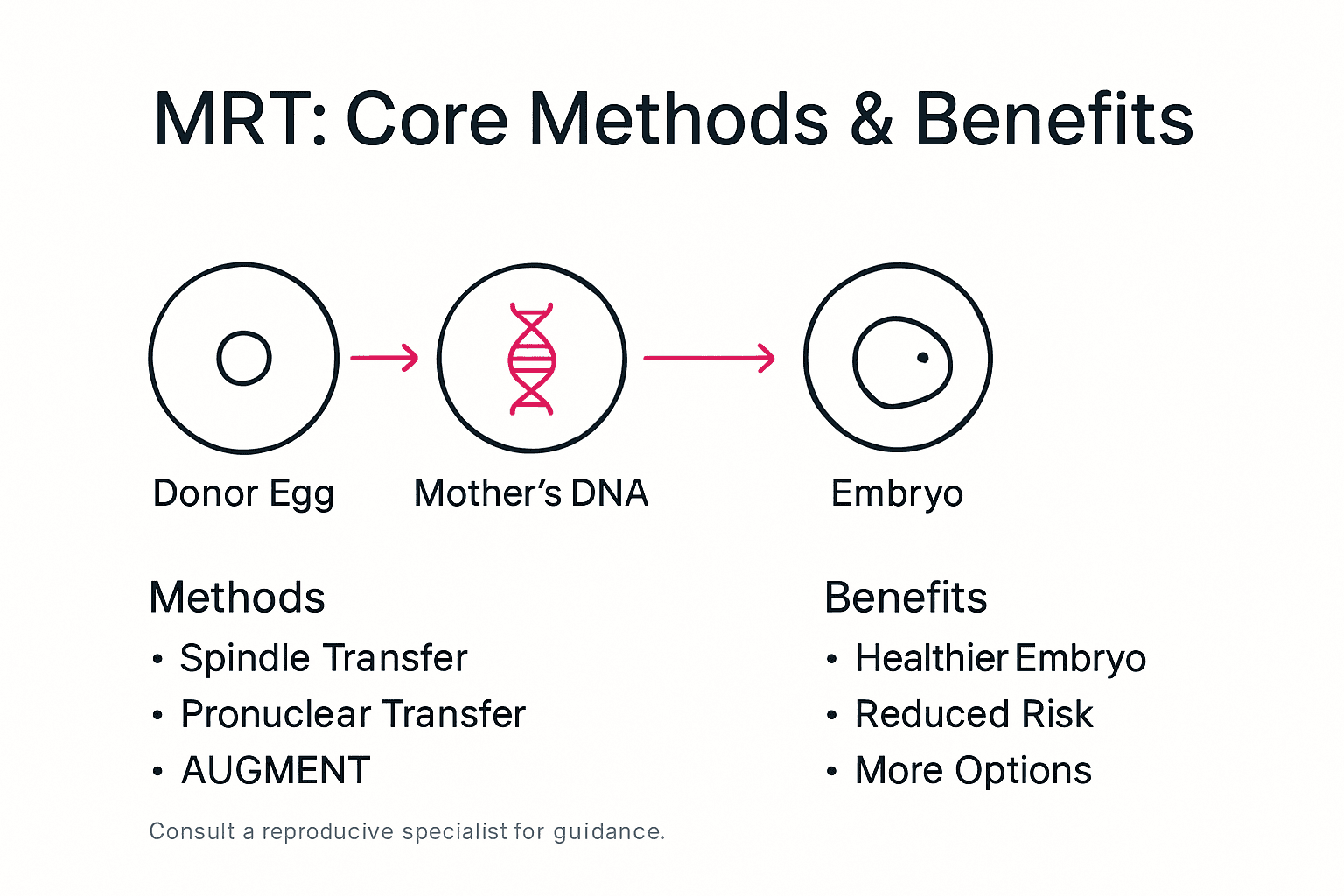
Mitochondrial Replacement Therapy (MRT) represents a groundbreaking fertility intervention designed to prevent the transmission of devastating mitochondrial genetic disorders. At its core, MRT is a sophisticated reproductive technique involving genetic material from three individuals, where nuclear DNA from intended parents is combined with healthy mitochondrial DNA from a donor.
The procedure involves extracting the nucleus from the intended mother’s egg and transferring it into an egg from a donor that has had its own nucleus removed. This sophisticated process ensures that while the nuclear genetic material comes from the original parents, the mitochondrial DNA comes from a healthy donor. Women with inherited mitochondrial diseases can thus potentially have biological children without risking passing on serious genetic conditions that could cause neurological disorders, muscle weakness, heart problems, and other life-threatening complications.
Despite its medical potential, MRT remains controversial. Several countries, including the United States, have not legalized the procedure due to complex ethical considerations surrounding genetic manipulation. Concerns range from potential long-term genetic consequences to philosophical debates about human genetic modification. Critics argue that introducing genetic material from a third party fundamentally alters human reproduction, while proponents emphasize the critical opportunity to prevent devastating genetic disorders.
Pro tip: Always consult multiple reproductive genetic specialists and thoroughly understand the complex legal and medical landscape before considering mitochondrial replacement therapy.
Core Types of Mitochondrial Replacement Techniques
Mitochondrial Replacement Therapy (MRT) encompasses several sophisticated techniques designed to prevent genetic disorders by replacing dysfunctional mitochondrial DNA. Researchers have identified multiple approaches for transferring healthy mitochondrial genetic material, each with unique methodological nuances and clinical implications.
The primary techniques can be categorized into two primary groups: heterologous and autologous methods. Heterologous methods involve transferring mitochondria from an external donor, and include four primary approaches:
Germinal Vesicle Transfer: Involves replacing mitochondria at an early cellular stage
Pronuclear Transfer: Transfers genetic material during early embryonic development
Maternal Spindle Transfer: Extracts and replaces the nuclear genetic material before fertilization
Polar Body Transfer: Focuses on mitochondrial replacement during egg maturation
Autologous methods, such as the AUGMENT technique, differ by utilizing the patient’s own mitochondrial materials. These techniques aim to eliminate mutant mitochondrial DNA inheritance and enhance embryo viability, representing a critical advancement in reproductive medicine for women with inherited mitochondrial disorders.
Here’s a concise overview of key MRT techniques and their distinguishing features:
Technique | Timing of Intervention | Source of Mitochondria | Key Benefit |
Maternal Spindle Transfer | Before fertilization | External donor | Preserves parental genetics |
Pronuclear Transfer | After fertilization | External donor | Reduces disease risk |
Germinal Vesicle Transfer | Early egg development | External donor | Addresses early-stage defects |
Polar Body Transfer | Egg maturation | External donor | Targets ovum-specific errors |
AUGMENT (Autologous) | Egg preparation | Patient’s own cells | Enhances egg viability |
Pro tip: Consult specialized reproductive geneticists to determine which mitochondrial replacement technique might be most appropriate for your specific genetic profile and fertility goals.
How MRT Improves Egg and Embryo Health
Mitochondrial Replacement Therapy (MRT) represents a revolutionary approach to addressing fundamental challenges in egg and embryo health. The technique fundamentally transforms cellular energy production by replacing defective mitochondrial DNA with healthy donor mitochondria, offering unprecedented potential for improving reproductive outcomes.
At the cellular level, MRT targets critical inefficiencies in egg quality that traditionally compromise fertility. Dysfunctional mitochondria can dramatically reduce energy production, impair cellular metabolism, and increase genetic mutation risks. By introducing healthy mitochondrial genetic material, the therapy effectively enhances oocyte function, potentially increasing fertilization rates and improving early embryonic development. This becomes particularly crucial for women experiencing age-related fertility decline or those with inherited mitochondrial genetic disorders.

The intervention’s primary mechanism involves strategic mitochondrial replacement, which aims to restore proper cellular energy metabolism and improve overall embryo viability. For women with compromised mitochondrial function, this approach offers a groundbreaking opportunity to overcome genetic barriers that traditionally prevented successful pregnancy. The technique is especially promising for individuals with a history of recurrent IVF failures, mitochondrial diseases, or advanced reproductive age.
Pro tip: Request a comprehensive mitochondrial genetic screening before considering MRT to understand your specific cellular energy production potential and genetic risks.
Legal, Ethical, and Safety Considerations Worldwide
Mitochondrial Replacement Therapy (MRT) navigates an intricate global landscape of legal and ethical challenges that vary dramatically across different jurisdictions. The regulatory environment surrounding this groundbreaking reproductive technology remains complex and highly fragmented, with only a handful of countries developing comprehensive legal frameworks to address its unique scientific and ethical implications.
The legal status of MRT reveals significant international disparities. In the United Kingdom and Australia, specific legislative provisions explicitly permit clinical trials for preventing severe mitochondrial diseases. Conversely, many countries, including the United States, maintain strict regulatory prohibitions that effectively block research and clinical applications. These restrictions stem from profound ethical concerns surrounding inheritable genetic modifications, the involvement of third-party genetic material, and the potential long-term consequences of manipulating human reproductive technologies.
Safety considerations represent a critical dimension of the ongoing global discourse about MRT. Researchers and ethicists emphasize the urgent need for rigorous, longitudinal clinical trials to comprehensively assess potential health outcomes. Key safety concerns include the risk of mitochondrial-nuclear DNA incompatibilities, potential inheritance of mitochondrial heteroplasmy, and the uncertain long-term genetic implications for children conceived through these techniques. The complex ethical debate centers on balancing the potential to prevent devastating genetic disorders against the profound moral questions raised by intentional human genetic modification.
The table below summarizes global perspectives on MRT regulation and clinical application:
Country/Region | Legal Status | Clinical Use Allowed | Major Ethical Focus |
United Kingdom | Permitted | Yes, with oversight | Long-term genetic effects |
Australia | Permitted | Yes, via trials | Parental and donor rights |
United States | Prohibited | No | Germline modification risks |
Japan | Unregulated | Unclear | Safety and societal acceptance |
Canada | Restricted | Research only | Embryo protection and consent |
Pro tip: Consult international reproductive law experts and genetic counselors to understand the specific legal and ethical landscape in your jurisdiction before pursuing mitochondrial replacement therapy.
Weighing Costs, Benefits, and Potential Alternatives
Mitochondrial Replacement Therapy (MRT) presents a complex landscape of potential benefits and significant challenges that require careful, nuanced evaluation. The decision to pursue this advanced reproductive technology involves intricate considerations of medical efficacy, financial investment, and potential long-term outcomes, making it crucial for prospective patients to conduct comprehensive research and consultation.
The primary benefits of MRT are profound. For women with inherited mitochondrial disorders, this technique offers an unprecedented opportunity to prevent devastating genetic conditions from being transmitted to future generations. By replacing dysfunctional mitochondrial DNA with healthy donor mitochondria, the therapy potentially increases IVF success rates and reduces the risk of severe genetic diseases. However, these benefits must be carefully weighed against substantial procedural costs, which can range from tens to hundreds of thousands of dollars, and the current limitations in long-term genetic outcome predictions.
Alternative approaches to addressing mitochondrial health remain limited in their proven efficacy. Current alternatives include autologous mitochondrial augmentation techniques and emerging pharmacological interventions, but these methods have not demonstrated comparable success rates to MRT. Small molecule therapies and traditional mitochondrial support strategies offer potential complementary approaches, yet they cannot match the genetic intervention potential of MRT. The therapy’s unique capacity to fundamentally modify genetic transmission represents a significant advancement in reproductive medicine, despite ongoing scientific and ethical debates.
Pro tip: Develop a comprehensive financial and medical consultation strategy, including consultations with genetic counselors, reproductive specialists, and fertility financing experts before committing to mitochondrial replacement therapy.
Discover Advanced Solutions for Genetic Fertility Challenges
Facing the complex hurdles of mitochondrial disorders or poor egg quality can feel overwhelming. Mitochondrial Replacement Therapy offers a transformative path to overcome inherited genetic risks and improve egg and embryo health. If you want to break free from the cycle of IVF failures or genetic barriers, expert guidance and cutting-edge treatment options are crucial to your success.
At the Rejuvenating Fertility Center in The Bahamas, we specialize in personalized care using advanced reproductive technologies, including MRT and stem cell therapy for ovarian rejuvenation. Led by Dr. Zaher Merhi, our team provides comprehensive genetic screening and tailored fertility solutions to help you pursue your dream of a healthy pregnancy. Take your first step today by visiting our main site and exploring how innovative therapies like mitochondrial replacement can transform your fertility journey. Contact us now to schedule a consultation and unlock new possibilities.
Frequently Asked Questions
What is Mitochondrial Replacement Therapy (MRT)?
Mitochondrial Replacement Therapy (MRT) is a fertility intervention that prevents the transmission of mitochondrial genetic disorders by combining nuclear DNA from intended parents with healthy mitochondrial DNA from a donor.
How does MRT improve egg and embryo health?
MRT improves egg and embryo health by replacing dysfunctional mitochondrial DNA with healthy donor mitochondria, enhancing cellular energy production and overall embryo viability.
What are the different types of mitochondrial replacement techniques?
The primary types of mitochondrial replacement techniques are heterologous methods, such as germinal vesicle transfer and pronuclear transfer, and autologous methods, like the AUGMENT technique, which use the patient’s own mitochondrial materials.
What are the legal and ethical considerations surrounding MRT?
MRT faces significant legal and ethical challenges, including concerns about inheritable genetic modifications, the involvement of third-party genetic material, and the potential long-term implications for future generations.
Recommended
Comments