
Why Use Mitochondrial Therapy for Fertility

Some American women over 40 face a troubling reality—egg quality begins to decline sharply just as fertility options grow more complex. For those living with diminished ovarian reserve, finding a solution that actually addresses cellular energy challenges becomes vital. Studies show up to 60 percent of age-related infertility may be linked to mitochondrial issues. This article reveals how mitochondrial therapy presents new hope for women considering international treatment in the Bahamas, exploring what this advanced approach truly means for your journey.
Table of Contents
Key Takeaways
Point | Details |
Mitochondrial Therapy Enhances Fertility | This innovative approach addresses mitochondrial dysfunction to improve energy production and optimize reproductive outcomes for women facing fertility challenges. |
Targeted Techniques Available | Various methods such as Maternal Spindle Transfer and Autologous Germline Mitochondrial Energy Transfer offer specific solutions to enhance egg quality and fertilization potential. |
Importance of Comprehensive Evaluation | Individuals considering mitochondrial therapy should undergo thorough genetic screening and assessments to determine eligibility and tailor treatments effectively. |
Risks and Ethical Considerations | Potential genetic complications and legal frameworks differ globally, necessitating careful evaluation of risks, informed consent, and adherence to regulations before proceeding. |
What Is Mitochondrial Therapy and Its Role
Mitochondrial therapy is an innovative reproductive medicine approach targeting cellular energy production to enhance fertility outcomes for women experiencing reproductive challenges. At its core, this advanced treatment focuses on improving the functional capacity of mitochondria - the microscopic powerhouses within reproductive cells that generate essential energy for successful fertilization and embryonic development.
Mitochondrial dysfunction can significantly impair reproductive potential, causing reduced egg quality, compromised embryo development, and increased risks of infertility. Mitochondrial research demonstrates that these cellular organelles play a critical role in generating the metabolic energy required for complex reproductive processes. When mitochondrial performance declines, particularly in women over 40, the likelihood of successful conception dramatically reduces.
The therapeutic strategies in mitochondrial therapy encompass multiple sophisticated approaches designed to optimize cellular energy production. These techniques include targeted antioxidant supplementation, mitochondrial replacement technologies, and precision cellular interventions that aim to restore optimal mitochondrial function. By addressing underlying cellular energy deficiencies, mitochondrial transplantation techniques seek to improve gamete quality, enhance fertilization potential, and increase the probability of successful embryonic development.
Pro tip: Consult with fertility specialists who specialize in mitochondrial therapy to understand how personalized cellular interventions might improve your specific reproductive challenges.
Types of Mitochondrial Therapy for Fertility
Mitochondrial replacement therapies represent a sophisticated array of advanced reproductive technologies designed to address complex fertility challenges. These cutting-edge approaches aim to optimize cellular energy production and improve reproductive outcomes by targeting the fundamental mechanisms of mitochondrial function in reproductive cells.
Maternal mitochondrial replacement techniques encompass several innovative strategies, each with unique characteristics and potential benefits. The primary approaches include:
Maternal Spindle Transfer (MST): This technique involves removing the genetic material from a donor egg and replacing it with the intended mother’s genetic spindle, effectively creating an embryo with mitochondria from a healthy donor.
Pronuclear Transfer: A method where genetic material is transferred between embryos before cellular division, allowing for mitochondrial replacement during early embryonic development.
Autologous Germline Mitochondrial Energy Transfer (AUGMENT): An approach that involves introducing mitochondria from immature egg cells to enhance the energy production and overall quality of existing reproductive cells.
Additionally, mitochondrial therapy strategies extend beyond direct replacement techniques to include pharmacological interventions. These complementary approaches focus on improving mitochondrial function through targeted antioxidant therapies, metabolic supplements, and precision cellular interventions that aim to restore optimal mitochondrial performance.
Pro tip: Consult with a reproductive specialist experienced in mitochondrial therapies to determine the most appropriate approach tailored to your specific fertility profile and genetic background.
Here’s a summary comparing key mitochondrial therapy techniques for fertility:
Approach | Main Objective | Cell Source | Typical Use Case |
Maternal Spindle Transfer (MST) | Replace dysfunctional mitochondria | Donor egg + mother’s DNA | Improve egg quality, avoid inherited disease |
Pronuclear Transfer | Mitochondrial replacement pre-cell division | Two embryos | Embryo rescue, prevent mutations |
Autologous Germline Mitochondrial Energy Transfer (AUGMENT) | Boost energy in existing eggs | Patient’s own cells | Enhance existing oocytes |
How Mitochondrial Therapy Improves Egg Quality
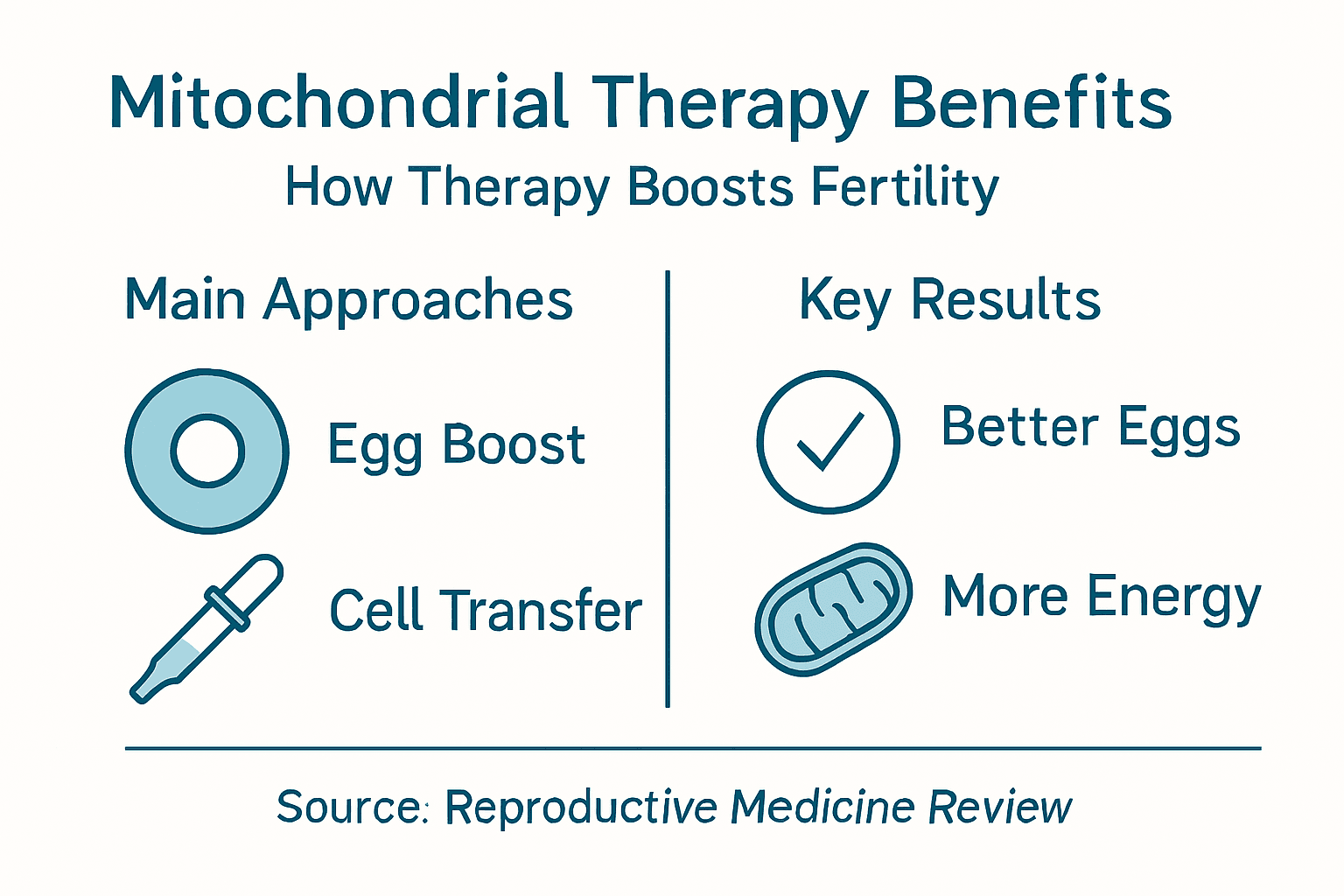
Egg quality is fundamentally determined by the health and efficiency of mitochondrial function within reproductive cells. As women age, mitochondrial performance naturally declines, directly impacting the ability of eggs to successfully develop into viable embryos. Mitochondrial therapy addresses these critical cellular challenges by implementing targeted interventions that restore and optimize cellular energy production.

The primary mechanism of improvement involves enhancing mitochondrial bioenergetics through multiple sophisticated strategies. These include reducing oxidative stress, increasing ATP production, and correcting mitochondrial DNA defects that compromise egg quality. By introducing healthy mitochondria or supporting existing mitochondrial function, the therapy can significantly improve chromosomal segregation during meiosis and support more robust early embryonic development.
Specifically, mitochondrial therapy focuses on several key improvements:
Boosting Energy Production: Increasing the ATP generation capacity of eggs
Reducing Oxidative Damage: Minimizing cellular stress that compromises egg quality
Improving Genetic Stability: Supporting more accurate chromosomal division
Enhancing Developmental Potential: Creating more favorable conditions for successful fertilization
Advanced mitochondrial interventions can effectively counteract age-related fertility decline by directly targeting the cellular mechanisms that determine reproductive potential. These approaches provide women, especially those over 40, with a scientifically sophisticated method to improve their chances of successful conception.
Pro tip: Request a comprehensive mitochondrial function assessment during your fertility consultation to understand your specific cellular energy profile and potential therapeutic interventions.
Eligibility, Process, and Key Requirements
Mitochondrial therapy eligibility is a carefully curated process designed to identify women who can most benefit from advanced reproductive interventions. Specific candidate criteria typically include women experiencing age-related fertility challenges, those with documented mitochondrial dysfunction, or individuals carrying specific genetic mutations that impact reproductive potential.
The comprehensive screening process involves multiple critical assessment stages:
Initial Medical Evaluation
Comprehensive genetic screening
Detailed reproductive health history
Mitochondrial function assessment
Comprehensive genetic mutation testing
Advanced Diagnostic Protocols
Chromosomal analysis
Mitochondrial DNA mutation screening
Comprehensive hormonal profile evaluation
Ovarian reserve testing
Key requirements for mitochondrial therapy candidates include:
Age typically between 35-45 years
Documented diminished ovarian reserve
Evidence of mitochondrial dysfunction
No contraindications for assisted reproductive technologies
Willingness to undergo extensive genetic counseling
Comprehensive treatment protocols integrate multiple sophisticated techniques, including advanced laboratory procedures, precise mitochondrial isolation, and carefully monitored transfer processes. The treatment demands exceptional medical expertise, cutting-edge technological capabilities, and a personalized approach to each patient’s unique reproductive profile.
Pro tip: Prepare a detailed medical history and be prepared to undergo comprehensive genetic screening to determine your suitability for mitochondrial therapy.
Risks, Safety, and Legal Considerations
Mitochondrial therapy risks represent a complex landscape of scientific, ethical, and legal considerations that demand careful evaluation. Potential genetic complications include the emergence of heteroplasmy, a phenomenon where mixed mitochondrial DNA populations can create unpredictable biological outcomes that may impact long-term health and genetic inheritance.
The primary safety concerns encompass several critical areas:
Genetic Modification Risks
Potential unintended genetic alterations
Uncertain long-term developmental impacts
Potential epigenetic changes
Biological Uncertainties
Potential transmission of mitochondrial genetic variations
Limited understanding of multi-generational effects
Complex interactions between donor and recipient mitochondrial DNA
Global legal frameworks surrounding mitochondrial replacement therapies vary dramatically across different jurisdictions. Some regions permit limited trials exclusively for preventing mitochondrial diseases, while others maintain strict prohibitions on germline modifications. Ethical debates continue to center on fundamental questions of genetic consent, potential offspring identity, and the broader implications of human genetic intervention.
Key legal considerations include:
Obtaining comprehensive patient informed consent
Adherence to national and international genetic modification guidelines
Transparent documentation of potential risks and limitations
Ongoing medical monitoring and long-term follow-up protocols
Pro tip: Consult with multiple genetic counseling professionals and thoroughly review all legal and medical documentation before proceeding with mitochondrial replacement therapy.
Comparing Mitochondrial Therapy to Alternatives
Advanced fertility treatments offer multiple pathways for addressing reproductive challenges, with mitochondrial therapy emerging as a sophisticated alternative to traditional assisted reproductive technologies. Comparative analysis reveals significant distinctions in approach, effectiveness, and targeted intervention strategies.
Traditional fertility alternatives include:
In Vitro Fertilization (IVF)
Less targeted cellular intervention
Broader application
Lower precision in addressing mitochondrial dysfunction
Intracytoplasmic Sperm Injection (ICSI)
Focused on sperm-related fertility issues
Limited mitochondrial improvement capabilities
Less sophisticated genetic screening
Antioxidant Therapies
Non-invasive approach
Indirect mitochondrial support
Limited effectiveness for profound mitochondrial issues
Mitochondrial replacement techniques distinguish themselves through a more precise, targeted intervention strategy. Unlike conventional methods that primarily address external fertility factors, mitochondrial therapy directly targets cellular energy production, genetic transmission risks, and fundamental reproductive cell quality.
Key comparative advantages include:
Direct mitochondrial dysfunction correction
Potential prevention of inherited mitochondrial diseases
Enhanced oocyte developmental competence
More sophisticated genetic screening
Pro tip: Schedule comprehensive consultations with fertility specialists who can provide personalized comparative analyses of different treatment options tailored to your specific reproductive health profile.
The following table highlights major differences between mitochondrial therapy and common fertility treatments:
Treatment Type | Main Target | Precision Level | Suitable For |
Mitochondrial Therapy | Cellular energy deficits | Very high | Women with mitochondrial dysfunction |
In Vitro Fertilization (IVF) | General infertility | Moderate | Wide range of infertility cases |
Intracytoplasmic Sperm Injection (ICSI) | Male-related infertility | Moderate | Severe male factor infertility |
Antioxidant Supplements | Oxidative stress | Low | Mild, non-specific cellular issues |
Unlock Your Fertility Potential with Expert Mitochondrial Therapy
Struggling with declining egg quality or mitochondrial dysfunction can feel overwhelming. The article highlights key challenges such as reduced cellular energy, genetic risks, and age-related fertility decline that impact your chance of conception. At the Rejuvenating Fertility Center in The Bahamas, we specialize in advanced solutions like Mitochondrial Replacement Therapy to directly address these critical cellular energy issues. Our personalized approach aims to boost your egg quality and embryo development by restoring mitochondrial function, giving you renewed hope for success.
Take control of your fertility journey today. Visit Rejuvenating Fertility Center to learn how our cutting-edge mitochondrial and stem cell therapies can help you overcome mitochondrial dysfunction. Speak with Dr. Zaher Merhi and his team who combine scientific innovation with compassionate care to craft a treatment plan tailored to your unique needs. Don’t wait to improve your chances of conception. Explore more about Mitochondrial Replacement Therapy and discover the difference that expert care and advanced medical technology can make.
Frequently Asked Questions
What is mitochondrial therapy for fertility?
Mitochondrial therapy is a reproductive medicine approach that focuses on enhancing fertility by improving the functional capacity of mitochondria, the cellular organelles responsible for energy production in reproductive cells.
How does mitochondrial therapy improve egg quality?
Mitochondrial therapy enhances egg quality by boosting energy production, reducing oxidative stress, improving genetic stability, and enhancing the developmental potential of eggs through targeted interventions that optimize mitochondrial function.
Who is eligible for mitochondrial therapy?
Eligible candidates typically include women between the ages of 35-45 who experience age-related fertility challenges, have documented mitochondrial dysfunction, or carry specific genetic mutations impacting reproductive potential.
What are the risks associated with mitochondrial therapy?
Risks of mitochondrial therapy include potential genetic complications like heteroplasmy, unintended genetic alterations, and ethical concerns regarding genetic modification, making thorough medical and legal consultations essential before proceeding.
Recommended
Comments