
Role of Fertility Clinics: Advancing Options for Women 40+

Most American clinics now offer cutting-edge fertility treatments that target diminished ovarian reserve in women over 40. Facing infertility can feel overwhelming, especially when myths about immediate success cloud real expectations. The truth is, success rates depend on personal factors like age and clinic expertise. This guide reveals how innovative technologies and personalized care can empower women worldwide to choose proven pathways toward parenthood.
Table of Contents
Key Takeaways
Point | Details |
Fertility Clinics Offer Specialized Care | Clinics provide comprehensive reproductive healthcare addressing infertility through a multidisciplinary approach. |
Innovative Treatments Are Transforming Fertility Options | Cutting-edge techniques like mitochondrial replacement therapy and stem cell treatments are enhancing success rates for older women. |
Personalized Care Is Essential for Women Over 40 | Tailored treatment plans integrating psychological support are crucial for effectively managing the unique challenges faced by older patients. |
Awareness of Risks and Costs Is Critical | Patients should understand the significant financial implications and medical risks associated with fertility treatments before proceeding. |
Defining Fertility Clinics and Common Misconceptions
Fertility clinics are specialized medical centers dedicated to helping individuals and couples overcome reproductive challenges through advanced diagnostic and treatment techniques. These facilities provide comprehensive reproductive healthcare services targeting infertility issues across diverse patient demographics. Comprehensive fertility interventions involve complex medical protocols designed to maximize chances of successful pregnancy.
Modern fertility clinics employ a multidisciplinary team including reproductive endocrinologists, embryologists, geneticists, and specialized nurses who collaborate to develop personalized treatment strategies. Key services typically include comprehensive fertility assessments, diagnostic testing, ovulation induction, intrauterine insemination (IUI), in vitro fertilization (IVF), genetic screening, and advanced reproductive technologies like mitochondrial replacement therapy.
However, significant misconceptions persist about fertility treatments. Many patients incorrectly assume that fertility clinics guarantee immediate pregnancy, overlook the complexity of reproductive medicine, or misunderstand success probability metrics. Success rates vary considerably based on individual patient factors such as age, underlying medical conditions, and specific fertility challenges. Patients often underestimate the potential emotional and financial investments required for comprehensive fertility treatments.
Pro tip: Schedule an initial comprehensive consultation to understand your specific fertility profile and realistic treatment expectations before committing to any specific intervention.
Innovative Fertility Treatments and Technologies
The landscape of reproductive medicine has dramatically transformed, offering increasingly sophisticated solutions for women facing fertility challenges. Advanced reproductive technologies have revolutionized the approach to conception, particularly for women over 40 seeking personalized fertility interventions. Modern clinics now integrate cutting-edge techniques that extend far beyond traditional in vitro fertilization (IVF), providing hope and realistic pathways to parenthood.
Key innovative treatments include mitochondrial replacement therapy, stem cell technologies, and advanced genetic screening. Mitochondrial replacement therapy allows genetic material from intended parents to be combined with healthy donor mitochondria, potentially mitigating inherited genetic disorders. Sophisticated embryo screening techniques enable precise genetic assessment, helping identify the most viable embryos and reducing risks associated with chromosomal abnormalities.
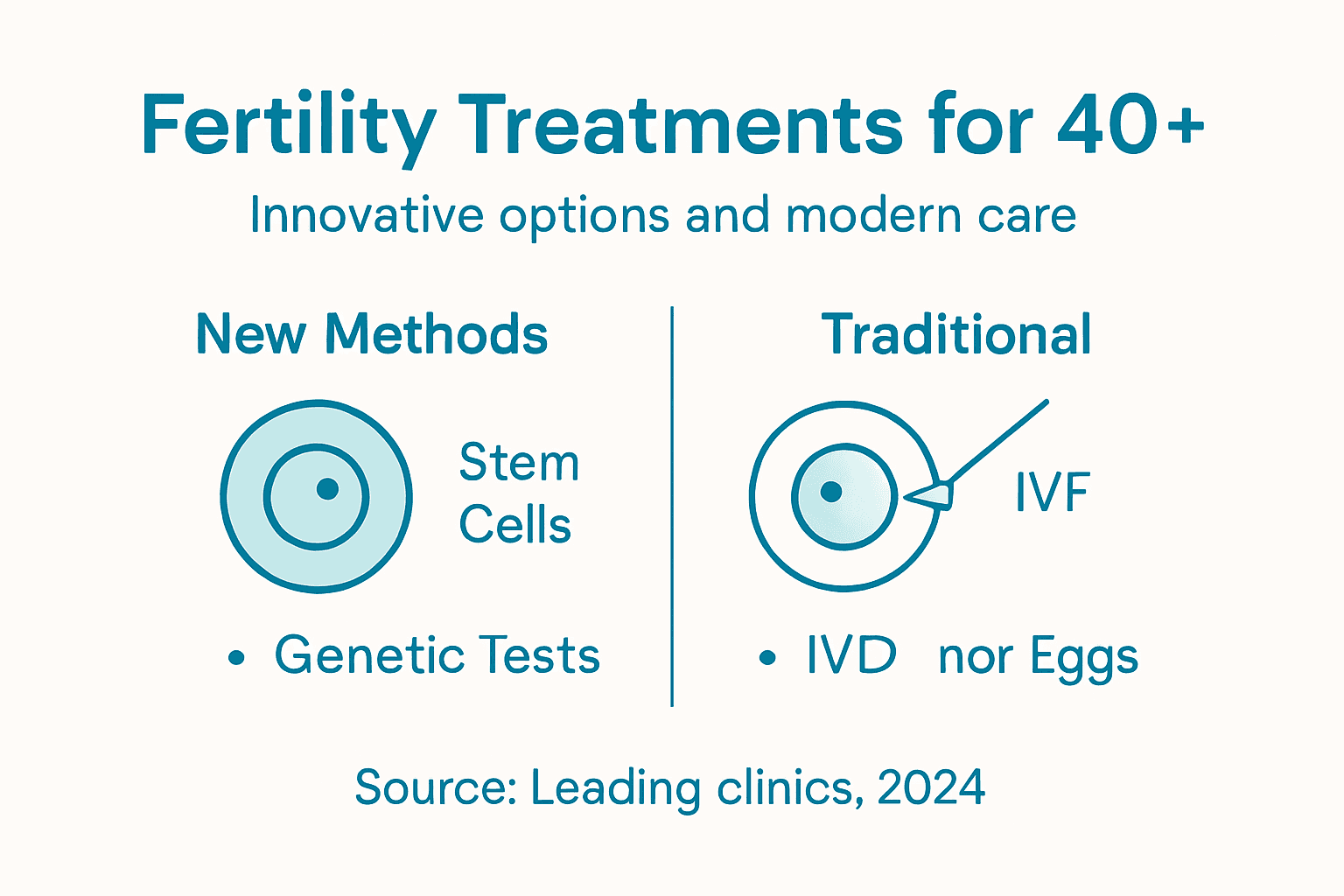
The emergence of stem cell therapies represents another groundbreaking frontier in fertility medicine. These technologies offer potential ovarian rejuvenation, potentially increasing egg quality and quantity for women with diminished ovarian reserve. Techniques like platelet-rich plasma (PRP) treatment and exosome therapy are showing promising results in stimulating dormant ovarian follicles and improving overall reproductive potential.
Pro tip: Research clinics offering comprehensive diagnostic genetic screening and multiple innovative treatment modalities to maximize your personalized fertility strategy.
Personalized Care for Women Over 40
Reproductive medicine has evolved to recognize the unique challenges faced by women over 40 seeking fertility treatments. Patient-centered fertility approaches are critical in addressing the complex physiological and emotional landscape of advanced maternal age reproductive planning. These specialized strategies acknowledge the intricate biological changes that impact fertility potential and require nuanced, individualized medical interventions.
The biological reality for women over 40 involves significant reproductive challenges, including diminished ovarian reserve, increased genetic risks, and lower egg quality. Comprehensive fertility evaluations become essential, encompassing detailed hormonal assessments, genetic screening, and advanced diagnostic techniques. Clinics now design treatment protocols that carefully balance medical possibilities with realistic expectations, offering comprehensive support that extends beyond traditional medical interventions.

Personalized care for women over 40 requires a holistic approach that integrates medical treatment with psychological support. This means developing customized treatment plans that might include innovative technologies like mitochondrial replacement therapy, stem cell interventions, genetic screening, and potentially donor egg options. Advanced clinics now offer comprehensive counseling that helps patients understand their unique reproductive potential, potential treatment outcomes, and emotional support mechanisms throughout their fertility journey.
Pro tip: Schedule comprehensive fertility consultations that include both medical assessments and emotional support counseling to develop a truly personalized reproductive strategy.
Legal, Ethical, and Safety Considerations
Fertility clinics operate within a complex landscape of legal, ethical, and safety regulations that demand rigorous oversight and patient protection. Comprehensive legal frameworks are essential to ensure patient rights, safety, and the responsible development of reproductive technologies. These regulatory structures aim to balance scientific innovation with critical ethical considerations, protecting both patients and potential future offspring.
Key ethical considerations include informed consent, patient autonomy, and transparent communication about treatment risks and potential outcomes. Modernized fertility regulations prioritize patient safety through stringent screening processes, comprehensive counseling, and mandatory disclosure of treatment success rates, genetic screening results, and potential long-term implications. Clinics must navigate complex moral territories, particularly with emerging technologies like mitochondrial replacement therapy and genetic screening.
Safety protocols extend beyond medical procedures to encompass psychological support, data protection, and long-term patient tracking. Advanced fertility clinics must implement robust consent mechanisms that fully inform patients about genetic implications, potential treatment risks, and emotional challenges. This includes detailed discussions about genetic screening, potential embryo selection processes, and the psychological impact of fertility treatments, ensuring patients make fully informed decisions about their reproductive journey.
The following table summarizes key ethical and safety considerations in fertility clinics:
Aspect | Why It Matters | Clinic Example Action |
Informed Consent | Empowers patient decision-making | Detailed consent process |
Patient Safety | Minimizes health risks | Medical screening, monitoring |
Data Privacy | Protects personal information | Secure health records |
Psychological Support | Supports emotional well-being | Onsite counseling services |
Pro tip: Request a comprehensive written overview of legal protections, ethical guidelines, and potential risks before committing to any advanced fertility treatment.
Risks, Financial Costs, and Key Alternatives
Fertility treatments for women over 40 represent a complex landscape of medical interventions with significant financial and physiological implications. Reproductive health risks/areas-of-work/fertility-care) encompass multiple dimensions, including medical complications, psychological challenges, and substantial financial investments that require careful consideration and strategic planning.
Medical risks associated with advanced fertility treatments include potential ovarian hyperstimulation syndrome, higher likelihood of multiple pregnancies, and increased genetic screening complexities. Comprehensive patient counseling becomes crucial in navigating these potential challenges, ensuring women understand the nuanced probabilities of success and potential medical interventions. Financial considerations are equally significant, with a single IVF cycle potentially costing between $12,000 and $25,000, and multiple cycles often required for successful outcomes.
Key alternatives to traditional fertility treatments provide valuable options for women seeking parenthood. These alternatives include egg donation, surrogacy, adoption, and emerging technologies like mitochondrial replacement therapy. Each alternative carries unique emotional, financial, and legal considerations. Some women might choose fertility preservation techniques, lifestyle modifications, or comprehensive genetic counseling as proactive strategies to address reproductive challenges. Understanding these alternatives empowers women to make informed decisions aligned with their personal goals, financial capacity, and emotional readiness.
Here’s a comparison of advanced fertility treatment options for women over 40:
Treatment Type | Main Benefit | Potential Drawback | Typical Cost Range |
In Vitro Fertilization (IVF) | Increases pregnancy chance | Multiple cycles often needed | $12,000 – $25,000 per cycle |
Mitochondrial Replacement | Reduces inherited disorder risk | Limited availability, ethical debate | Varies, often high cost |
Egg Donation | Compensates for low egg quality | Not genetically related child | $15,000 – $30,000+ |
Stem Cell Therapy | May rejuvenate ovarian function | Experimental, uncertain outcomes | Not widely available |
Adoption | Allows parenting without treatment | Legal and emotional complexities | $20,000 – $50,000+ |
Pro tip: Create a comprehensive financial and emotional readiness plan that explores multiple fertility and parenthood pathways before committing to expensive medical interventions.
Unlock Advanced Fertility Solutions Tailored for Women Over 40
If you are navigating the complex journey of fertility after 40, understanding the challenges like diminished ovarian reserve and genetic risks can be overwhelming. This article highlights how cutting-edge treatments such as mitochondrial replacement therapy and stem cell interventions offer promising hope beyond traditional methods. At the Rejuvenating Fertility Center in The Bahamas, we specialize in these advanced therapies designed specifically for women facing these obstacles, combining scientific innovation with compassionate personalized care.
Take control of your reproductive future today by exploring proven treatments that improve egg and embryo quality. Visit https://rfcbahamas.com to schedule a comprehensive consultation with Dr. Zaher Merhi and his expert team. Discover how our pioneering approach can help you achieve your parenthood dreams with confidence and clarity. Don’t wait as timely intervention can maximize your chances for success.
Frequently Asked Questions
What services do fertility clinics offer for women over 40?
Fertility clinics provide a range of services including comprehensive fertility assessments, diagnostic testing, in vitro fertilization (IVF), intrauterine insemination (IUI), mitochondrial replacement therapy, and advanced genetic screening to address the specific needs of women over 40.
How can I understand my fertility potential if I’m over 40?
Scheduling a comprehensive fertility evaluation that includes hormone assessments, genetic testing, and personalized treatment strategies is essential to understand your unique fertility potential and options available.
What are the risks of advanced fertility treatments for older women?
Some risks associated with advanced fertility treatments include ovarian hyperstimulation syndrome, higher chances of multiple pregnancies, and potential genetic screening complexities, which require thorough counseling and understanding before proceeding with treatment.
How do financial costs vary for fertility treatments for women over 40?
Financial costs for fertility treatments, such as IVF or mitochondrial replacement therapy, can range significantly, with IVF cycles typically costing between $12,000 and $25,000, and the expenses may accumulate with multiple cycles and additional treatments required.
Recommended
Comments