
Why Egg Quality Declines – Impact on Fertility After 40

Most American women over 40 with diminished ovarian reserve face real concerns about declining egg quality and what it means for their future family. The truth is, egg quality begins to drop sharply after age 35, and by 40, less than ten thousand eggs usually remain with much lower chances of healthy pregnancy. If you are looking for advanced, science-driven options in the Bahamas like mitochondrial replacement therapy or stem cell treatments, understanding the myths and realities of egg quality could change your path to parenthood.
Table of Contents
Key Takeaways
Point | Details |
Understanding Egg Quality | Egg quality is essential for fertility, with significant decline starting in the early 30s and accelerating post-35. |
Factors Affecting Egg Quality | Egg quality is influenced by chromosomal integrity, mitochondrial health, and environmental factors, among others. |
Risks of Pregnancy After 40 | Women over 40 face increased risks such as miscarriage and pregnancy complications due to declining egg quality. |
Innovative Therapies | Emerging treatments like mitochondrial replacement therapy and stem cell rejuvenation offer new hope for improving egg quality. |
Defining Egg Quality and Common Myths
Understanding egg quality is crucial for women navigating fertility challenges, especially as they approach their 40s. At its core, egg quality refers to the genetic integrity and potential developmental capacity of a woman’s eggs. This complex biological attribute determines whether an egg can be successfully fertilized, implant properly, and develop into a healthy embryo.
While many misconceptions circulate about fertility, scientific research provides clear insights. According to CDC infertility guidelines, infertility is defined as the inability to conceive after 12 months of unprotected intercourse. Contrary to popular belief, egg quality is not uniform throughout a woman’s reproductive years. Specialized medical research indicates that egg quality begins declining in the early 30s and accelerates significantly after age 35.
The primary factors influencing egg quality include:
Chromosomal integrity
Mitochondrial health
Cellular environment
Hormonal balance
Genetic predispositions
Common myths about egg quality often mislead women about their reproductive potential. Some widespread misconceptions include believing that all eggs are equally viable until menopause or that stress alone determines fertility. In reality, egg quality is a nuanced biological process influenced by genetics, lifestyle, and age-related changes in cellular function.
Pro tip: Consider comprehensive fertility testing in your early 30s to understand your ovarian reserve and egg quality trajectory, allowing proactive planning for potential fertility interventions.
How Egg Quality Declines Over Time
The biological journey of egg quality represents a complex and progressive decline that significantly impacts female fertility. Specialized medical research reveals that this process begins subtly in early adulthood and accelerates dramatically during the late 30s and early 40s. Women are born with approximately 6-7 million eggs, but this number dramatically reduces to around 300,000 by puberty, with further significant reduction occurring as reproductive years progress.
At the cellular level, egg quality deterioration stems from multiple intricate biological mechanisms. Each egg remains arrested in meiosis for decades, which means these reproductive cells accumulate molecular damage over time. This prolonged cellular stasis leads to increased chromosomal abnormalities and reduced mitochondrial efficiency. CDC fertility statistics confirm that by age 37, women typically have around 25,000 eggs remaining, with substantially compromised genetic integrity.
The decline in egg quality manifests through several critical changes:
Increased chromosomal abnormality rates
Reduced mitochondrial function
Slower cellular repair mechanisms
Higher oxidative stress vulnerability
Decreased metabolic efficiency
Understanding this biological progression helps women make informed reproductive decisions. The quality decline is not merely about quantity but represents a fundamental shift in cellular potential. Genetic errors become more prevalent, implantation rates decrease, and the risk of miscarriage increases substantially with advancing maternal age.
Pro tip: Consider comprehensive genetic screening and advanced fertility assessments in your early to mid 30s to understand your specific egg quality trajectory and explore proactive fertility preservation strategies.
Here’s an overview of how egg quantity and quality change throughout a woman’s reproductive lifespan:
Age Range | Estimated Egg Count | Egg Quality Trend | Notable Fertility Impact |
Birth | 6-7 million | Highest | N/A |
Puberty | ~300,000 | Slight decline | Fertility begins |
Early 30s | ~100,000 | Gradual decrease | Possible conception challenges |
Age 37 | ~25,000 | Accelerated decline | Egg quality significantly reduced |
40+ | <10,000 | Rapid decline | Higher miscarriage, lower implantation rates |
Key Drivers: Biological Aging and Genetics
Biological aging represents a complex interplay of genetic and environmental factors that profoundly impact female reproductive potential. Cutting-edge genetic research reveals that ovarian aging is not a uniform process, but a nuanced biological phenomenon driven by multiple interconnected mechanisms. The genetic blueprint inherited from one’s family can significantly predetermine the trajectory of reproductive longevity.

At the cellular level, mitochondrial dysfunction and DNA damage accumulation emerge as critical drivers of egg quality decline. Reproductive biology insights demonstrate that genetic variations can accelerate or decelerate this aging process. Some women experience earlier ovarian aging due to inherited genetic markers, particularly those with a family history of premature menopause or reduced fertility.
Key genetic and biological factors influencing egg quality include:
Inherited mitochondrial DNA variants
Telomere length and degradation rate
Epigenetic modifications
Hormonal receptor gene expressions
Cellular repair mechanism efficiency
Understanding these intricate biological drivers empowers women to make proactive reproductive health decisions. The interplay between genetics and environmental factors creates a unique fertility fingerprint, with some genetic predispositions potentially increasing susceptibility to accelerated egg quality decline. This complexity underscores the importance of personalized genetic and fertility assessments.
Pro tip: Consider comprehensive genetic screening and family fertility history evaluation to gain deeper insights into your potential reproductive aging trajectory and personalized fertility preservation strategies.
Environmental, Health, and Lifestyle Influences
The delicate ecosystem of female fertility is profoundly shaped by an intricate web of environmental, health, and lifestyle factors. Scientific research on fertility demonstrates that reproductive potential is not solely determined by genetic predisposition, but significantly influenced by external and personal health dynamics. Every lifestyle choice acts as a potential lever, either supporting or potentially undermining egg quality and overall reproductive health.
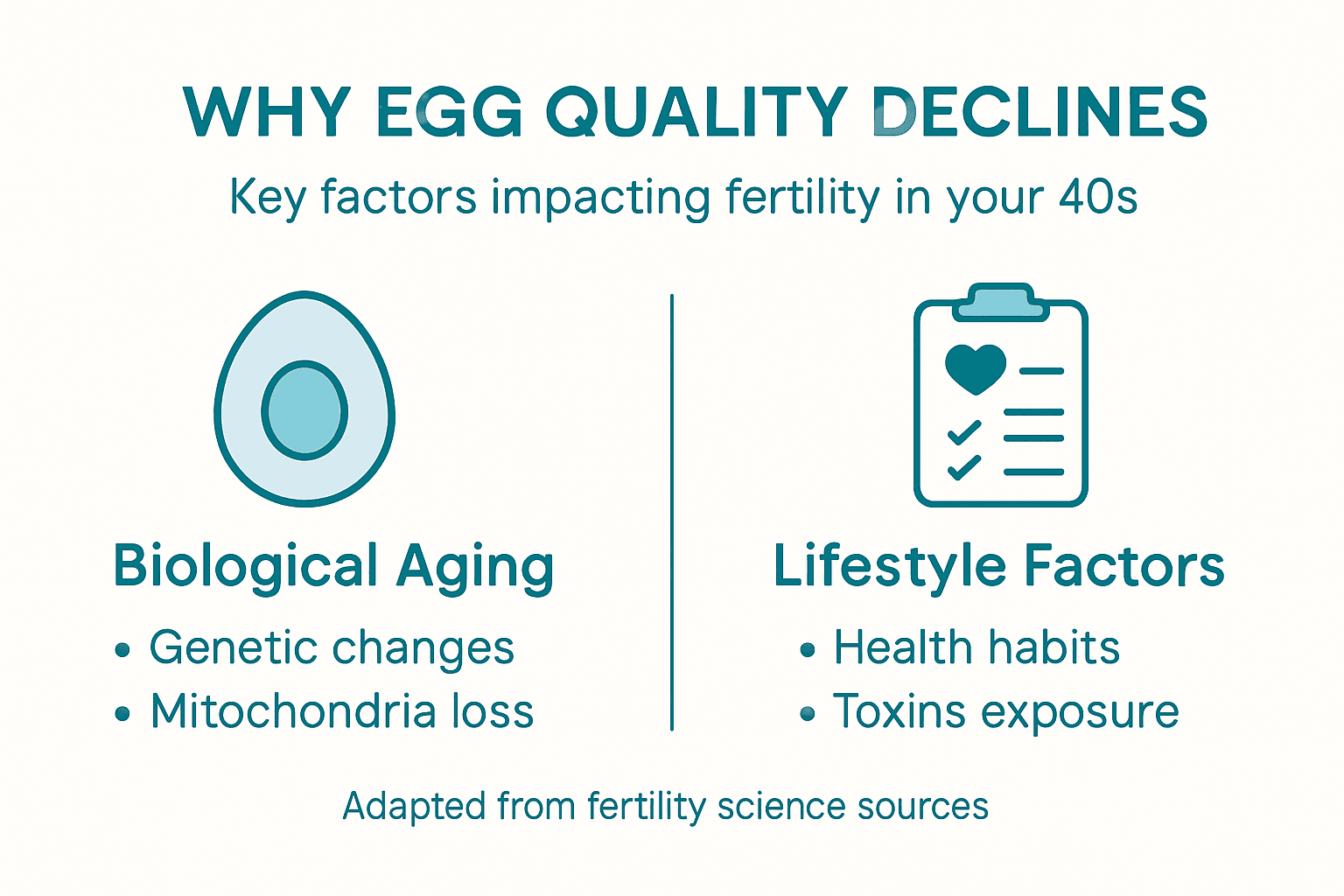
Oxidative stress emerges as a critical mechanism through which environmental exposures impact egg quality. Endocrine disruptors, heavy metals, and environmental pollutants can cause direct cellular damage, triggering mutations and compromising mitochondrial function. National health insights reveal that occupational chemical exposures, pesticides, and lifestyle toxins can dramatically alter hormonal balance and reproductive cell integrity.
Key lifestyle and environmental factors affecting egg quality include:
Nutritional intake and diet composition
Regular physical activity levels
Stress management techniques
Sleep quality and duration
Exposure to environmental toxins
Body weight and metabolic health
Alcohol and tobacco consumption
Chemical and radiation exposures
Understanding these interconnected influences empowers women to make proactive health decisions. The cumulative impact of lifestyle choices creates a complex biological landscape that can either support or challenge reproductive potential. By recognizing these factors, women can strategically optimize their environmental and personal health to potentially mitigate egg quality decline.
Pro tip: Implement a comprehensive lifestyle audit, focusing on reducing environmental toxin exposure, maintaining a nutrient-dense diet, and developing effective stress management strategies to support reproductive health.
Risks and Implications for Fertility Outcomes
Pregnancy after 40 represents a complex reproductive landscape marked by heightened medical complexity and nuanced biological challenges. Comprehensive reproductive health research reveals that women in this age group face significantly elevated risks related to egg quality, embryonic development, and overall pregnancy outcomes. The biological constraints become increasingly pronounced, transforming fertility from a seemingly straightforward process to a delicate, intricate journey.
Chromosomal abnormalities emerge as a critical concern, with the probability of genetic complications escalating dramatically. Genetic mutation risks increase exponentially, potentially leading to higher miscarriage rates and complex pregnancy challenges. Maternal health insights indicate that women over 40 experience heightened probabilities of pregnancy-related complications such as:
Increased miscarriage likelihood
Higher ectopic pregnancy rates
Greater gestational hypertension risk
Potential placental development complications
Elevated chances of low birth weight
Increased pre-eclampsia probability
The implications extend beyond immediate pregnancy risks, potentially impacting long-term maternal and child health. While these statistics might seem overwhelming, they represent probabilistic trends rather than absolute outcomes. Many women successfully navigate pregnancy after 40 through comprehensive medical monitoring, advanced reproductive technologies, and personalized healthcare strategies.
Pro tip: Consult with a reproductive specialist early to develop a comprehensive fertility and pregnancy risk mitigation plan tailored to your specific health profile and genetic background.
Innovative Therapies to Restore Egg Quality
The landscape of reproductive medicine has dramatically transformed with breakthrough therapies targeting egg quality restoration. Cutting-edge fertility research demonstrates emerging technologies that offer unprecedented hope for women experiencing diminished ovarian reserve, particularly those over 40. These innovative approaches represent a paradigm shift from traditional fertility interventions, focusing on cellular regeneration and quality enhancement.
Advanced reproductive technologies now encompass multiple sophisticated strategies for egg quality improvement. Mitochondrial replacement therapy, stem cell interventions, and targeted genetic treatments provide nuanced approaches to addressing cellular aging. Oocyte preservation techniques have evolved to offer increasingly personalized solutions, allowing women to strategically manage their reproductive potential.
Key innovative therapies for egg quality restoration include:
Mitochondrial replacement technology
Stem cell rejuvenation protocols
Advanced genetic screening techniques
Platelet-rich plasma ovarian treatments
Targeted antioxidant interventions
Epigenetic modification strategies
Precision hormonal modulation
These groundbreaking approaches recognize that egg quality decline is not an inevitable process but a complex biological challenge that can be strategically addressed. By leveraging cellular regeneration technologies, reproductive specialists can potentially reverse or mitigate age-related fertility constraints, offering renewed hope for women seeking to expand their families.
The table below summarizes innovative therapies and their potential roles in restoring egg quality:
Therapy Type | Main Mechanism | Potential Benefit |
Mitochondrial replacement | Adds healthy mitochondria | Improves egg energy function |
Stem cell rejuvenation | Cellular regeneration | Boosts egg developmental potential |
Platelet-rich plasma treatment | Tissue repair enhancement | May support ovarian health |
Targeted antioxidant approach | Reduces oxidative stress | Protects egg cellular DNA |
Pro tip: Consult with a specialized reproductive endocrinologist to develop a personalized egg quality restoration strategy tailored to your unique genetic and physiological profile.
Take Control of Your Fertility Journey Today
Understanding the decline in egg quality and its impact on fertility, especially after 40, can feel overwhelming. The good news is that innovative treatments like Mitochondrial Replacement Therapy and Stem Cell Therapy are changing the reproductive landscape. These advanced medical solutions directly address the biological aging and cellular damage that reduce egg quality, offering renewed hope for women facing diminished ovarian reserve or genetic challenges.
At the Rejuvenating Fertility Center in the Bahamas, we specialize in personalized fertility care designed to improve egg and embryo quality using cutting-edge techniques. Do not wait until age-related risks escalate. Discover how science-backed therapies can support your dream of parenthood by visiting our advanced treatments page today. Take the next step toward restoring your reproductive potential with expert guidance from Dr. Zaher Merhi and the team committed to your success.
Frequently Asked Questions
What factors contribute to the decline of egg quality after age 40?
Egg quality declines due to several factors, including increased chromosomal abnormalities, reduced mitochondrial function, slower cellular repair mechanisms, and higher oxidative stress vulnerability as women age.
How does age affect the chances of conception and pregnancy after 40?
As women age, particularly after 40, the chances of conception decrease significantly, and risks such as higher miscarriage rates and potential pregnancy complications increase due to the decline in egg quality and quantity.
What are some common myths about egg quality and fertility?
Common myths include the belief that all eggs remain equally viable until menopause and that stress is the primary determinant of fertility. In reality, egg quality is influenced by age, genetics, and lifestyle choices.
Are there any innovative therapies available to improve egg quality for women over 40?
Yes, there are several emerging therapies targeting egg quality improvement, including mitochondrial replacement therapy, stem cell rejuvenation, and advanced genetic screening techniques, which aim to enhance cellular function and reproductive potential.
Recommended
Discussions regarding changes in egg quality as women age demonstrate that reproductive health is a topic that should be understood early on. Information like this is valuable because it helps the public recognize various factors related to female fertility, as well as the importance of obtaining accurate medical information before planning a pregnancy.