
Why Women Freeze Eggs: Empowering Future Fertility

More than 40 percent of American women aged 35 to 45 face questions about their reproductive timeline as they consider options like egg freezing for future family planning. With concerns about diminished ovarian reserve growing more common, many women worldwide are looking for ways to preserve fertility and protect their chance for biological children. This article breaks down how egg freezing works and explains why it is becoming a pivotal choice for those seeking advanced control over their reproductive journey.
Table of Contents
Key Takeaways
Point | Details |
Egg Freezing Advantages | Egg freezing allows women to preserve their fertility by storing healthy eggs at a younger age, providing flexibility for future family planning. |
Medical Necessity | Conditions like cancer treatment and autoimmune disorders make egg freezing a crucial option for many women to safeguard reproductive potential. |
Social Factors | Relationship status and career demands heavily influence women’s decisions to opt for egg freezing, reflecting broader societal trends in reproductive autonomy. |
Costs and Success Rates | Egg freezing involves substantial financial investment and varies significantly in success rates based on the woman’s age at the time of freezing. |
What Is Egg Freezing and How It Works
Egg freezing, or oocyte cryopreservation, is a groundbreaking fertility preservation method allowing women to safeguard their reproductive potential for future family planning. This advanced medical technique enables women to store healthy eggs at a younger age, effectively pausing their biological clock and providing greater reproductive flexibility.
The process begins with a comprehensive fertility assessment, which involves evaluating ovarian reserve through blood tests and ultrasound. During the egg freezing procedure, women undergo ovarian stimulation through hormone injections over 10-14 days, designed to mature multiple eggs simultaneously. These mature eggs are then carefully retrieved vaginally under sedation in a minimally invasive medical procedure.
Once retrieved, eggs undergo vitrification, an ultra-rapid freezing technique that prevents ice crystal formation and preserves egg quality. Unlike traditional slow-freezing methods, vitrification maintains cellular integrity, significantly improving survival and future fertilization rates. The eggs can remain viable indefinitely until the woman decides to use them for pregnancy, providing unprecedented reproductive planning opportunities.
When a woman is ready to conceive, the frozen eggs are carefully thawed and fertilized using intracytoplasmic sperm injection (ICSI), then transferred as embryos. Success rates depend on factors like the woman’s age at egg freezing, total number of eggs retrieved, and overall reproductive health.
Pro Tip: Consider consulting a fertility specialist before 35 to understand your specific egg freezing options and optimal timing for preservation.
Medical Reasons for Choosing Egg Freezing
Women face numerous medical circumstances that make egg freezing a critical fertility preservation strategy. Cancer treatments, such as chemotherapy and radiation, can significantly damage reproductive potential, making egg preservation an essential protective measure for patients facing potentially fertility-compromising medical interventions.
Beyond cancer treatments, multiple medical conditions necessitate egg freezing as a proactive reproductive strategy. Women with autoimmune disorders, severe endometriosis, or genetic predispositions like Turner syndrome or Fragile X syndrome can experience accelerated reproductive decline. Individuals undergoing gender-affirming treatments that might impact fertility also benefit from this advanced medical technique, ensuring they retain future reproductive options.
Genetic and chromosomal conditions further underscore the importance of egg freezing. Some women have inherited risks of premature ovarian failure or carry genetic mutations that could compromise egg quality and quantity. By freezing eggs at a younger age, these individuals create a biological insurance policy, preserving their potential to have biological children despite underlying medical challenges.
Complex medical scenarios like surgical interventions affecting reproductive organs, such as ovarian surgeries or treatments requiring ovary removal, make egg freezing an invaluable option. The procedure allows women to secure their reproductive potential before medical treatments that might permanently impact their fertility.
Here’s an overview of key medical reasons for choosing egg freezing:
Medical Reason | Impact on Fertility | How Egg Freezing Helps |
Cancer treatment | Damages ovaries/eggs | Preserves eggs before therapy |
Autoimmune disorders | Accelerates egg decline | Secures healthy eggs early |
Genetic/chromosomal conditions | Higher risk of egg loss | Provides backup for future use |
Surgical interventions | May require ovary removal | Retains potential for pregnancy |
Pro Tip: Consult a reproductive endocrinologist early to comprehensively assess your specific medical risks and personalized egg freezing strategy.
Social Factors Influencing Egg Freezing
Relationship dynamics and career trajectories have emerged as critical drivers behind women’s decisions to pursue egg freezing. Many women choose this reproductive strategy due to the absence of a stable romantic partner, recognizing that biological fertility windows do not always align with personal relationship timelines. The modern professional landscape increasingly demands women prioritize career development during peak reproductive years, creating a complex intersection between professional ambition and family planning.
Social equity and economic realities significantly shape egg freezing choices. Research reveals that elective egg freezing predominantly benefits white, well-resourced women, highlighting systemic disparities in reproductive healthcare access. Ethical discussions increasingly challenge whether egg freezing masks deeper structural challenges rather than addressing fundamental societal constraints like inadequate workplace policies, limited parental leave, and prohibitive childcare costs.
Workplace culture and societal expectations play substantial roles in reproductive decision-making. Many professional women feel pressured to delay childbearing to maintain career momentum, viewing egg freezing as a strategic option to mitigate age-related fertility decline. This trend reflects broader conversations about gender equity, workplace flexibility, and the evolving expectations surrounding women’s personal and professional lifecycles.
Ultimately, egg freezing represents more than a medical procedure—it’s a nuanced social response to complex economic and relationship landscapes. Women are increasingly viewing this technology as a form of reproductive autonomy, allowing them to create alternative pathways to parenthood that align with their individual life circumstances and aspirations.
Pro Tip: Schedule comprehensive consultations with fertility specialists and financial advisors to develop a holistic reproductive planning strategy.
The Egg Freezing Process Step-by-Step
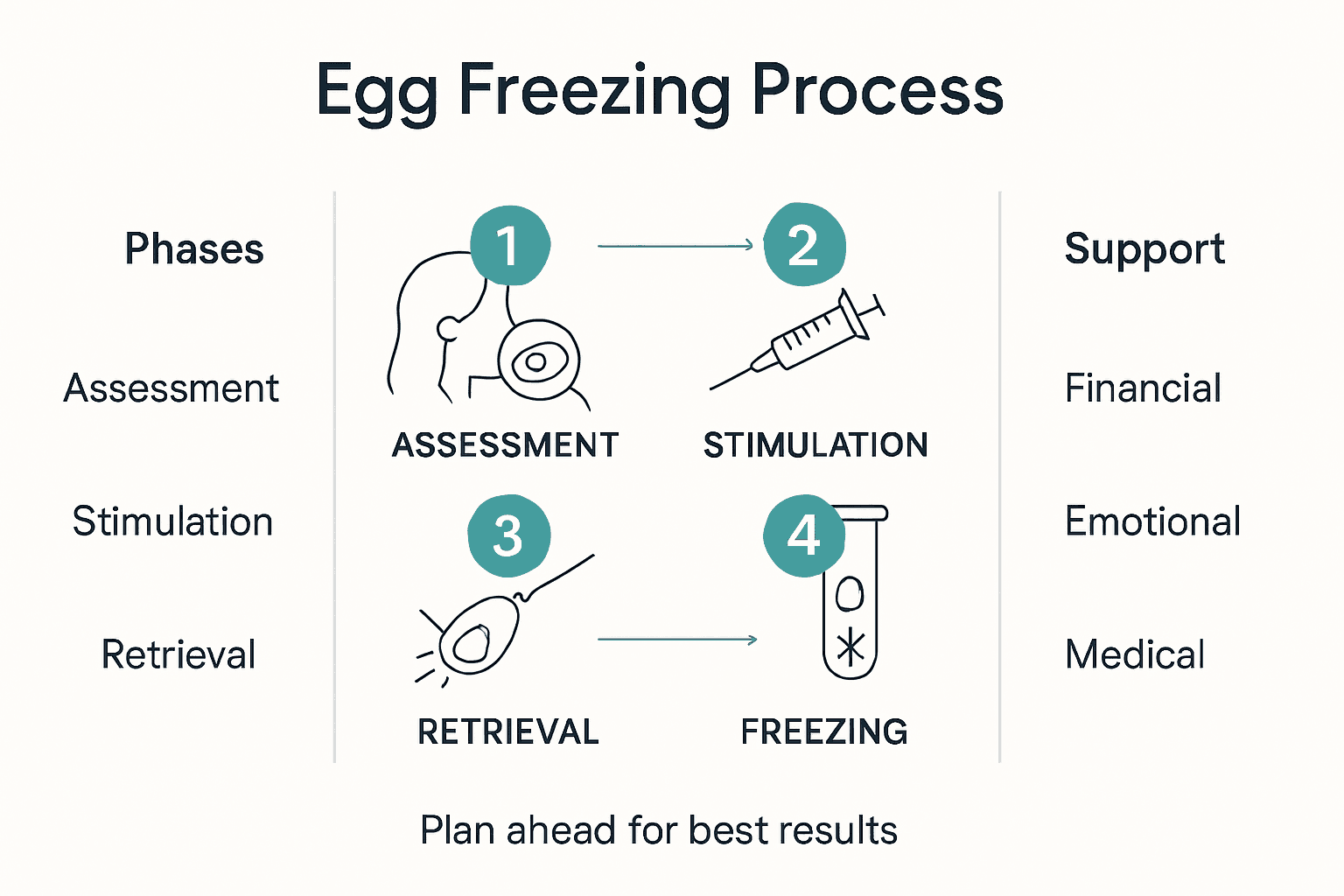
The egg freezing journey begins with a comprehensive fertility assessment at a reproductive health clinic, where medical professionals evaluate your overall reproductive health. Initial consultations typically involve detailed medical history reviews, hormone level testing, and transvaginal ultrasounds to assess ovarian reserve and potential egg quality. This critical first step helps physicians develop a personalized treatment strategy tailored to your specific reproductive profile.
The next phase involves ovarian stimulation, a carefully monitored process where patients receive hormonal injections designed to encourage multiple egg development. Over approximately 10-14 days, patients self-administer injectable medications that stimulate the ovaries to produce multiple mature eggs, significantly increasing the chances of successful egg retrieval. During this period, frequent monitoring through blood tests and ultrasound examinations tracks egg development and hormone levels, ensuring optimal timing for egg retrieval.
Egg retrieval represents a pivotal moment in the preservation process. Performed under mild sedation, this minimally invasive procedure involves using a specialized ultrasound-guided needle to extract mature eggs from the ovaries. The entire retrieval typically takes 20-30 minutes, with patients experiencing minimal discomfort. Immediately following retrieval, embryologists carefully examine and evaluate the collected eggs, selecting the most viable specimens for the vitrification process—an ultra-rapid freezing technique that prevents ice crystal formation and maintains cellular integrity.
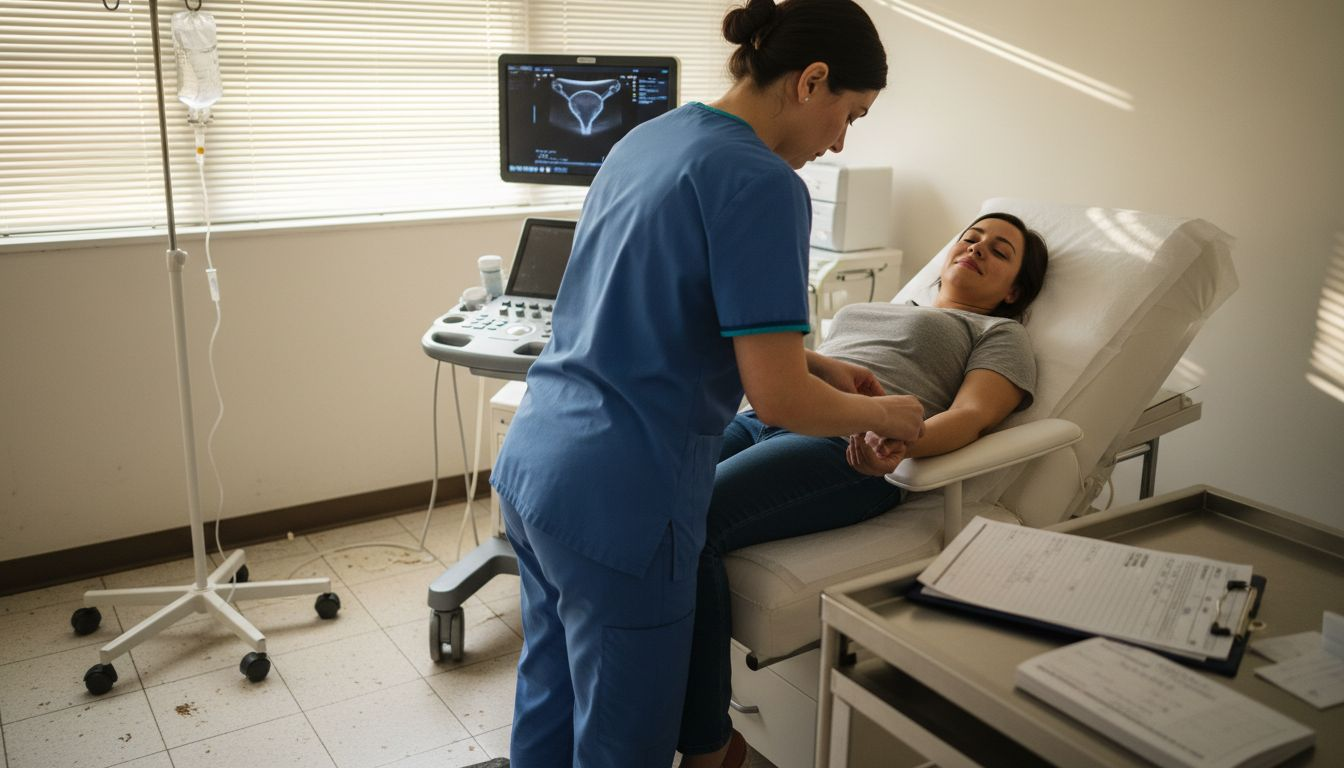
The final stage involves the precise cryopreservation of selected eggs. Using advanced flash-freezing technologies, eggs are rapidly cooled and stored in liquid nitrogen at extremely low temperatures. These frozen eggs can remain viable for years, providing women with unprecedented flexibility in their reproductive planning. When a woman decides to use her frozen eggs, they will be carefully thawed, fertilized through intracytoplasmic sperm injection (ICSI), and potentially transferred as embryos during future fertility treatments.
Pro Tip: Request a comprehensive consultation that includes financial planning and emotional support resources to navigate the egg freezing process holistically.
Risks, Costs, and Success Rates to Consider
Egg freezing involves significant financial and medical considerations that women must carefully evaluate. Medical risks during the procedure range from mild to potentially serious complications, including ovarian hyperstimulation syndrome, which can cause significant discomfort and fluid retention. Potential side effects encompass rare instances of bleeding, infection risks, and anesthesia-related complications that require thorough pre-procedure medical screening.
The financial investment in egg freezing is substantial, typically ranging from $10,000 to $15,000 per retrieval cycle, with additional annual storage fees. Success rates are highly age-dependent, with women under 35 experiencing significantly higher chances of future pregnancy. Not every frozen egg will result in a successful pregnancy, making it crucial to understand that egg freezing represents a probability enhancement rather than a guaranteed fertility solution.
Statistical outcomes demonstrate that younger women who freeze more eggs improve their reproductive prospects. Generally, women who freeze 10-15 eggs before age 35 have approximately a 70-80% chance of having a live birth in future fertility treatments. However, these probabilities decrease with age, highlighting the importance of timing in the egg freezing process. Factors like overall health, genetic background, and individual reproductive characteristics significantly influence potential success rates.
Emotional preparedness is equally critical when considering egg freezing. While the procedure offers reproductive autonomy, it also involves complex medical interventions, potential disappointments, and significant financial commitments. Women should approach egg freezing with realistic expectations, comprehensive medical consultations, and a holistic understanding of their personal reproductive goals and limitations.
Compare notable success factors and costs for egg freezing:
Factor | Younger Women (<35) | Older Women (35+) |
Typical eggs retrieved | 10-15 eggs | Often fewer eggs |
Projected success rate | 70-80% live birth rate | Reduced success rates |
Total cost per cycle | $10K-$15K | $10K-$15K, additional fees |
Emotional considerations | Optimism, future planning | Greater uncertainty |
Pro Tip: Request a comprehensive cost breakdown and success rate analysis specific to your age group and health profile before committing to egg freezing.
Take Control of Your Fertility Journey Today
Facing the challenges of preserving fertility can feel overwhelming, especially when medical or social factors pressure your reproductive timeline. This article highlights the critical importance of egg freezing as a powerful way to safeguard your future family planning. At the heart of those concerns are worries about ovarian decline, the impact of medical treatments, and aligning reproductive goals with life circumstances. Understanding the process of egg freezing and its potential to pause your biological clock empowers you to make informed, proactive choices.
The Rejuvenating Fertility Center in the Bahamas offers cutting-edge solutions that go beyond standard egg freezing. Led by Dr. Zaher Merhi, our team combines advanced IVF, mitochondrial replacement therapy, and stem cell treatments to improve egg quality and boost success rates, especially for women facing poor ovarian reserve or genetic challenges. We tailor every step to your specific needs, ensuring compassionate, scientific care designed to maximize your chances for future pregnancy.
Explore our fertility treatments to discover innovative options that support your reproductive goals and take full advantage of egg freezing benefits.
Empower yourself to plan confidently with personalized fertility preservation strategies. Contact us at Rejuvenating Fertility Center now to schedule your consultation and secure your fertility future with expert care and proven technology.
Frequently Asked Questions
What is the egg freezing process?
The egg freezing process involves a fertility assessment, ovarian stimulation through hormone injections, egg retrieval under sedation, and the vitrification (ultra-rapid freezing) of mature eggs for storage.
Why do women choose to freeze their eggs?
Women choose to freeze their eggs for various reasons including medical circumstances (like cancer treatment), social factors such as relationship dynamics or career pressures, and to preserve reproductive options due to genetic or age-related concerns.
What are the success rates of using frozen eggs?
Success rates depend on various factors, particularly the woman’s age at the time of freezing. Generally, women under 35 who freeze 10-15 eggs have a 70-80% chance of having a live birth using them later.
What are the potential risks and costs associated with egg freezing?
Risks of egg freezing include complications like ovarian hyperstimulation syndrome and anesthesia-related issues. Financially, the cost typically ranges from $10,000 to $15,000 per cycle, along with additional annual storage fees.
Recommended
Comments