
How to Prepare for IVF: A Step-by-Step Guide for Success

Starting a fertility journey after 40 can feel daunting, especially when facing diminished ovarian reserve and looking for hope beyond standard approaches. Every step taken today matters for women in this stage, as age and ovarian reserve play a significant role in your path to motherhood. This guide brings together advanced IVF strategies, expert-backed assessments, and leading-edge solutions, empowering you to make informed choices with confidence and clarity.
Table of Contents
Quick Summary
Key Insight | Explanation |
1. Understand your fertility health | Start with a comprehensive fertility evaluation to assess factors affecting conception. This shapes your IVF treatment plan. |
2. Consult with a fertility specialist | Bring your test results and timeline to create a tailored treatment strategy. Ask detailed questions about your diagnosis and options. |
3. Optimize lifestyle and diet | Focus on nourishing foods, moderate exercise, and stress management to enhance egg quality and body readiness for IVF. |
4. Complete medical tests before IVF | Undergo essential blood work and imaging studies to inform your specialist and customize your treatment protocol. |
5. Plan your IVF treatment timeline | Understand the sequence of your IVF cycle to mentally prepare. Keep track of key dates for tests, medications, and procedures. |
Step 1: Assess Your Fertility Health
Before diving into IVF treatment, you need a clear picture of your current fertility status. This assessment phase identifies what might be affecting your ability to conceive and helps your fertility specialist design the most effective treatment plan for your specific situation. Think of this as gathering crucial information that shapes everything that follows.
Start by scheduling a comprehensive fertility evaluation with your reproductive endocrinologist. Fertility evaluation should be systematic and focus on the least invasive methods first to identify underlying factors. Your doctor will review your complete medical history, including previous pregnancies, miscarriages, surgeries, and any existing health conditions. Age matters significantly in this conversation. If you’re over 35 and trying to conceive, standard protocol recommends evaluation after just 6 months of attempting pregnancy rather than waiting a full year. For women under 35, the benchmark is typically 12 months. This timeline accelerates for women in your situation because ovarian reserve declines more rapidly as you age, and earlier intervention often yields better outcomes.
Your fertility assessment includes several key tests that paint a complete picture of your reproductive health. Hormone level testing (particularly FSH, LH, and estradiol measured on day three of your cycle) reveals how your ovaries are responding to hormonal signals. Transvaginal ultrasound evaluates your ovarian reserve by counting antral follicles and assessing your uterus and fallopian tubes for any structural issues. Evaluating infertility requires assessing medical history, physical examinations, and specific tests such as hormone levels and imaging to detect common factors affecting conception. Your doctor may also recommend hysterosalpingography or sonohysterography to check if your fallopian tubes are open and to visualize the uterine cavity. Don’t overlook the male factor either. Your partner’s semen analysis provides essential information about sperm count, motility, and morphology, which directly influences whether conventional IVF or ICSI (intracytoplasmic sperm injection) will be necessary.
Beyond the physical tests, honest conversations about your lifestyle matter tremendously. Your specialist will ask about smoking, alcohol consumption, exercise habits, stress levels, and diet. These factors genuinely impact egg quality and embryo development. If you haven’t already, discuss whether advanced treatment options like fertility preservation strategies might benefit your long-term family planning goals. This assessment phase might feel like simply gathering data, but it’s actually the foundation upon which your entire treatment success rests.
Pro tip: Bring a detailed timeline of your fertility journey to your first appointment, including dates of any previous pregnancies, surgeries, or significant health events. This speeds up the evaluation process and ensures your doctor has complete context for recommending the most targeted treatment approach.
Step 2: Consult With a Fertility Specialist
Now that you understand your fertility baseline, it’s time to partner with a reproductive endocrinologist who can interpret your results and design a treatment strategy tailored to your specific circumstances. This consultation is where the path to IVF becomes concrete and personalized rather than theoretical.
When you meet with your fertility specialist, bring all your test results, medical records, and that detailed timeline you prepared. Your doctor will review everything together, creating a complete picture of your reproductive health. Consulting a fertility specialist involves comprehensive assessment of both partners to diagnose infertility causes, which often involves multiple contributing factors. This is your chance to ask detailed questions about what your results mean. What does your FSH number actually tell you about your egg quality? Why are your antral follicle counts lower than expected? How might your partner’s semen analysis affect your treatment options? A good specialist takes time to explain the science in language you understand, never making you feel rushed or dismissed. They should discuss your age, your ovarian reserve status, your overall health, and your family planning timeline. All of these factors shape whether you’re a candidate for standard IVF, whether you might benefit from advanced options, or whether other approaches might serve you better.
Your specialist will outline a personalized treatment protocol during this consultation. Initial consultation with a reproductive endocrinologist is foundational in the IVF journey to review medical history, conduct fertility workup, and develop a tailored treatment plan. They’ll explain the stimulation protocol they recommend, how long the process typically takes, what to expect regarding side effects, and realistic success rates based on your specific situation. This is also when you discuss whether innovations like advanced fertility treatment options for ovarian rejuvenation might enhance your chances before proceeding with standard IVF. The conversation should feel collaborative, not dictatorial. Your preferences, concerns, and goals matter. If you feel pressured, rushed, or unheard, that’s a signal to seek a second opinion. You need a specialist you trust completely, especially when navigating something as emotionally and physically demanding as fertility treatment.
Pro tip: Record the consultation notes your specialist provides and write down your specific protocol details, medication names, dosages, and start dates immediately after your appointment, then photograph or scan them for easy reference during the treatment cycle.
Step 3: Optimize Your Lifestyle and Diet
The months leading up to your IVF cycle are your opportunity to create the best possible internal environment for egg development and embryo success. What you eat, how you move, and how you manage stress directly influence egg quality, hormone balance, and your body’s ability to respond well to fertility medications.

Start with nutrition. Your eggs are being formed right now, and the nutritional choices you make today literally become part of your egg cells over the next three to four months. Focus on nutrient density rather than restriction. Prioritize protein at every meal because amino acids support hormone production and egg development. Aim for 80 to 100 grams daily from sources like wild caught fish, grass fed beef, organic chicken, eggs, legumes, and quality Greek yogurt. Include healthy fats from avocados, nuts, seeds, olive oil, and fatty fish high in omega three fatty acids. These fats are essential for hormone synthesis and reducing inflammation that can compromise egg quality. Add colorful vegetables and fruits rich in antioxidants like leafy greens, berries, and cruciferous vegetables to protect your eggs from oxidative stress. Cut back on processed foods, refined sugars, and excessive caffeine. While one cup of coffee daily is generally considered safe during fertility treatment, some research suggests limiting caffeine intake may support better outcomes. Stay hydrated with at least two to three liters of water daily to support hormone circulation and cellular function. Consider working with a nutritionist who specializes in fertility if you’re unsure where to start or have specific dietary restrictions.
Movement matters, but intensity should match your current health status. Moderate exercise like brisk walking, swimming, yoga, or cycling for 30 minutes most days improves circulation, reduces stress, and supports hormonal balance. However, avoid intense high impact exercise or significant calorie restriction right now, as both can stress your body and potentially interfere with your reproductive hormones. Equally important is managing stress through meditation, acupuncture, journaling, or therapy. Chronic stress elevates cortisol, which can suppress reproductive hormones and reduce blood flow to your ovaries. This isn’t about being perfect. It’s about making consistent, sustainable choices that signal to your body that you’re creating an optimal condition for conception. By the time your IVF cycle begins, you’ll have given yourself the physiological advantage that comes from three to four months of genuine self care.
This comparison outlines the impact of common lifestyle factors on IVF outcomes:
Lifestyle Factor | Positive Influence | Negative Influence |
Nutrition | Supports egg quality and hormone production | Poor diet may reduce IVF success |
Exercise | Improves circulation and stress balance | Excessive intensity affects hormones |
Stress Management | Reduces cortisol, supports conception | Chronic stress disrupts hormones |
Hydration | Enhances cellular health and egg quality | Low intake affects hormone function |
Pro tip: Start tracking your current habits now by keeping a simple food and movement journal for two weeks, then identify one nutrition change and one movement habit to add each week rather than overhauling everything at once, which is overwhelming and rarely sustainable.
Step 4: Complete Necessary Medical Tests
Before your IVF cycle officially begins, you’ll need to complete a comprehensive battery of medical tests. These aren’t just formalities. They’re the foundation that allows your fertility specialist to customize your treatment protocol, identify potential complications before they arise, and optimize your chances of success.
Your testing starts with blood work to establish your baseline health status. Before IVF, patients undergo essential medical tests including blood work for infectious diseases and hormone levels like AMH and FSH to assess ovarian reserve. Blood tests screen for infectious diseases including HIV, hepatitis B and C, syphilis, and rubella immunity. You’ll have hormone testing done on day three of your menstrual cycle, measuring follicle stimulating hormone (FSH), luteinizing hormone (LH), and estradiol to evaluate how your pituitary gland communicates with your ovaries. Anti-Müllerian hormone (AMH) testing provides another crucial marker of your ovarian reserve. Don’t be alarmed if your numbers seem low compared to women in their twenties. What matters is understanding your individual baseline so your doctor can adjust medication doses accordingly. Some clinics also recommend genetic carrier screening to identify whether you or your partner carry genes for serious inherited conditions. This information helps determine whether genetic testing of embryos before transfer would be appropriate for your situation.
Imaging studies give your doctor a visual map of your reproductive anatomy. Transvaginal ultrasound evaluates your uterus, ovaries, and fallopian tubes. Your doctor will measure the thickness of your uterine lining and count your antral follicles, which provides yet another measure of ovarian reserve. If your specialist suspects tubal factor infertility, you may need a hysterosalpingogram or sonohysterography to visualize whether your tubes are open and to assess your uterine cavity shape. Medical testing for infertility includes imaging studies such as ultrasound or hysterosalpingogram for uterine and tubal evaluation and semen analysis for male factor infertility. If your partner hasn’t already had semen analysis completed, schedule that now. This test evaluates sperm count, motility, morphology, and volume, all of which determine whether you’ll use conventional IVF or intracytoplasmic sperm injection (ICSI). Compile all your test results in one organized folder, digital or physical, and bring copies to your next appointment. Your specialist will review everything together and explain what each result means for your specific treatment plan.
Here is a summary of key medical tests required before starting IVF:
Test Type | Purpose | Timing |
Hormone Panel | Assess ovarian function and reserve | Day 3 of cycle |
Infectious Screen | Rule out transmissible diseases | Anytime prior |
Imaging (Ultrasound) | Examine ovaries, uterus, and follicle count | Early-cycle recommended |
Semen Analysis | Evaluate sperm count, motility, shape | Within 6 months |
Genetic Screening | Detect inherited conditions | Before treatment |
Pro tip: Schedule all your testing during the first half of your cycle when possible, and avoid scheduling ovulation predictor kits or home testing during this period, as hormone fluctuations can create confusion about your actual cycle day and test timing.
Step 5: Plan Your IVF Treatment Timeline
Understanding the timing and sequence of your IVF cycle helps you prepare mentally and logistically for what’s ahead. Your treatment won’t happen all at once. Instead, it unfolds over several weeks with distinct phases, each requiring your attention and participation. Knowing this timeline allows you to plan work commitments, arrange support, and set realistic expectations about the journey.
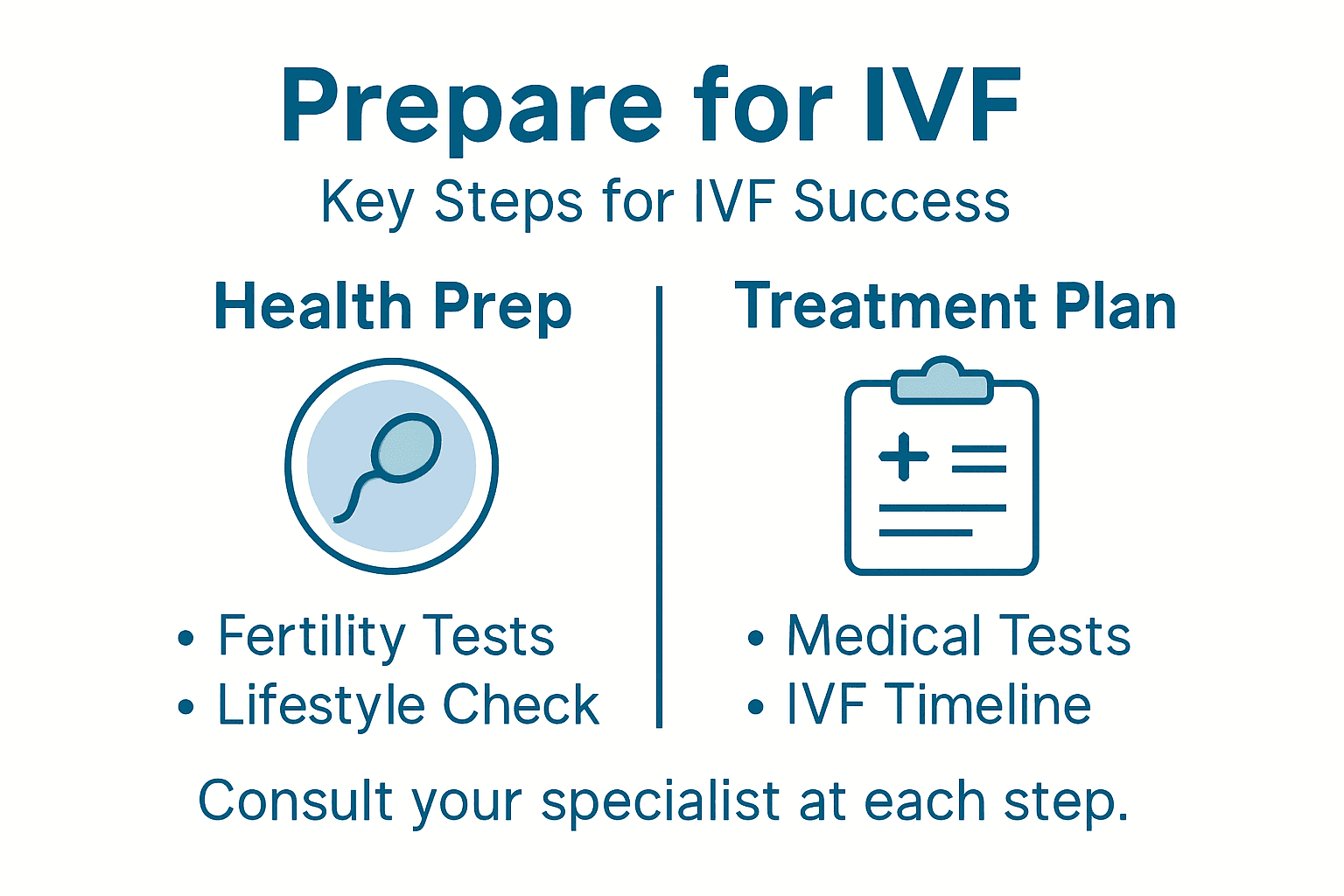
Your IVF timeline begins after your evaluation is complete and your specialist has designed your personalized protocol. An IVF treatment timeline typically begins with consultation and fertility evaluation, followed by genetic screening and formulation of a personalized treatment plan. Most cycles start on day one of your menstrual period when you’ll begin taking birth control pills to suppress your natural cycle. This usually lasts 10 to 14 days. Then comes the stimulation phase, which is the most intensive part. You’ll inject fertility medications (typically gonadotropins like FSH or hCG) daily for 9 to 12 days to encourage multiple eggs to develop simultaneously. During this time, you’ll have frequent ultrasounds and blood tests, sometimes every other day, to monitor how your ovaries are responding. Your doctor adjusts medication doses based on these results, so your exact timeline may shift. Once your follicles reach the appropriate size, you’ll receive a trigger injection of human chorionic gonadotropin (hCG) to complete the final maturation of your eggs. Approximately 34 to 36 hours later, you’ll undergo egg retrieval, a minor surgical procedure done under light sedation.
After retrieval, the timeline accelerates. Planning the IVF timeline involves initial assessments followed by ovarian stimulation, egg retrieval, fertilization in the lab, embryo culture, and transfer, each step carefully scheduled to optimize outcomes and aligned with your menstrual cycle. Your eggs are fertilized that same day using either conventional IVF or ICSI, depending on your sperm analysis results. Embryos develop in the laboratory for five to six days, growing to the blastocyst stage. During this waiting period, you’ll rest and prepare for transfer. You can learn more about 7 essential tips for women seeking advanced care during this phase. Your embryo transfer happens either on day five (blastocyst transfer) or day six, depending on your clinic’s protocol and your embryo development. If you’re not transferring immediately, your viable embryos will be frozen for future use. The entire cycle from start to transfer typically takes four to six weeks, though this varies based on your individual response and whether you’re doing fresh or frozen transfer. Mark these key dates on your calendar now, and communicate the full timeline to your employer, partner, and support network.
Pro tip: Request your complete IVF schedule in writing from your clinic on day one, including all ultrasound and blood test appointments, trigger injection timing, and retrieval and transfer dates, then add these to your calendar with buffer time for potential adjustments based on your response.
Take Control of Your IVF Journey with Advanced Care
Preparing for IVF comes with challenges like understanding your fertility health, optimizing lifestyle choices, and navigating complex medical tests. If you are concerned about ovarian reserve, hormone levels, or finding treatment options that truly fit your unique needs, you are not alone. At the Rejuvenating Fertility Center, we specialize in cutting-edge solutions such as mitochondrial replacement therapy and stem cell therapy to improve egg quality and enhance your chances of success. Our approach blends personalized care with the latest science so you can move forward with confidence and hope.
Explore how our expert team led by Dr. Zaher Merhi can partner with you through every step of your IVF preparation, from the initial fertility evaluation to advanced treatment protocols tailored to your goals. Visit our website today to learn about pioneering options like ovarian rejuvenation treatments and discover why so many women choose us for their fertility journey. Take the first step toward realizing your dreams with care designed just for you.
Frequently Asked Questions
What initial steps should I take to assess my fertility health before IVF?
Before starting IVF, schedule a comprehensive fertility evaluation with a reproductive endocrinologist to assess your fertility health. This will help identify any underlying factors affecting your ability to conceive.
How do I select the right fertility specialist for my IVF journey?
Choose a fertility specialist who takes the time to explain your results and answer your questions. Ensure you feel comfortable and heard during the consultation, as this partnership is crucial for navigating your IVF treatment.
What lifestyle changes should I make before starting my IVF cycle?
Focus on optimizing your nutrition, exercise, and stress management. Aim for a balanced diet, engage in moderate exercise several times a week, and find effective stress-relief methods like meditation or yoga, to create the best conditions for conception.
What medical tests are required before beginning the IVF process?
Complete necessary medical tests, including hormone panels, infectious disease screenings, and imaging studies like transvaginal ultrasounds. This thorough testing ensures your fertility specialist can customize your IVF treatment plan effectively.
How do I create a timeline for my IVF treatment?
Develop a timeline by noting key steps and expected durations, such as the start of medication, egg retrieval, and embryo transfer. This organized plan will guide your preparations and help manage expectations throughout the IVF journey.
What should I include in my detailed timeline when preparing for IVF?
Include important dates such as the start of your menstrual cycle, medication schedules, and appointments for blood tests and ultrasounds in your timeline. Aim to communicate this plan to your support network to ensure you have the assistance you need during this process.
Recommended
Comments