
Role of Science in Reproductive Medicine Innovations
- Feb 3
- 7 min read

Feeling overwhelmed by the ever-expanding options in modern fertility care is common, especially when time feels precious. For women over 40 with diminished ovarian reserve, understanding what truly sets advanced treatments like mitochondrial replacement therapy and stem cell interventions apart can make all the difference. This article breaks down the science behind reproductive medicine so you can feel confident exploring leading-edge care at a world-class Bahamas clinic, where holistic and technological expertise meet.
Table of Contents
Key Takeaways
Point | Details |
Multidisciplinary Approach | Reproductive medicine combines molecular biology, endocrinology, embryology, immunology, and genetics to enhance fertility treatments. |
Technological Innovations | Advanced technologies like AI embryo selection and mitochondrial replacement therapy are expanding the possibilities for effective reproductive solutions. |
Holistic Care | Addressing both the physiological and emotional aspects of fertility is essential for successful interventions, highlighting the importance of personalized medicine. |
Ethical Considerations | Ethical frameworks guide the use of reproductive technologies, ensuring patient autonomy, genetic privacy, and equitable access to care. |
Defining Science in Reproductive Medicine
Reproductive medicine represents a complex, multidisciplinary scientific domain that integrates biological research, clinical practice, and technological innovation to address human fertility challenges. At its core, this field explores the intricate mechanisms of human reproduction, developing advanced strategies to diagnose, treat, and prevent reproductive disorders.
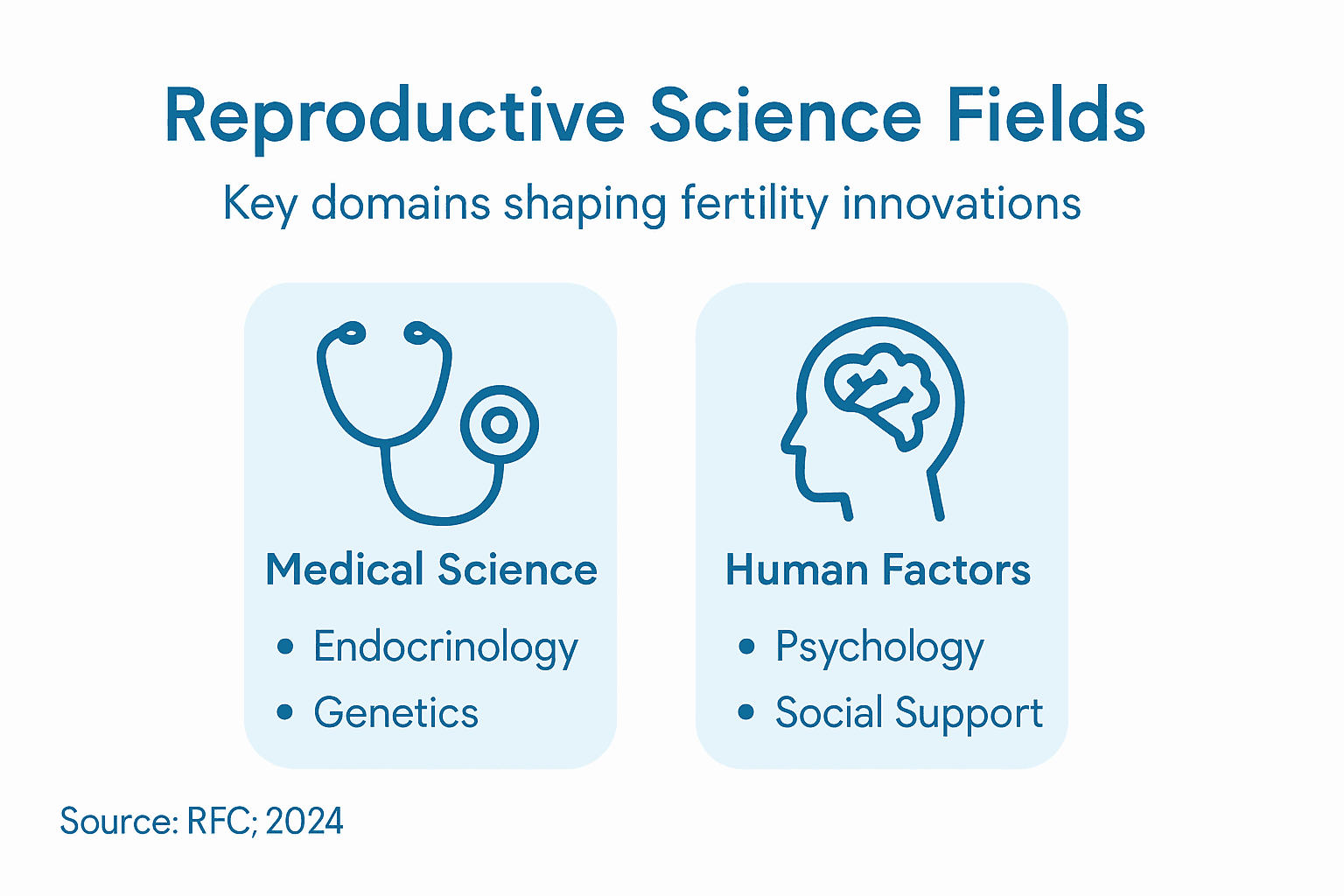
The scientific foundation of reproductive medicine encompasses several critical domains:
Molecular Biology: Investigating genetic factors influencing fertility
Endocrinology: Understanding hormonal interactions and reproductive cycles
Embryology: Studying embryonic development and potential interventions
Immunology: Exploring immune system interactions with reproductive processes
Genetics: Analyzing genetic predispositions and potential hereditary complications
Globally, reproductive medicine research is strategically focused on addressing comprehensive challenges. The WHO Human Reproduction Programme highlights the importance of generating evidence-based interventions that can transform reproductive healthcare worldwide.
Contemporary reproductive science goes beyond traditional medical approaches, integrating psychological, social, and technological perspectives. Researchers now recognize that fertility challenges are not merely biological but involve complex human experiences requiring holistic, personalized solutions.
Technological Innovations have dramatically expanded reproductive medicine’s capabilities. Advanced techniques like mitochondrial replacement therapy, preimplantation genetic testing, and stem cell research are reshaping our understanding of human reproductive potential.
Pro tip: Schedule comprehensive fertility consultations that explore both scientific and personal dimensions of your reproductive health journey.
Advanced Technologies Transforming Fertility Care
Advanced reproductive technologies are rapidly revolutionizing fertility care, offering unprecedented hope for individuals facing complex reproductive challenges. Innovative assisted reproductive technologies are expanding treatment possibilities beyond traditional approaches, creating new pathways for individuals struggling with fertility.
Key technological innovations driving reproductive medicine include:
Artificial Intelligence (AI) Embryo Selection: Utilizing machine learning algorithms to identify most viable embryos
Micro-TESE Procedures: Advanced surgical techniques for sperm retrieval in challenging cases
In Vitro Follicle Activation: Stimulating dormant ovarian follicles to enhance fertility potential
Genetic Screening Technologies: Comprehensive preimplantation genetic testing
Mitochondrial Replacement Therapy: Innovative genetic intervention for preventing inherited disorders
The field is increasingly focused on developing low-cost fertility technologies that can expand access to reproductive healthcare globally. These advancements are particularly crucial in low- and middle-income countries, where traditional fertility treatments remain prohibitively expensive.
Psychosocial support has also become an integral component of these technological innovations. Modern fertility technologies recognize that successful reproductive interventions require a holistic approach, addressing both physiological and emotional aspects of patient care.
Personalized medicine is emerging as a transformative paradigm, with technologies now capable of tailoring treatments to individual genetic profiles, increasing the precision and effectiveness of reproductive interventions.

Here’s a summary of how advanced technologies are transforming different aspects of fertility care:
Technology | Main Benefit | Application Stage |
AI Embryo Selection | Improves embryo selection | During IVF process |
Micro-TESE Procedures | Enables sperm retrieval | Male infertility cases |
In Vitro Follicle Activation | Restores ovarian function | Ovarian insufficiency |
Genetic Screening Technologies | Detects genetic disorders | Pre-implantation testing |
Mitochondrial Replacement | Prevents mitochondrial disease | Early embryo development |
Pro tip: Research clinics offering comprehensive technological assessments that combine advanced medical technologies with personalized patient care.
Mitochondrial Replacement and Stem Cell Therapies
Mitochondrial replacement and stem cell therapies represent groundbreaking approaches in reproductive medicine, offering transformative solutions for individuals facing complex fertility challenges. Mitochondrial replacement techniques are emerging as powerful interventions to address genetic and cellular dysfunction that impede reproductive success.
Key strategies in mitochondrial and stem cell therapies include:
Heterologous Mitochondrial Replacement: Transferring healthy mitochondria from donor eggs
Autologous Mitochondrial Transfer: Using patient’s own mitochondrial components
Mesenchymal Stromal Cell Therapy: Leveraging cell-based regenerative approaches
Tunneling Nanotube Technology: Facilitating direct mitochondrial transportation
Extracellular Vesicle Mechanisms: Enabling cellular communication and mitochondrial exchange
Mesenchymal stromal cell transfer mechanisms are particularly promising, demonstrating potential for addressing reproductive disorders through innovative cellular interventions. These techniques involve complex biological processes that enable precise mitochondrial donation and functional cellular integration.
The scientific community continues to refine these technologies, addressing challenges such as immune response compatibility and ensuring the functional integrity of transferred mitochondria. Researchers are developing sophisticated protocols to maximize the effectiveness and safety of these cutting-edge reproductive interventions.
Precision medicine is driving these advancements, with each intervention tailored to individual genetic profiles and specific reproductive challenges. The goal is not just fertility restoration, but comprehensive genetic and cellular optimization.
Pro tip: Consult reproductive specialists who specialize in advanced mitochondrial and stem cell therapies to understand personalized treatment potential.
Safety, Ethics, and Global Legal Standards
Reproductive medicine stands at a complex intersection of scientific innovation, ethical considerations, and global regulatory challenges. Comprehensive practice guidance from professional organizations like the American Society for Reproductive Medicine (ASRM) provides critical frameworks for navigating these intricate ethical landscapes.
Key ethical considerations in reproductive technologies include:
Patient Autonomy: Ensuring informed consent and personal choice
Genetic Privacy: Protecting individual and familial genetic information
Equitable Access: Preventing discrimination in reproductive treatments
Scientific Transparency: Maintaining rigorous research standards
Cultural Sensitivity: Respecting diverse global perspectives on reproduction
Global ethics frameworks are increasingly focused on harmonizing international standards, recognizing the significant regulatory disparities across different countries. These efforts aim to create consistent guidelines that balance technological innovation with ethical considerations and patient protection.
The regulatory landscape for reproductive technologies remains dynamic and complex. Different nations have widely varying approaches to genetic screening, embryo manipulation, and reproductive interventions, reflecting diverse cultural, religious, and scientific perspectives.
Ethical oversight requires continuous adaptation, balancing the potential of groundbreaking technologies with fundamental principles of human dignity, patient safety, and informed consent.
Pro tip: Consult independent bioethics experts to understand the nuanced ethical implications of advanced reproductive technologies before making personal treatment decisions.
Comparing Modern Treatments and Alternatives
Reproductive medicine offers a diverse landscape of treatment options, each with unique advantages and considerations for individuals facing fertility challenges. Alternatives to traditional in vitro fertilization have emerged as promising approaches, expanding potential pathways to successful conception.
Key treatment alternatives include:
Intrauterine Insemination (IUI): Less invasive, lower-cost option
Tubal Flushing: Potential to improve natural fertility
In Vitro Maturation: Lower-risk embryo development technique
Intravaginal Culture: Innovative, minimally invasive approach
Restorative Reproductive Medicine (RRM): Holistic treatment strategy
Restorative Reproductive Medicine approaches demonstrate promising outcomes, often presenting higher live birth rates and lower multiple pregnancy risks compared to standard IVF treatments.
Compare key reproductive treatment alternatives to help guide decision-making:
Treatment Option | Invasiveness | Key Advantage |
Intrauterine Insemination | Minimally invasive | Lower cost, less time |
Tubal Flushing | Non-invasive | May boost natural fertility |
In Vitro Maturation | Moderately invasive | Reduces hormone exposure |
Intravaginal Culture | Minimally invasive | Fewer medical interventions |
Restorative Medicine | Non-invasive | Focuses on underlying causes |
The selection of an appropriate fertility treatment depends on multiple factors, including age, medical history, genetic considerations, and individual reproductive health profiles. Patients must work closely with reproductive specialists to determine the most suitable approach for their specific circumstances.
Personalized treatment strategies are crucial, recognizing that no single approach works universally for all individuals experiencing fertility challenges.
Pro tip: Request comprehensive diagnostic testing to identify the most appropriate and effective fertility treatment tailored to your unique physiological conditions.
Discover Advanced Solutions in Reproductive Medicine with Rejuvenating Fertility Center
If you are facing fertility challenges linked to poor ovarian reserve or genetic complications the latest advances like Mitochondrial Replacement Therapy and Stem Cell Therapy offer new hope. These cutting-edge treatments directly address the core scientific issues discussed in the article by targeting mitochondrial health and cellular regeneration to improve egg and embryo quality. With personalized care driven by evidence-based science you gain access to breakthrough interventions that transform reproductive potential.
Experience the difference by exploring our specialized services at Rejuvenating Fertility Center. Led by Dr. Zaher Merhi our clinic in the Bahamas pioneers fertility innovation with a focus on comprehensive patient support. Take the next step in your reproductive journey now by scheduling a consultation and learning how scientifically advanced therapies can be tailored to your unique needs. Visit https://rfcbahamas.com to start your path toward renewed fertility today.
Frequently Asked Questions
What are the key scientific domains involved in reproductive medicine?
The key scientific domains in reproductive medicine include molecular biology, endocrinology, embryology, immunology, and genetics. These fields work together to diagnose, treat, and prevent reproductive disorders.
How is technology transforming fertility care?
Technology is transforming fertility care through innovations such as AI embryo selection, micro-TESE procedures, in vitro follicle activation, and genetic screening technologies. These advancements improve patient outcomes and expand treatment options beyond traditional methods.
What are the ethical considerations in reproductive medicine?
Ethical considerations in reproductive medicine include patient autonomy, genetic privacy, equitable access to treatments, scientific transparency, and cultural sensitivity. These factors ensure that patient rights and ethical standards are upheld in reproductive technologies.
What are some alternatives to traditional in vitro fertilization (IVF)?
Alternatives to traditional IVF include intrauterine insemination (IUI), tubal flushing, in vitro maturation, intravaginal culture, and restorative reproductive medicine (RRM). These options may provide different benefits and lower risks depending on individual circumstances.
Recommended
Comments