
Why Choose IVF After 40: Science and Solutions

Facing diminished ovarian reserve after 40 can make fertility feel unpredictable, yet modern IVF innovations are rewriting possibilities. With tailored protocols and cutting-edge therapies, women can access personalized options not only locally but in places like the Bahamas. This article uncovers essential facts and debunks persistent myths about IVF for advanced maternal age, sharing how advanced medical technologies and holistic strategies now offer realistic hope for renewed reproductive success.
Table of Contents
Key Takeaways
Point | Details |
IVF is a viable option after 40 | Despite age-related challenges, IVF can offer pathways to pregnancy with proper management. |
Egg quality is crucial | Advanced techniques can improve egg quality, making personalized strategies essential. |
Personalized testing enhances success | Comprehensive diagnostic tools facilitate targeted interventions, improving IVF outcomes. |
Consider financial and medical risks | Plan for the financial implications and potential health risks when pursuing IVF treatments. |
IVF After 40 Defined and Debunked
Infertility treatments have transformed dramatically in recent years, especially for women navigating conception after 40. IVF (In Vitro Fertilization) represents a sophisticated medical intervention that offers hope where traditional conception methods might falter. Despite persistent myths, modern reproductive medicine provides nuanced strategies for women seeking pregnancy later in life.
Contrary to widespread misconceptions, IVF remains a viable option for women over 40, though success rates require careful management and realistic expectations. Fertility experts challenge common assumptions about age-related fertility challenges. The key lies in understanding the biological realities and leveraging advanced medical technologies.
Critical considerations for IVF after 40 include:
Declining egg quality and quantity
Increased genetic mutation risks
Higher potential for chromosomal abnormalities
Need for personalized treatment protocols
Potential requirement for donor eggs
Statistically, while natural conception becomes more challenging with age, IVF can provide meaningful pathways to parenthood. Egg quality emerges as the most significant factor, with medical interventions like mitochondrial replacement and advanced screening techniques offering promising solutions.
Successful IVF strategies often involve:
Comprehensive genetic screening
Personalized hormonal treatments
Advanced embryo selection techniques
Potential use of donor eggs
Holistic health optimization
Pro tip: Consult a reproductive specialist who specializes in advanced maternal age fertility to develop a customized, data-driven treatment strategy tailored to your unique physiological profile.
Types of IVF and Advanced Therapies
Reproductive medicine has evolved dramatically, offering women over 40 multiple sophisticated IVF (In Vitro Fertilization) approaches tailored to individual physiological needs. Advanced fertility protocols now provide nuanced strategies that significantly improve pregnancy potential for older patients.
Modern IVF techniques encompass several specialized approaches designed to address age-related fertility challenges:
Standard IVF: Traditional method involving egg retrieval and fertilization in laboratory
Intracytoplasmic Sperm Injection (ICSI): Precise sperm injection directly into egg
Preimplantation Genetic Testing (PGT): Advanced screening for chromosomal abnormalities
Mitochondrial Replacement Therapy: Innovative technique addressing cellular aging
Donor Egg IVF: Using younger, healthier donor eggs to improve conception chances
Each IVF method presents unique advantages, with selection depending on individual medical history, egg quality, and specific fertility challenges. Genetic screening has become increasingly crucial, allowing physicians to identify the most viable embryos and minimize potential genetic risks associated with advanced maternal age.
Advanced reproductive technologies now offer increasingly personalized treatment protocols. Emerging techniques like stem cell therapy and mitochondrial replacement provide groundbreaking opportunities for women previously considered beyond reproductive potential. These innovations represent a paradigm shift in understanding and treating age-related fertility limitations.
Here’s how key IVF techniques for women over 40 compare:
IVF Method | Main Advantage | Primary Application |
Standard IVF | Proven, widely available approach | Age-related fertility decline |
ICSI | Addresses severe male infertility | Low sperm count or motility issues |
PGT (Genetic Testing) | Screens for chromosomal problems | Reduces miscarriage risk |
Mitochondrial Replacement | Improves cellular energy in eggs | Compensates for egg mitochondrial aging |
Donor Egg IVF | Bypasses poor egg quality | Very low ovarian reserve |
Pro tip: Consult a reproductive specialist experienced in advanced maternal age fertility to develop a comprehensive, personalized treatment strategy that combines multiple therapeutic approaches.
Age-Related Fertility Challenges and Egg Quality
As women approach and pass 40, reproductive biology undergoes significant transformations that directly impact fertility potential. Egg quality declines dramatically during this period, presenting complex challenges for conception that extend far beyond simple age-related statistics.
Key biological changes affecting fertility after 40 include:
Decreased mitochondrial efficiency
Increased chromosomal abnormalities
Reduced ovarian reserve
Higher oxidative stress in egg cells
Compromised cellular repair mechanisms
Egg quality emerges as the most critical factor determining pregnancy success for women in their early 40s. Biological aging creates multiple intricate challenges that traditional fertility approaches struggle to address. Specifically, mitochondrial function becomes progressively impaired, leading to reduced cellular energy production and increased genetic mutation risks.
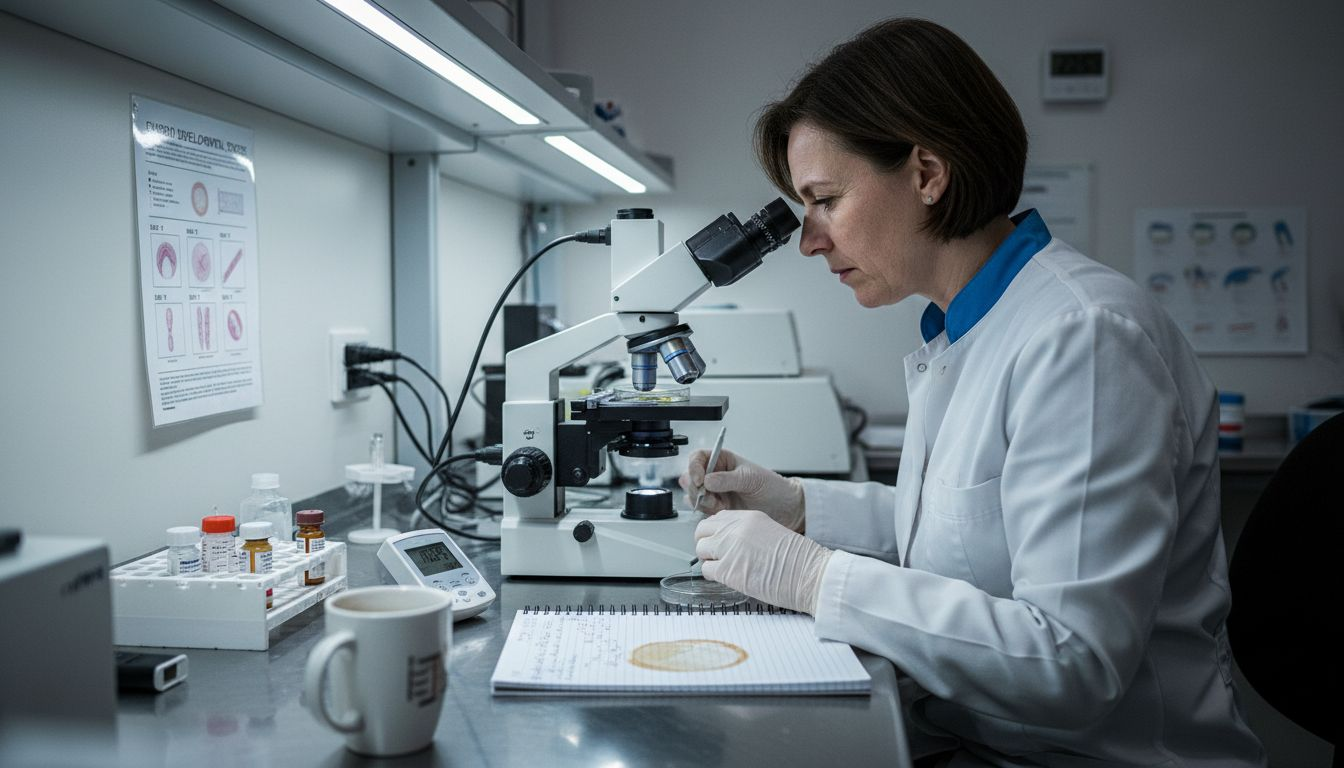
The reproductive landscape for women over 40 demands sophisticated, personalized interventions. Advanced genetic screening, mitochondrial replacement therapies, and targeted hormonal treatments represent emerging strategies designed to counteract age-related fertility limitations. These innovative approaches focus on optimizing egg quality through cellular-level interventions, offering renewed hope for women previously considered beyond reproductive potential.
Pro tip: Proactively assess your comprehensive reproductive health through advanced genetic and mitochondrial screenings, enabling targeted therapeutic strategies tailored to your specific biological profile.
Personalized Solutions: Tests and Innovations
Reproductive medicine has revolutionized fertility treatments for women over 40, introducing sophisticated personalized diagnostic approaches that dramatically improve conception possibilities. Precision testing now enables physicians to design targeted interventions addressing individual reproductive challenges.
Critical diagnostic tools and personalized tests include:
Anti-Müllerian Hormone (AMH) screening
Comprehensive genetic chromosomal testing
Advanced ovarian reserve assessments
Detailed hormonal profile evaluations
Preimplantation genetic testing (PGT)
Mitochondrial function analysis
Genetic screening represents a groundbreaking innovation in personalized fertility care. By identifying potential chromosomal abnormalities and assessing cellular health, physicians can develop highly customized treatment protocols that significantly enhance pregnancy potential for women navigating fertility after 40. These advanced diagnostic techniques allow for unprecedented precision in understanding individual reproductive capabilities.
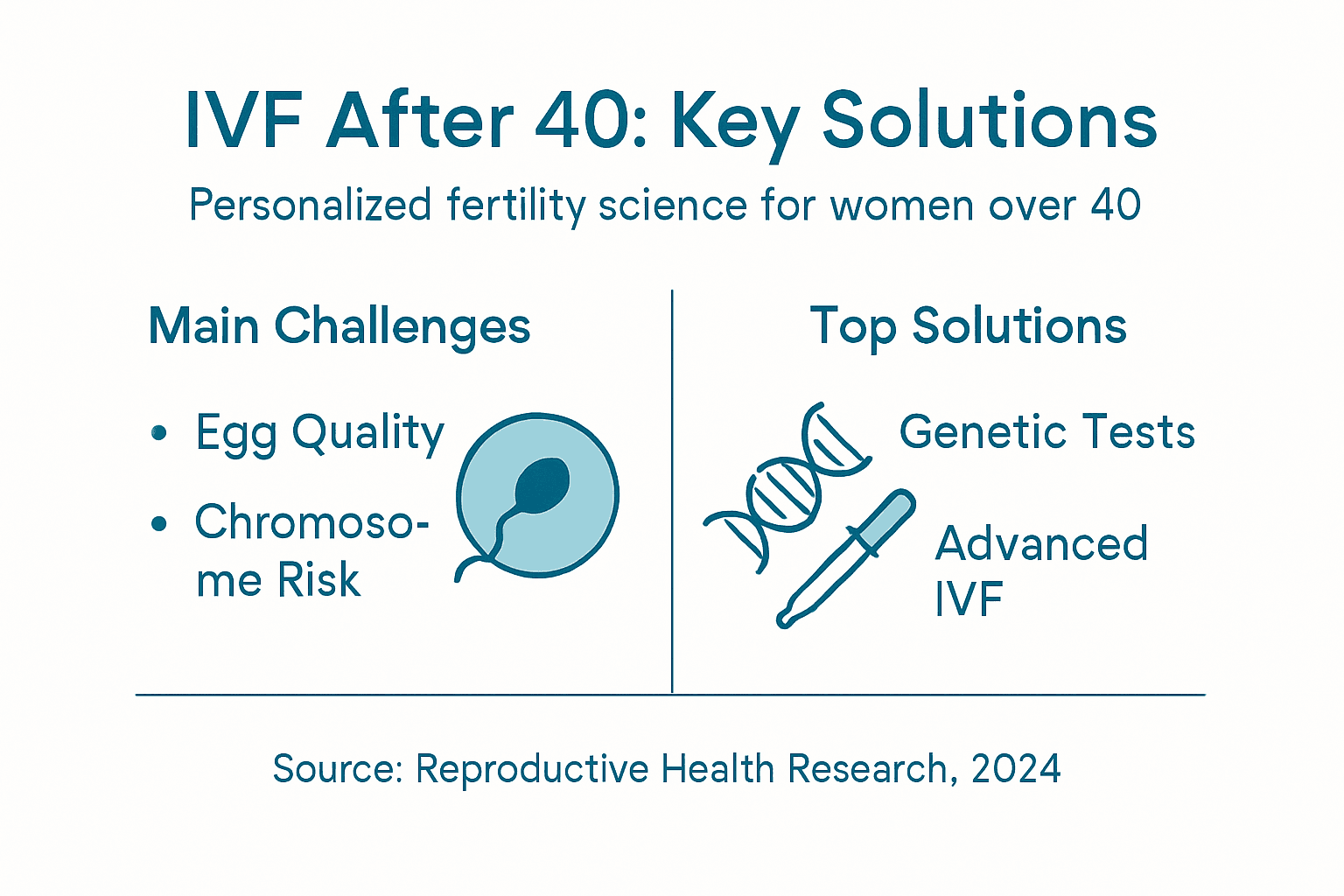
Here is a summary of advanced diagnostic tools and their roles:
Diagnostic Tool | Measures or Detects | Impact on IVF Outcomes |
AMH Screening | Ovarian reserve levels | Predicts response to stimulation |
Genetic Chromosomal Test | Embryo genetic health | Reduces transfer of abnormal embryos |
Hormonal Profile | Hormone balance | Optimizes medication protocol |
Mitochondrial Analysis | Cellular energy in eggs | Identifies viable eggs for success |
Emerging technologies like mitochondrial replacement therapy and stem cell interventions are transforming the reproductive landscape. These cutting-edge approaches focus on cellular-level optimization, addressing age-related fertility limitations through innovative, targeted strategies that go beyond traditional fertility treatments. The result is a more nuanced, scientifically sophisticated approach to conception for women in their early 40s.
Pro tip: Request a comprehensive reproductive health assessment that includes advanced genetic and mitochondrial screenings to develop a personalized fertility strategy tailored to your unique biological profile.
Risks, Costs, and Alternative Paths
Navigating fertility treatments after 40 requires careful consideration of complex medical and financial landscapes. Perinatal risks for advanced maternal age present significant challenges that demand comprehensive understanding and strategic planning.
Key risks associated with IVF after 40 include:
Increased hypertensive disorder risks
Higher potential for gestational diabetes
Greater likelihood of cesarean delivery
Elevated chromosomal abnormality probabilities
More complex postpartum recovery scenarios
Enhanced medical monitoring requirements
Financial considerations represent another critical dimension of fertility treatments. IVF cycles can range from $12,000 to $25,000 per attempt, with success rates declining proportionally with maternal age. Alternative fertility paths emerge as viable options, including egg donation, embryo freezing, and advanced genetic screening techniques that can mitigate some age-related reproductive challenges.
Comprehensive risk mitigation strategies involve thorough medical evaluations, genetic counseling, and exploring multiple reproductive technologies. Emerging approaches like mitochondrial replacement and stem cell interventions offer promising alternatives for women seeking to expand their reproductive options beyond traditional IVF protocols. These innovative techniques provide nuanced strategies for addressing age-related fertility limitations.
Pro tip: Develop a comprehensive financial and medical strategy by consulting multiple reproductive specialists and creating a multi-cycle, multi-approach fertility plan that accounts for potential medical risks and financial constraints.
Discover Advanced IVF Solutions for Women Over 40
Facing the challenges of IVF after 40 requires hope and cutting-edge solutions tailored to your unique biology. If you struggle with declining egg quality, genetic risks, or complex ovarian reserve issues, you are not alone. At the Rejuvenating Fertility Center in The Bahamas, we specialize in advanced reproductive treatments like Mitochondrial Replacement Therapy and Stem Cell Therapy to rejuvenate your ovarian function and improve embryo quality.
Unlock personalized fertility care guided by Dr. Zaher Merhi, a leader in transformative fertility innovations. Explore how our sophisticated methods address age-related fertility hurdles with data-driven strategies designed just for you. Take your first step toward parenthood today by visiting Rejuvenating Fertility Center. Learn more about our advanced IVF treatments, and start your journey with a consultation tailored specifically for women over 40 who refuse to settle for traditional limits.
Frequently Asked Questions
What are the main challenges of IVF after 40?
Women over 40 face several challenges with IVF, including declining egg quality and quantity, increased risks of chromosomal abnormalities, and the potential need for donor eggs. These factors can impact the chances of successful conception and require tailored treatment approaches.
How can egg quality be improved for IVF after 40?
Improving egg quality may involve advanced medical interventions such as personalized hormonal treatments, mitochondrial replacement therapy, and comprehensive genetic screening to identify the healthiest embryos for transfer.
What IVF methods are most suitable for women over 40?
Suitable IVF methods for women over 40 include standard IVF, Intracytoplasmic Sperm Injection (ICSI), Preimplantation Genetic Testing (PGT), mitochondrial replacement therapy, and donor egg IVF, each with unique advantages depending on individual health challenges.
What financial considerations should be taken into account for IVF after 40?
IVF costs can range from $12,000 to $25,000 per attempt, and financial planning should consider potential multiple cycles. Understanding associated medical risks and exploring alternative paths like egg donation or embryo freezing are crucial for developing a comprehensive strategy.
Recommended
keonhacai 5 mình thấy nhiều người nhắc nên tò mò bấm vào xem thử giao diện thế nào thôi. Mình không có ngồi soi từng mục hay nội dung cụ thể, chủ yếu lướt qua cách họ sắp xếp trang cho dễ nhìn hay không. Cảm giác đầu tiên là bố cục khá thoáng, các phần nội dung được chia thành từng khối rõ ràng nên kéo xuống không bị ngợp. Mình thích kiểu trình bày dạng danh sách ô thông tin gọn gàng, nhìn cái là biết đang ở mục nào, đỡ phải bấm qua lại nhiều. Thanh menu cũng đặt chỗ dễ thấy nên chuyển trang khá nhanh, không phải tìm kiếm lòng vòng. Nói chung lướt vài…