
Advanced Fertility Treatment Guide for Ovarian Rejuvenation

Choosing the right fertility treatment can be overwhelming, especially when your ovarian reserve is low and past IVF cycles haven’t produced results. For women over 40, exploring options like mitochondrial replacement therapy and stem cell therapy may open new possibilities for building your family. As guidelines and clinic policies shape who qualifies for these innovative treatments, partners like Bahamian specialists offer unique expertise that aligns with your goals, medical needs, and hope for success.
Table of Contents
Quick Summary
Insight | Explanation |
1. Gather Complete Medical History | Compile all pertinent medical records, testing results, and prior treatments to evaluate fertility status effectively. |
2. Consult a Reproductive Specialist | Schedule a consultation to discuss treatment options, ask questions, and receive personalized advice based on your specific fertility challenges. |
3. Understand Therapy Options | Familiarize yourself with various advanced therapies like MRT and stem cell therapy, focusing on how they align with your fertility needs and situations. |
4. Prepare Physically and Emotionally | Make lifestyle improvements and seek emotional support to build resilience, as readiness impacts treatment outcomes and personal wellbeing. |
5. Monitor and Optimize Treatment Cycles | Track detailed metrics from each treatment cycle to inform future decisions and tailor protocols based on individual responses for better results. |
Step 1: Assess Eligibility for Advanced Fertility Treatments
Determining whether you’re a candidate for advanced fertility treatments like mitochondrial replacement therapy (MRT) or stem cell therapy requires understanding your medical profile, ovarian reserve status, and specific reproductive goals. This step involves gathering key medical information, understanding what these treatments can realistically achieve for your situation, and having honest conversations with fertility specialists about your options. Think of this as creating a complete picture of your reproductive health before moving forward with any advanced intervention.
Start by collecting your complete medical history, paying special attention to information that directly impacts fertility. Gather records from previous fertility evaluations, hormone test results (particularly follicle-stimulating hormone, or FSH levels), ultrasound reports showing ovarian reserves, and any genetic testing you’ve had done. If you’ve undergone previous IVF cycles, locate those records and outcome data. Document any relevant medical conditions, surgeries, or medications you’re currently taking, as these all influence treatment suitability. Next, get clear about your ovarian reserve status. Poor ovarian reserve is often the primary indicator for advanced treatments, but understanding exactly how diminished your reserve is matters significantly. Your FSH levels, anti-Müllerian hormone (AMH) measurements, and antral follicle counts paint a specific picture of your ovarian health. These metrics help fertility specialists determine whether traditional IVF might still work for you or if advanced approaches like MRT become necessary. When you consult with a fertility center, specialists will evaluate whether your eggs show signs of mitochondrial dysfunction, which is critical for MRT candidacy, or whether stem cell therapy to rejuvenate ovarian tissue might benefit your situation more directly.
Understand the role of clear eligibility guidelines in determining access to these cutting-edge treatments. Eligibility extends beyond age and ovarian reserve; fertility clinics assess psychological readiness, realistic expectations, and commitment to the treatment process. Women over 40 with diminished ovarian reserve who haven’t succeeded with conventional IVF often qualify, but each clinic applies slightly different criteria. Be prepared to discuss your emotional readiness for these treatments, your family building timeline, and whether you have realistic expectations about success rates. Some advanced treatments require multiple cycles or preparatory phases before embryo transfer, so your ability to commit to this journey matters. Additionally, your general health status gets evaluated. Uncontrolled diabetes, severe hypertension, or other significant health conditions might impact your candidacy or require management before proceeding. Fertility specialists also consider whether any genetic factors influenced your poor ovarian reserve, as this information guides treatment selection.
The consultation process itself reveals your eligibility. When meeting with specialists, bring all your medical documentation and ask specific questions about how your particular situation matches their treatment protocols. Request honest feedback about whether advanced treatments align with your specific condition or whether other approaches might serve you better. Many women find that talking directly with fertility clinics offering advanced options for women over 40 provides clarity that written materials alone cannot deliver. Ask about success rates for patients with your exact profile, not just general statistics. Inquire about the center’s experience with the specific treatments you’re considering. Request information about what eligibility criteria mean in practical terms for your treatment plan. Don’t hesitate to ask about realistic timelines, required lifestyle changes, and potential complications. The specialists will explain how your age, ovarian reserve metrics, prior treatment history, and health status collectively determine which advanced treatments make sense for you.
Pro tip: Request a comprehensive fertility assessment that includes both traditional metrics and advanced imaging or testing specific to mitochondrial function if you’re considering MRT, allowing you to make an informed decision based on complete clinical data rather than guesswork.
Step 2: Consult with a Specialist in Reproductive Medicine
Scheduling a consultation with a reproductive medicine specialist transforms your fertility journey from confusion and uncertainty into a personalized roadmap forward. This specialist becomes your partner in understanding your specific situation, evaluating which advanced treatments align with your medical profile, and addressing all your concerns with expert knowledge. A quality consultation goes beyond routine bloodwork and ultrasounds, providing comprehensive assessment and honest discussion about realistic outcomes tailored to your circumstances.
Finding the right specialist requires some research and thoughtfulness about what matters most to you. Start by identifying reproductive endocrinologists in your area or centers known for advanced treatments like mitochondrial replacement therapy and stem cell therapy. If you’re considering treatment outside your home country, research clinics with extensive experience in your target procedure and international patient protocols. Look for specialists whose credentials include board certification in reproductive endocrinology and infertility, as this ensures they meet rigorous professional standards. You can access professional directories through ASRM to locate qualified reproductive endocrinologists in your region, helping you identify specialists with proven expertise. When evaluating potential specialists, review their experience with your specific situation. If you have poor ovarian reserve, ask how many patients with similar metrics they’ve treated and what outcomes they achieved. If you’re interested in MRT or stem cell therapy, confirm that the clinic actively offers these treatments and has published success data. Don’t shy away from calling multiple clinics to compare approaches, answer your preliminary questions, and gauge how they communicate. Pay attention to whether staff members listen carefully, explain concepts clearly, and respect your time. The right specialist makes you feel heard and supported, not rushed or dismissed.
During your actual consultation, come prepared with all your medical records and a list of specific questions. Bring your previous ultrasound reports, hormone test results, prior IVF cycle summaries, and any genetic testing information you have. Ask the specialist to explain what your specific test results mean for your fertility potential and which treatment approaches make medical sense for you. Inquire about how they determine treatment recommendations, what success rates they achieve in patients with your profile, and what the realistic timeline looks like for your situation. Discuss what you should expect during each phase of treatment, including potential side effects, time commitments, and costs. Ask about their approach to personalized care and whether they adjust protocols based on how your body responds. Request information about their support systems for emotional wellbeing, as fertility treatment involves significant psychological components. A comprehensive consultation involves diagnostic assessment, treatment option discussion, and realistic expectations setting all in one meeting. The specialist should explain why certain treatments do or don’t fit your situation rather than simply proposing their most expensive option. They should acknowledge the emotional weight of fertility struggles and validate your concerns while maintaining professional boundaries.
After your consultation, take time to reflect before committing to treatment. You should feel confident in the specialist’s expertise, comfortable with their communication style, and aligned with their treatment philosophy. If something doesn’t feel right, trust that instinct and seek another opinion. Advanced fertility treatments work best when you have genuine confidence in your medical team and understand exactly what they’re recommending and why. Remember that a good reproductive medicine specialist welcomes your questions, respects your autonomy, and partners with you in decision making rather than dictating a treatment path.
Pro tip: Bring a written list of three to five priority questions to your consultation and take notes on responses, ensuring you capture important details and can later compare recommendations from multiple specialists if you’re seeking second opinions.
Step 3: Select the Right Innovative Therapy Option
Choosing between mitochondrial replacement therapy, stem cell therapy, platelet-rich plasma injections, and other emerging treatments requires understanding how each approach works, what evidence supports it, and which aligns best with your specific fertility challenge. This decision shapes your treatment timeline, costs, and realistic expectations, making it one of the most important choices in your fertility journey. The right therapy option for you depends on your ovarian reserve status, egg quality indicators, age, prior treatment history, and personal preferences about treatment intensity.
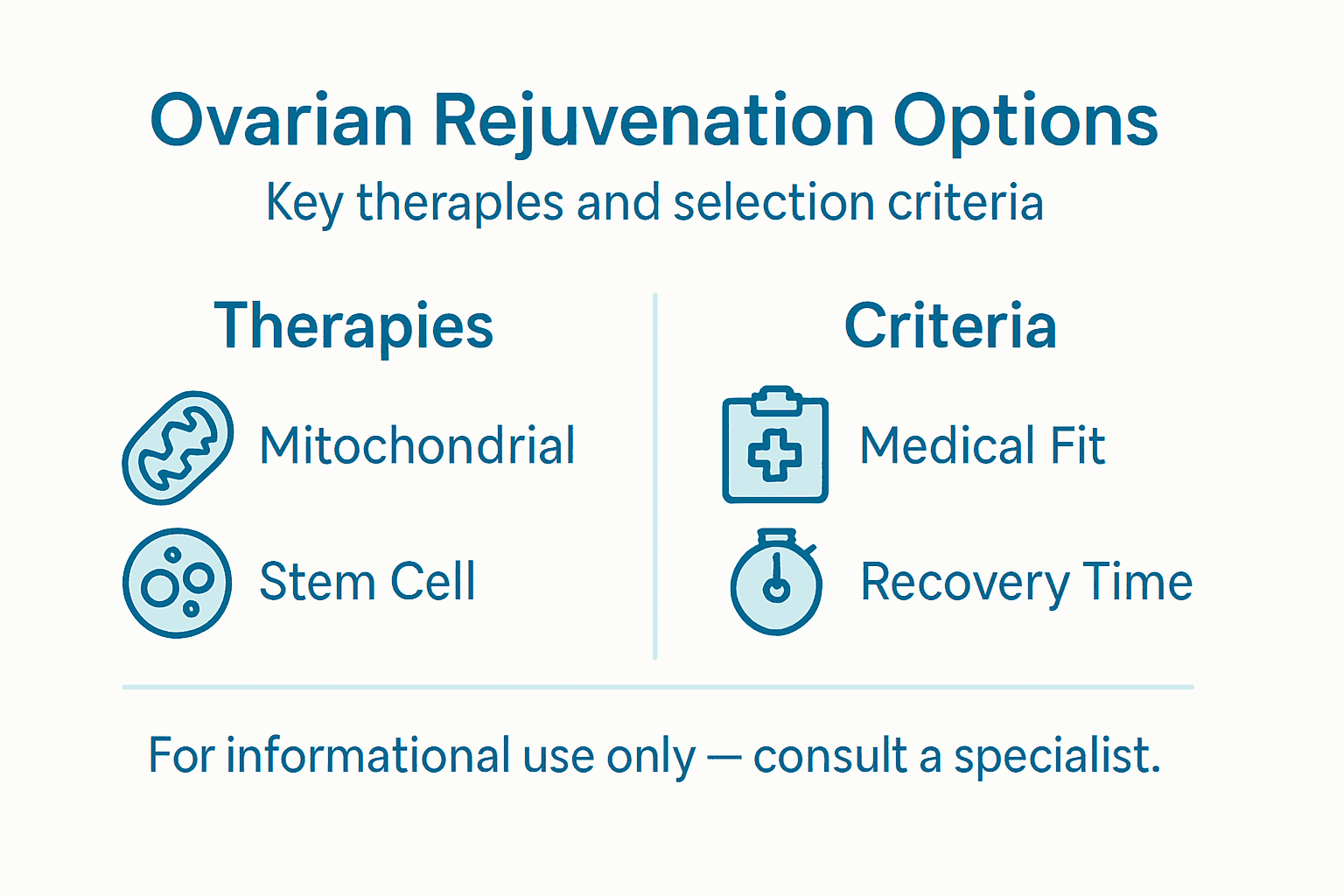
Start by understanding the major innovative therapy categories and what they actually accomplish. Mitochondrial replacement therapy addresses the root cause when mitochondrial dysfunction contributes to poor egg quality by replacing dysfunctional mitochondria with healthy ones from a donor egg, offering hope when traditional IVF has repeatedly failed. Stem cell therapy works differently by stimulating your own ovarian tissue to regenerate and produce healthier eggs, making it appealing for women seeking to work with their body’s own biology rather than donor material. Platelet-rich plasma therapy involves concentrating healing platelets from your own blood and injecting them into ovarian tissue to enhance blood flow and stimulate rejuvenation. Research shows PRP therapy significantly improves hormonal levels and reproductive outcomes in patients with diminished ovarian reserve, positioning it as an accessible first option for many women. Each therapy has different success rates, recovery times, and realistic outcome expectations. Ask your specialist which therapies they actively offer and have extensive experience with. Request their specific success rates with patients matching your age and ovarian reserve profile. Don’t accept generic statistics. Instead, request data specific to your situation so you can make informed comparisons.
Evaluate each therapy option against your personal circumstances and values. Consider the evidence base behind each treatment, understanding that some have more published research than others and some show stronger results in specific patient populations. Think about whether you prefer a single concentrated treatment or multiple smaller interventions spread over time. Factor in the physical recovery required, as some therapies involve minimal downtime while others require more substantial recovery periods. Consider cost differences, as innovative therapies vary significantly in price and insurance coverage varies by location and treatment type. Research indicates that various ovarian rejuvenation strategies including stem cells, mitochondrial enhancement, and PRP injections show promise, yet effectiveness varies based on individual factors and clinic experience. Ask your specialist whether combining therapies might benefit you more than a single approach. Some women benefit from PRP as a preparatory treatment followed by stem cell therapy or MRT. Others find that a single well-chosen therapy aligns better with their timeline and budget. Request a detailed explanation of why your specialist recommends specific therapy options for you rather than others. A thoughtful specialist explains the reasoning, acknowledges the evidence supporting or limiting each option, and respects your input on treatment preferences.
Here’s a concise comparison of innovative fertility therapy options:
Therapy Type | Main Mechanism | Typical Candidates | Average Recovery Time |
Mitochondrial Replacement | Replaces faulty mitochondria in eggs | Poor egg quality, failed IVF | 2-3 days |
Stem Cell Therapy | Stimulates ovarian regeneration | Diminished ovarian reserve | 1-2 days |
Platelet-Rich Plasma (PRP) | Enhances ovarian blood flow | Early ovarian aging, low AMH | Few hours |
This table helps assess which therapy may best match individual fertility profiles.
Make your final decision after considering all relevant factors, but don’t let perfect information paralyze you. You likely have enough information to move forward when you understand the mechanism of each option, the evidence supporting it, the realistic success rates for your profile, and what the specialist recommends and why. Trust your instincts about which therapy feels right for your situation, and remember that fertility treatment often involves some calculated risk taking. The therapy that feels aligned with your values and circumstances becomes your best option.
Pro tip: Request comparative success data from your specialist showing outcomes for patients within five years of your age and with similar AMH levels across the different therapy options they offer, allowing you to base your decision on concrete numbers rather than general statistics.
Step 4: Prepare Physically and Emotionally for Treatment
Advanced fertility treatments demand preparation that goes far beyond scheduling an appointment. Your body and mind both require deliberate attention and strengthening before beginning treatment, as the physical demands of hormone injections, monitoring visits, and procedures combine with the emotional weight of hope, uncertainty, and potential disappointment. Preparing yourself comprehensively increases your resilience, improves your capacity to handle treatment-related stress, and positions you to navigate whatever comes with greater strength.

Physical preparation starts with foundational lifestyle optimization. Your diet matters significantly during fertility treatment, so shift toward nutrient-dense foods that support egg quality and overall health. Focus on adequate protein intake, healthy fats, antioxidant-rich vegetables and fruits, and whole grains. Reduce processed foods, excessive sugar, and caffeine consumption, as these can interfere with hormone balance and egg development. Begin a gentle movement practice suited to your fitness level, whether that means walking, yoga, swimming, or cycling. Exercise improves circulation, reduces stress hormones, and enhances overall wellbeing, but avoid intense training that could stress your system during stimulation phases. Prioritize sleep quality by establishing consistent sleep schedules, creating a dark and cool sleeping environment, and limiting screen time before bed. Poor sleep directly impacts hormone regulation and reproductive function, making this non-negotiable. If you’re using alcohol, smoking, or recreational substances, now is the time to eliminate these completely, as they compromise egg quality and treatment outcomes. Work with your fertility specialist to review all supplements and medications, as some can interfere with treatment while others may enhance it. Address any underlying health conditions like thyroid dysfunction or autoimmune issues before starting treatment, as controlled conditions improve outcomes significantly.
Emotional preparation requires equal attention and intentionality. Acknowledge that fertility treatment carries real emotional weight. You’re facing uncertainty, experiencing intense hope, managing potential grief if cycles don’t succeed, and navigating complex feelings about your body and identity. These emotions are completely valid and deserve space and support. Consider working with a therapist or counselor experienced in fertility issues before treatment begins. Evidence-based approaches like cognitive behavioral therapy and mindfulness-based interventions effectively help patients manage the distress and psychological challenges inherent in fertility treatment. A therapist provides tools for managing anxiety, processing emotions as they arise, and maintaining perspective throughout your journey. If professional therapy isn’t accessible, consider fertility support groups where you can connect with women experiencing similar challenges. Build your support network intentionally. Identify trusted friends or family members who understand your journey and can offer emotional support without judgment. Communicate clearly with your partner, if you have one, about what you need from them during treatment and when you need space. Discuss realistic expectations together, as disagreements about treatment intensity or emotional responses can strain relationships when unaddressed. Practice stress-reduction techniques that work for you, whether meditation, journaling, time in nature, or creative expression. These practices aren’t luxuries but essential maintenance for your mental health during an intensive treatment cycle.
Prepare logistically as well. Arrange time off work for procedure days and recovery periods. Coordinate transportation if you need someone to drive you after sedation. Prepare your living space to support recovery, stocking easy foods, comfortable clothing, and entertainment for downtime. Create a treatment timeline and share it with people who support you so they can anticipate when you’ll need particular help. Financial preparation prevents additional stress during treatment, so understand your costs in advance and arrange payment or insurance coverage before starting. When you arrive at your treatment cycle having optimized your physical health, developed emotional coping strategies, and handled logistics, you approach treatment from a place of strength rather than scrambling. This foundation matters tremendously for your wellbeing throughout the journey.
Pro tip: Begin physical and emotional preparation at least two to three months before your treatment cycle starts, allowing enough time for lifestyle changes to take root, new habits to settle, and meaningful progress in therapy or support groups before the intensity of treatment begins.
Step 5: Monitor Results and Optimize Future Cycles
Each treatment cycle generates valuable data about how your body responds to stimulation, which eggs develop, which embryos form, and ultimately whether pregnancy occurs. Rather than viewing each cycle in isolation, sophisticated fertility care treats every cycle as a learning opportunity, extracting insights from your individual response patterns to progressively refine your treatment approach. This data-driven optimization significantly improves your chances with subsequent cycles by personalizing protocols to your specific physiology.
Begin monitoring results immediately after your cycle concludes. Collect comprehensive data about your response to hormone stimulation, including how many follicles developed, how many eggs were retrieved, fertilization rates, embryo development patterns, and embryo quality grades if applicable. Request detailed reports from your clinic documenting each of these metrics rather than just the final outcome. If your cycle resulted in pregnancy, document your hormone levels, ultrasound findings, and any pregnancy progression data. If it didn’t result in pregnancy, this information becomes even more critical for understanding what to adjust. Work with your fertility specialist to analyze these results in context. Were there retrieval challenges suggesting protocol adjustments? Did fertilization rates indicate potential sperm or egg quality issues? Did embryos develop slowly, suggesting timing modifications? Did many eggs fail to fertilize despite adequate numbers, pointing toward potential mitochondrial dysfunction relevant to MRT consideration? Advanced centers now use machine learning models to predict IVF success by analyzing comprehensive patient data from previous cycles, providing personalized recommendations to optimize treatment plans. Ask your specialist whether they employ data analysis tools to review your cycle results and generate specific recommendations for future cycles.
Documentation becomes your strategic advantage for optimization. Create a personal fertility record documenting every cycle detail including stimulation protocols used, medication doses, monitoring results, retrieval outcomes, fertilization data, and embryo development. Note your physical responses like bloating severity, energy levels, or any concerning symptoms. Include emotional responses and stress factors, as these often correlate with physical outcomes. Over time, patterns emerge that inform better decisions. Perhaps you respond better to certain medication combinations, retrieve more eggs when using specific protocols, or produce higher quality embryos under particular stimulation approaches. Track everything meticulously so you and your specialist can identify these patterns. Between cycles, have detailed conversations with your fertility team about what worked and what didn’t. Ask specifically what protocol changes they recommend based on your response. Discuss whether your current therapy option remains optimal or whether switching therapies might improve outcomes. Ask whether combining approaches, like using PRP therapy to prepare your ovaries before stem cell therapy, might benefit you. Request that they explain the reasoning behind each recommendation so you understand the logic, not just the prescription. Artificial intelligence applications in ovarian stimulation now help clinicians adjust medication dosing and timing based on monitored parameters, enhancing accuracy in treatment protocols and increasing success rates through data-driven adjustments.
Use this summary to track essential cycle outcomes for future optimization:
Data Point | Why It Matters | How to Use |
Follicle Count | Indicates ovarian response | Guides stimulation protocol tweaks |
Egg Quality | Impacts embryo success | Supports therapy selection |
Embryo Grade | Predicts implantation chance | Informs transfer decisions |
Emotional State | Affects treatment persistence | Shapes support strategies |
A holistic view of results improves long-term treatment plans.
Implement recommended changes thoughtfully but deliberately. If your specialist suggests increasing stimulation dose because you retrieved fewer eggs than desired, understand that higher doses carry risks including ovarian hyperstimulation syndrome. If they recommend switching from antagonist to agonist protocol, recognize that protocol changes affect your entire cycle timeline. Make changes one variable at a time when possible so you can isolate what impacts your outcomes. After implementing changes, monitor your response carefully during the next cycle. Did the modification produce the desired result? Did it introduce unexpected challenges? This continuous refinement process, cycle after cycle, progressively personalizes your treatment to match your specific physiology. Many women find that their third or fourth cycle, after significant protocol optimization, produces dramatically better results than their first attempts. You’re not starting fresh with each cycle but building on accumulated knowledge about your individual response patterns. This perspective shift from viewing cycles as isolated events to understanding them as part of an evolving optimization journey provides hope even when early cycles don’t succeed.
Pro tip: Maintain a detailed spreadsheet documenting every cycle metric alongside your physical and emotional observations, allowing you to visually identify patterns in your responses and bring data-backed insights to conversations with your specialist about optimization strategies.
Unlock New Hope with Advanced Ovarian Rejuvenation Treatments at Rejuvenating Fertility Center
If you are facing the challenges of diminished ovarian reserve or poor egg quality, navigating complex advanced fertility options like mitochondrial replacement therapy or stem cell therapy can feel overwhelming. The pain of unsuccessful cycles and the uncertainty of treatment outcomes call for expert guidance and cutting-edge solutions tailored specifically to your unique reproductive profile. At the Rejuvenating Fertility Center in the Bahamas, we specialize in pioneering these innovative therapies to help you restore ovarian function and improve fertility potential with personalized care led by Dr. Zaher Merhi.
Take control of your fertility journey by consulting with a center that offers proven advanced treatments supported by science and extensive patient success stories. Explore how our expertise in mitochondrial replacement therapy, stem cell therapy, and supportive ovarian rejuvenation techniques can align with the goals and realities outlined in your fertility assessment. Don’t let age or ovarian challenges define your future. Visit us at Rejuvenating Fertility Center to learn more about your options and schedule a personalized consultation today. Your path to renewed fertility starts here with trusted experts ready to help you move forward confidently.
Frequently Asked Questions
What is mitochondrial replacement therapy, and how does it relate to ovarian rejuvenation?
Mitochondrial replacement therapy (MRT) replaces faulty mitochondria in eggs with healthy ones from a donor. This treatment targets poor egg quality caused by mitochondrial dysfunction, offering hope for women who have failed traditional IVF. Discuss MRT with your fertility specialist to see if it aligns with your health needs.
How can I assess my ovarian reserve before considering advanced fertility treatments?
To assess your ovarian reserve, gather key medical information such as hormone test results (especially follicle-stimulating hormone levels), ultrasound reports, and anti-Müllerian hormone measurements. Schedule a consultation with a fertility specialist who can evaluate these factors and determine the best course of action for your situation.
What types of innovative therapy options are available for ovarian rejuvenation?
Innovative therapies for ovarian rejuvenation include mitochondrial replacement therapy, stem cell therapy, and platelet-rich plasma (PRP) injections. Each treatment offers different mechanisms and success rates, so consult with your specialist to learn which option may work best for your fertility challenges.
How should I prepare emotionally and physically for advanced fertility treatment?
Prepare emotionally by acknowledging your feelings and considering support from a therapist or support group. Physically, focus on a nutrient-dense diet, regular exercise, and adequate sleep for at least two to three months before treatment. These steps will help position you for a stronger response during your treatment cycle.
What should I track during my treatment cycles to optimize future fertility treatments?
Track key metrics such as follicle count, egg quality, and embryo grades from each treatment cycle. Documenting these details helps identify patterns in your body’s responses, allowing for informed discussions with your fertility specialist about optimizing your future treatment plans.
How can I ensure I choose the right reproductive medicine specialist for my fertility journey?
Choose a reproductive medicine specialist by researching their qualifications, experience, and success rates with patients who have similar profiles to yours. Prepare a list of specific questions regarding your situation to assess their approach during your consultation, ensuring you feel comfortable and supported moving forward.
Recommended
Comments