
Fertility Treatment Planning Guide for Advanced Options

The journey to motherhood can feel especially complex when you are over 40 and searching for effective answers to diminished ovarian reserve. For many women, traditional solutions no longer fit and hope rests in advanced reproductive options designed to meet these unique needs. This guide shares how working with specialized experts and embracing innovative treatments like mitochondrial replacement therapy and stem cell therapy from a trusted Bahamas clinic can offer new possibilities tailored to your fertility goals.
Table of Contents
Quick Summary
Key Insight | Explanation |
1. Choose the Right Fertility Expert | Selecting a specialist with relevant experience and a personalized approach can greatly enhance your fertility journey. |
2. Explore Innovative Treatments | Familiarize yourself with advanced options like mitochondrial replacement therapy and stem cell therapy tailored to your needs. |
3. Create a Personalized Plan | Document a detailed treatment plan with specific timelines and benchmarks to maintain focus and accountability. |
4. Evaluate Treatment Results Thoroughly | Assess progress based on key metrics and understand what they mean for future strategies or adjustments. |
5. Prioritize Emotional and Psychological Support | Acknowledge the emotional aspect of fertility treatment and seek support to reinforce your resilience and decision-making. |
content
Step 2: Consult with a specialized fertility expert
Finding the right fertility specialist transforms your treatment journey from guesswork into a strategic plan tailored to your specific situation. A qualified expert brings both medical precision and emotional intelligence to address your unique challenges.
Start by identifying specialists who focus on advanced reproductive options relevant to your age and circumstances. Women over 40 with diminished ovarian reserve benefit significantly from experts experienced in innovative treatments like mitochondrial replacement therapy and stem cell therapy. Look for credentials in reproductive endocrinology and subspecialty training in your area of concern.
Schedule a comprehensive consultation where you can discuss your complete medical history, previous fertility treatments, and specific goals. The specialist should ask detailed questions about your ovarian reserve status, egg quality concerns, and whether genetic considerations matter to your family planning. This clinical and psychosocial assessment helps create a personalized roadmap.
Prepare specific questions before your appointment:
What advanced treatment options align with my age and ovarian reserve status?
What success rates can realistically be expected for my situation?
How does this clinic approach egg quality improvement through advanced therapies?
What is your experience with patients in similar circumstances?
How will treatment progress be monitored and adjusted?
Bring relevant medical records, previous fertility test results, and any genetic screening information. A thorough specialist reviews these details to avoid redundant testing and build on previous insights.
The right fertility expert doesn’t just offer treatments—they educate you on realistic outcomes and partner with you through each decision.
Ask about the clinic’s approach to multidisciplinary care. Top fertility centers combine reproductive medicine with counseling support, nutritional guidance, and emotional resources. Specialized fertility counselors and support systems strengthen your treatment experience and decision-making confidence.
During the consultation, assess whether you feel heard and respected. Your fertility expert should validate the emotional weight of your journey while maintaining realistic optimism about advanced options available to you.
Pro tip: Record key recommendations and success rate statistics during your consultation, then take time to review them before committing to treatment—this prevents decision-making under the pressure of the appointment itself.
Step 3: Explore innovative treatment options
Understanding what’s available beyond traditional IVF opens doors to solutions specifically designed for your situation. Advanced fertility treatments address the unique challenges women over 40 face, particularly diminished ovarian reserve and egg quality concerns.
Start by researching cutting-edge assisted reproductive technologies relevant to your diagnosis. The landscape of fertility medicine has expanded significantly, with newer assisted reproductive technologies and innovations now available that weren’t options even five years ago. These include mitochondrial replacement therapy, stem cell therapy for ovarian rejuvenation, platelet-rich plasma treatments, and advanced genetic screening techniques.
Mitochondrial replacement therapy works by replacing damaged mitochondria in your eggs with healthier ones from a donor, potentially improving egg quality and energy production. Stem cell therapy stimulates ovarian rejuvenation by promoting angiogenesis and blood flow to aging ovarian tissue, which can help restore ovarian function.
Here’s a comparison of advanced fertility treatments and what they address:
Treatment Type | Primary Focus | How It Works | Typical Considerations |
Mitochondrial Replacement Therapy | Egg quality | Replaces damaged mitochondria in eggs | Success tied to donor health |
Stem Cell Therapy | Ovarian function and reserve | Stimulates ovarian tissue rejuvenation | Experimental; clinic experience varies |
Platelet-Rich Plasma Injection | Ovarian response | Promotes tissue healing and blood flow | Limited long-term outcome data |
Genetic Screening with IVF | Embryo selection | Identifies healthiest embryos for transfer | May increase costs and timelines |
Evaluate treatments based on three key factors:
Your specific diagnosis and ovarian reserve status
Success rates for women in your age group with your circumstances
Whether the treatment addresses your underlying concern (egg quality, quantity, or both)
Research clinic experience with each option you’re considering. Ask how many patients with diminished ovarian reserve they’ve treated, what their success rates are, and whether they combine advanced therapies with traditional IVF protocols. Centers with robust data on outcomes provide more realistic expectations.
The best treatment isn’t necessarily the newest one—it’s the one matched to your specific reproductive challenge and supported by measurable results in your demographic.
Consider combination approaches that stack therapies for enhanced outcomes. Many clinics now pair advanced treatment protocols with genetic screening to identify the healthiest embryos, maximizing your chances of a successful pregnancy.
Request detailed information about how each treatment improves your particular situation. A legitimate clinic explains the biological mechanism, provides success data for your age group, and discusses realistic timelines and costs transparently.
Don’t overlook supportive therapies alongside medical treatments. Nutritional optimization, stress management, and reproductive wellness protocols work synergistically with advanced treatments to support better outcomes.

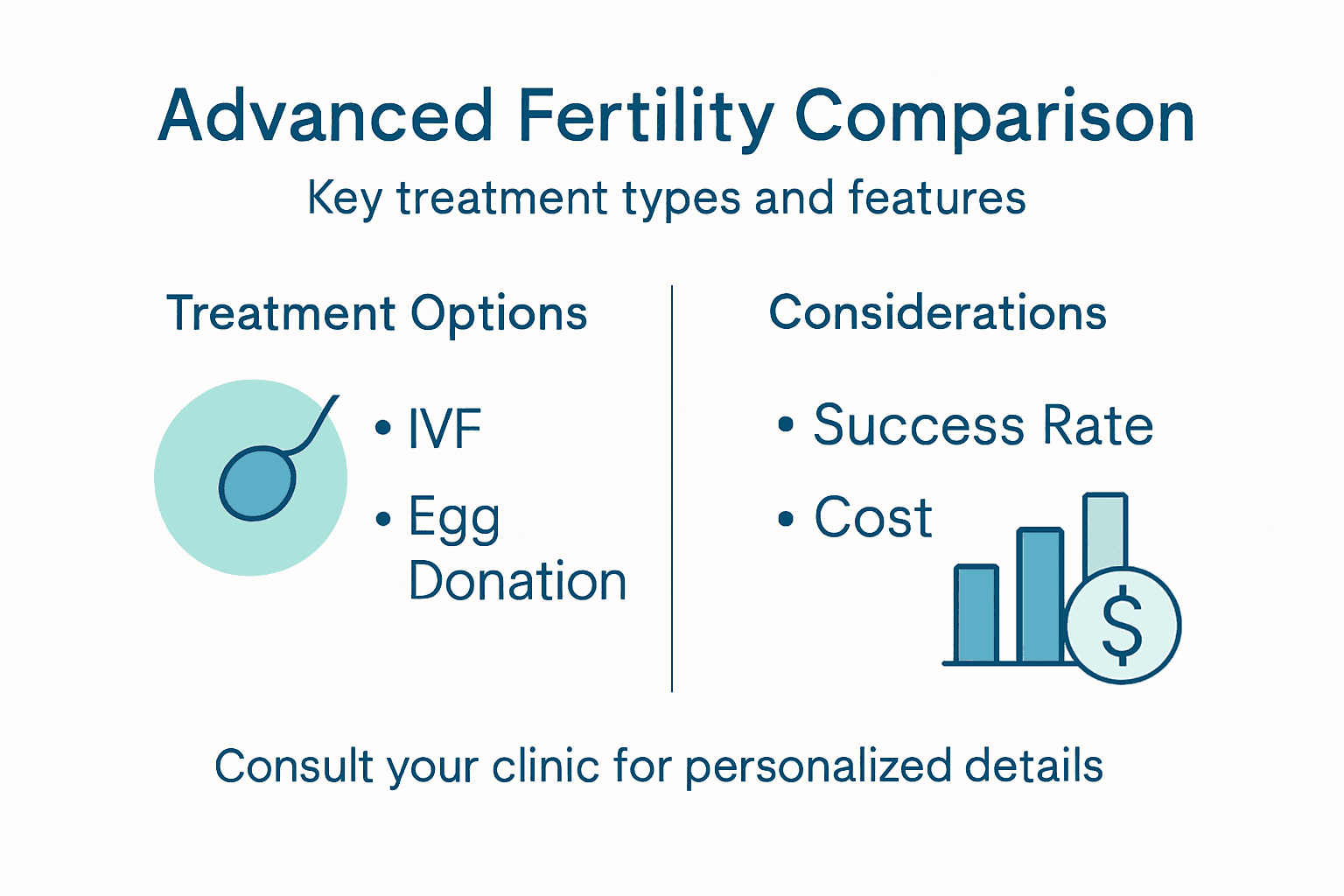
Pro tip: Create a comparison chart for each treatment option listing success rates, costs, timeline to results, and how it addresses your specific concern—this clarity helps you make confident decisions and communicate priorities to your fertility team.
Step 4: Create and follow your personalized plan
A written personalized plan transforms abstract goals into concrete actions with specific timelines and measurable milestones. This document becomes your roadmap, keeping you focused and accountable throughout your fertility journey.
Work with your fertility specialist to document your customized treatment protocol. Your plan should specify which advanced therapies you’re pursuing, the sequence of treatments, expected timelines for each phase, and realistic success metrics for your age and ovarian reserve status. A strong plan addresses both medical protocols and lifestyle factors that support treatment success.
Your personalized fertility plan should include:
Specific treatment sequence and timeline (e.g., mitochondrial replacement therapy followed by IVF in month three)
Monitoring schedule and key decision points
Cost breakdown and payment timeline
Clear success indicators and contingency options if outcomes don’t meet expectations
Psychosocial support and wellness components integrated with medical treatment
Document baseline measurements before treatment begins. These include ovarian reserve markers, egg quality assessments, and any genetic screening results. Baseline data helps your team track progress objectively and adjust the plan if needed.
Schedule regular check-in appointments to assess progress and modify strategies based on how your body responds. Advanced fertility treatment isn’t static—it requires ongoing evaluation and willingness to adapt as you learn what works for your unique physiology.
Your plan is a living document, not a rigid prescription. The best fertility outcomes come from adaptability combined with medical expertise.
Establish clear communication protocols with your clinic. Know how to reach your specialist between appointments, what results warrant immediate communication, and when you should expect updates on lab work or imaging findings. Patient-centered fertility planning aligned with your individual preferences ensures you remain an active partner in your care.
Integrate supportive care alongside medical treatment. Coordinate with nutritionists experienced in fertility, mental health professionals who understand reproductive stress, and wellness practitioners focused on optimizing ovarian health. This multidisciplinary approach strengthens outcomes.
Track your own progress separately from clinic records. Document how you’re feeling physically and emotionally, any side effects from medications or procedures, and personal observations about your health. This self-awareness helps you communicate effectively with your team.
Pro tip: Set a monthly review date with yourself to assess what’s working, what needs adjustment, and whether you’re staying aligned with your emotional and financial boundaries—this self-check prevents drift and keeps your plan genuinely serving your needs.
Step 5: Evaluate results and plan next steps
Treating results objectively and understanding what they mean for your next move separates hope from strategy. This step requires honest assessment of outcomes and clear decision-making about whether to continue, adjust, or pivot your approach.
Request a comprehensive results review meeting with your fertility specialist within one to two weeks after treatment completion. Come prepared with written questions about what the numbers mean specifically for your situation. Ask your doctor to explain findings in plain language, not just medical terminology.
Key metrics to evaluate depend on your treatment type:
Below is a summary of key metrics to track after fertility treatments for optimal follow-up:
Treatment Completed | Main Metrics to Track | Indicates Progress In |
Ovarian Rejuvenation | Antral follicle count, hormones | Ovarian reserve improvement |
IVF Cycle | Fertilization rate, embryo grades | Egg quality and development |
Embryo Transfer | Implantation success, screening | Pregnancy potential |
All Treatments | Side effects, emotional impact | Overall patient well-being |
If you completed ovarian rejuvenation therapy, review changes in ovarian reserve markers, antral follicle counts, and hormone levels
If you proceeded to IVF, assess fertilization rates, embryo quality grades, and blastocyst development
If embryos were transferred, understand implantation outcomes and whether genetic screening influenced results
Evaluate overall treatment tolerance and side effects you experienced
Understand realistic outcome expectations for your demographic. Assisted reproductive technology success rates vary significantly by age and treatment type, and women over 40 should be comparing results to appropriate peer groups, not overall population averages.
Ask your specialist about success rate context specific to your situation. Did your cycle perform better, worse, or as expected compared to similar cases at the clinic? This perspective prevents both false discouragement and unrealistic optimism.
Success isn’t always a positive pregnancy test. Sometimes it’s learning exactly what your body needs for the next attempt or deciding to pursue a different path entirely.
Discuss contingency plans before emotional exhaustion sets in. If results weren’t as hoped, explore whether modified treatment strategies or alternative approaches deserve consideration based on what you learned. Options might include repeating the same cycle, adjusting medication protocols, trying a different advanced therapy, or reevaluating your overall goals.
Document your emotional response alongside medical data. How did this cycle affect your well-being? Are you prepared to continue treatment, or do you need a break to regroup? Your emotional capacity matters as much as your medical timeline.
Make next-step decisions collaboratively with your specialist and support system. Avoid making major decisions immediately after receiving results when emotions run high. Give yourself 48 to 72 hours to process before committing to the next phase.
Pro tip: Request written summaries of all test results and your specialist’s interpretation so you can review them independently later, share with trusted advisors, or seek a second opinion without relying on memory during an emotionally intense time.
Take Control of Your Fertility Journey with Advanced Solutions
Facing challenges like diminished ovarian reserve or concerns about egg quality can feel overwhelming. You deserve more than traditional fertility options—you need a personalized plan tailored to your unique needs that embraces cutting-edge treatments such as mitochondrial replacement therapy and stem cell ovarian rejuvenation. The right expertise transforms uncertainty into clear, hopeful steps forward.
At the Rejuvenating Fertility Center in the Bahamas, Dr. Zaher Merhi and his experienced team specialize in advanced reproductive medicine focused on improving outcomes for women with complex fertility challenges. From innovative therapies to comprehensive care, explore how you can benefit from our proven scientific approach. Start your consultation today to receive a detailed fertility treatment plan designed specifically for you. Visit Learn More about Our Treatments and take the first step toward renewed hope and success.
Frequently Asked Questions
What should I consider when choosing a fertility specialist for advanced treatment options?
Finding a qualified fertility specialist is crucial to your treatment journey. Look for experts who focus on advanced reproductive techniques relevant to your age and specific conditions, such as diminished ovarian reserve. Schedule a comprehensive consultation to discuss your medical history and treatment goals, ensuring you feel comfortable with their approach and experience.
How can I prepare for my consultation with a fertility expert?
To make the most of your consultation, prepare a list of specific questions regarding your treatment options, success rates, and any concerns about egg quality. Additionally, gather relevant medical records and previous fertility test results to provide the specialist with complete information. Taking these steps will help you get a detailed assessment tailored to your needs.
What innovative treatments should I explore beyond traditional IVF?
Many advanced treatments can enhance your chances of conception, such as mitochondrial replacement therapy and stem cell therapy for ovarian rejuvenation. Research these options to understand how they address your specific challenges, especially if you are over 40 and experiencing diminished ovarian reserve. Discuss these possibilities with your specialist during your consultation.
How can I create an effective personalized fertility plan?
Start by collaborating with your fertility specialist to outline a documented treatment protocol that includes timelines, expected outcomes, and lifestyle considerations. Make sure your plan details the sequence of treatments, cost breakdown, and success indicators. Regularly review and adjust your plan based on how your body responds to therapies.
What should I do if my fertility treatment does not yield expected results?
If your treatment outcomes are disappointing, request a comprehensive review meeting with your fertility specialist to discuss next steps. Together, evaluate key metrics to identify what might have gone wrong, and explore modified treatment strategies or alternative options that could better suit your needs. Allow yourself time to process the information before making any major decisions about your next approach.
How can I integrate supportive therapies alongside my medical treatment?
Combine nutritional guidance, stress management techniques, and emotional support resources as part of your overall fertility plan. These supportive therapies can enhance your treatment outcomes and improve your well-being during the process. Consult with experts in these areas and integrate their recommendations into your personalized fertility plan.
Recommended
Comments