
Personalized Fertility Care: Transforming Outcomes for Women 35+

Choosing the right fertility treatment can feel overwhelming when traditional options have not provided the answers you need. Many women notice that fertility care often overlooks individual differences in genetics and health, making advanced solutions like MRT and stem cell therapy especially appealing. With specialized centers in the Bahamas focusing on personalized fertility care approaches, you can explore innovative therapies designed for your unique profile while benefiting from expert support tailored to every stage of your journey.
Table of Contents
Key Takeaways
Point | Details |
Personalized Fertility Care | Tailored interventions consider individual genetic, physiological, and lifestyle factors for optimal treatment outcomes. |
Technological Innovations | Advancements like AI and machine learning significantly enhance embryo selection and predictive modeling in treatment strategies. |
Mitochondrial and Stem Cell Therapies | New techniques aim to improve embryo quality and address fertility challenges at the cellular level, offering hope for women with repeated failures. |
Global Challenges | Patients must navigate varied legal, financial, and medical landscapes in fertility treatments, emphasizing the need for comprehensive pre-treatment research. |
Defining Personalized Fertility Care Approaches
Personalized fertility care represents a revolutionary approach to reproductive medicine, moving far beyond traditional one-size-fits-all treatment models. This innovative strategy recognizes that every woman’s fertility journey is unique, requiring customized interventions tailored to individual genetic, physiological, and lifestyle factors. Multidisciplinary fertility prediction models have emerged as powerful tools in developing these precision-driven treatment plans.
At its core, personalized fertility care integrates several critical dimensions:
Comprehensive Patient Assessment
Advanced genetic screening
Detailed medical history analysis
Individual hormonal profiling
Lifestyle and environmental factor evaluation
The scientific approach goes beyond traditional diagnostic methods. Patient outcome prediction models now leverage machine learning to generate remarkably accurate prognoses, helping clinicians design targeted treatment strategies with unprecedented precision. These models can predict live birth possibilities with up to 78% accuracy, transforming how reproductive specialists approach patient care.
Modern personalized fertility care also emphasizes holistic collaboration, bringing together experts from multiple disciplines. Gynecologists, geneticists, nutritionists, and psychological professionals work in concert to develop comprehensive treatment plans that address not just medical challenges, but emotional and lifestyle factors contributing to fertility outcomes.
Pro tip: Schedule a comprehensive consultation that explores your complete health profile, not just reproductive metrics, to maximize personalized fertility treatment potential.
Technologies Shaping Personalized Fertility Treatment
The landscape of fertility treatment is undergoing a remarkable transformation, driven by cutting-edge technological innovations that promise to revolutionize reproductive medicine. Artificial intelligence is dramatically reshaping in-vitro fertilization by enabling unprecedented precision in embryo selection, ovarian stimulation protocols, and gamete quality assessments.
Key technologies emerging in personalized fertility treatment include:
Artificial Intelligence (AI) Embryo Assessment
Machine learning predictive models
Advanced genetic screening techniques
Precision imaging technologies
Personalized hormonal monitoring systems
These innovative approaches are fundamentally changing how reproductive specialists approach fertility challenges. Low-cost IVF systems combined with mild ovarian stimulation protocols are expanding access to fertility treatments, addressing critical disparities in reproductive healthcare delivery across different socioeconomic contexts.
Artificial intelligence technologies are particularly transformative, reducing subjective assessments and standardizing evaluations. By leveraging complex data analytics, these systems can optimize treatment protocols, predict potential outcomes with greater accuracy, and customize interventions tailored to individual patient profiles. Machine learning algorithms now analyze multiple physiological parameters simultaneously, providing insights that were previously impossible to obtain through traditional diagnostic methods.
Here’s a comparison of emerging fertility technologies and their potential impact:
Technology | Clinical Application | Benefits |
AI Embryo Assessment | Embryo selection in IVF | Higher implantation rates |
Machine Learning Models | Predicting treatment outcomes | Personalized protocols |
Precision Imaging | Visualizing reproductive structures | Improved diagnosis accuracy |
Genetic Screening | Detecting inherited fertility issues | Enhanced patient counseling |
Pro tip: Request a comprehensive consultation that incorporates advanced technological assessments to maximize your personalized fertility treatment strategy.
Mitochondrial Replacement and Stem Cell Innovations
Reproductive medicine is experiencing a groundbreaking transformation through advanced mitochondrial replacement techniques that offer new hope for women struggling with fertility challenges. Innovative stem cell mitochondrial transfer methods are providing remarkable opportunities to improve embryo quality and metabolism, particularly for women facing repeated pregnancy failures.
Key innovations in mitochondrial and stem cell therapies include:
Non-invasive mitochondrial replacement
Advanced genetic screening techniques
Autologous stem cell interventions
Precision cellular regeneration approaches
Personalized mitochondrial health optimization
Mitochondrial replacement techniques represent a sophisticated approach to addressing fertility challenges, particularly for women with compromised egg quality. These techniques involve replacing defective maternal mitochondria with healthy donor mitochondria, potentially revolutionizing reproductive medicine by offering new pathways to successful pregnancy.
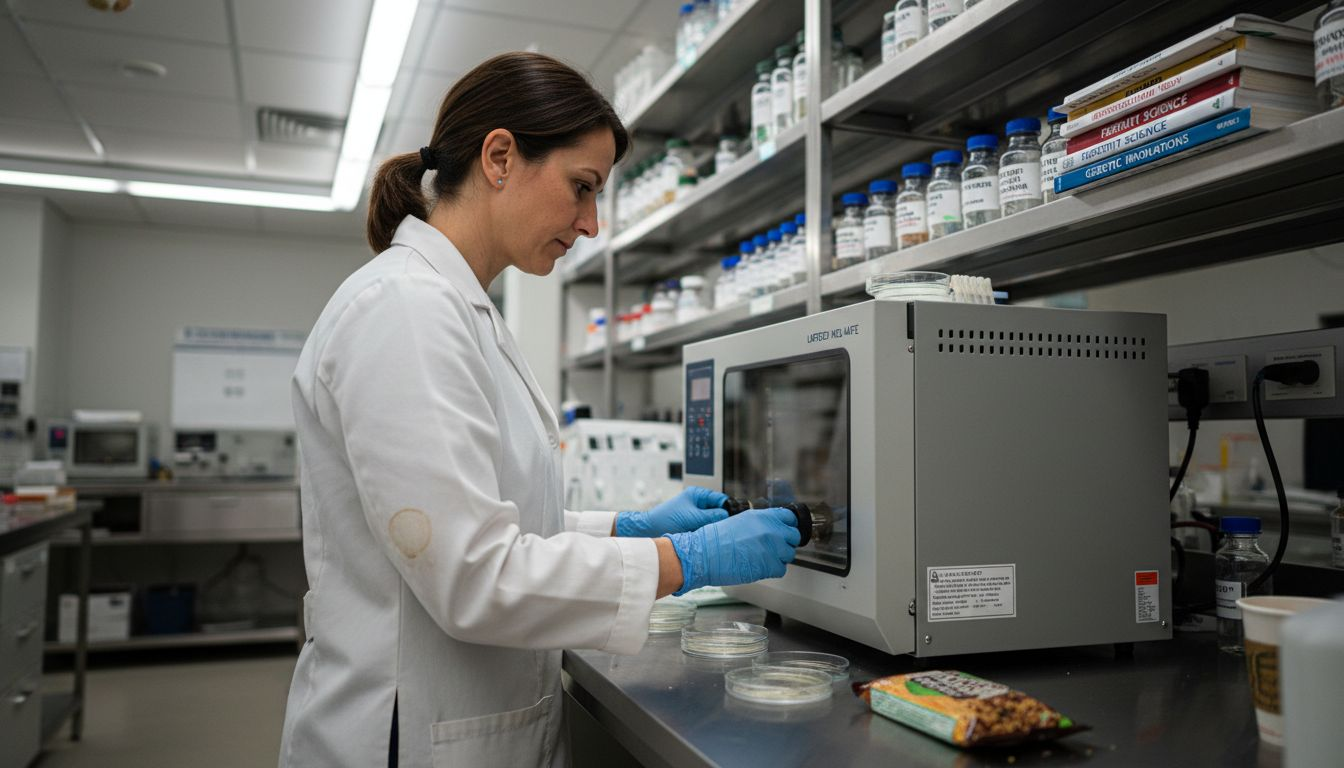
The scientific community is particularly excited about the potential of stem cell and mitochondrial innovations, which promise to address complex fertility issues at the cellular level. By focusing on mitochondrial function and cellular health, these advanced therapies can potentially overcome age-related fertility decline, genetic challenges, and reproductive limitations that traditional treatments struggle to address.
Pro tip: Consult with a reproductive specialist who specializes in advanced mitochondrial and stem cell therapies to explore personalized treatment strategies.
Personalized IVF Protocols and Egg Freezing Strategies
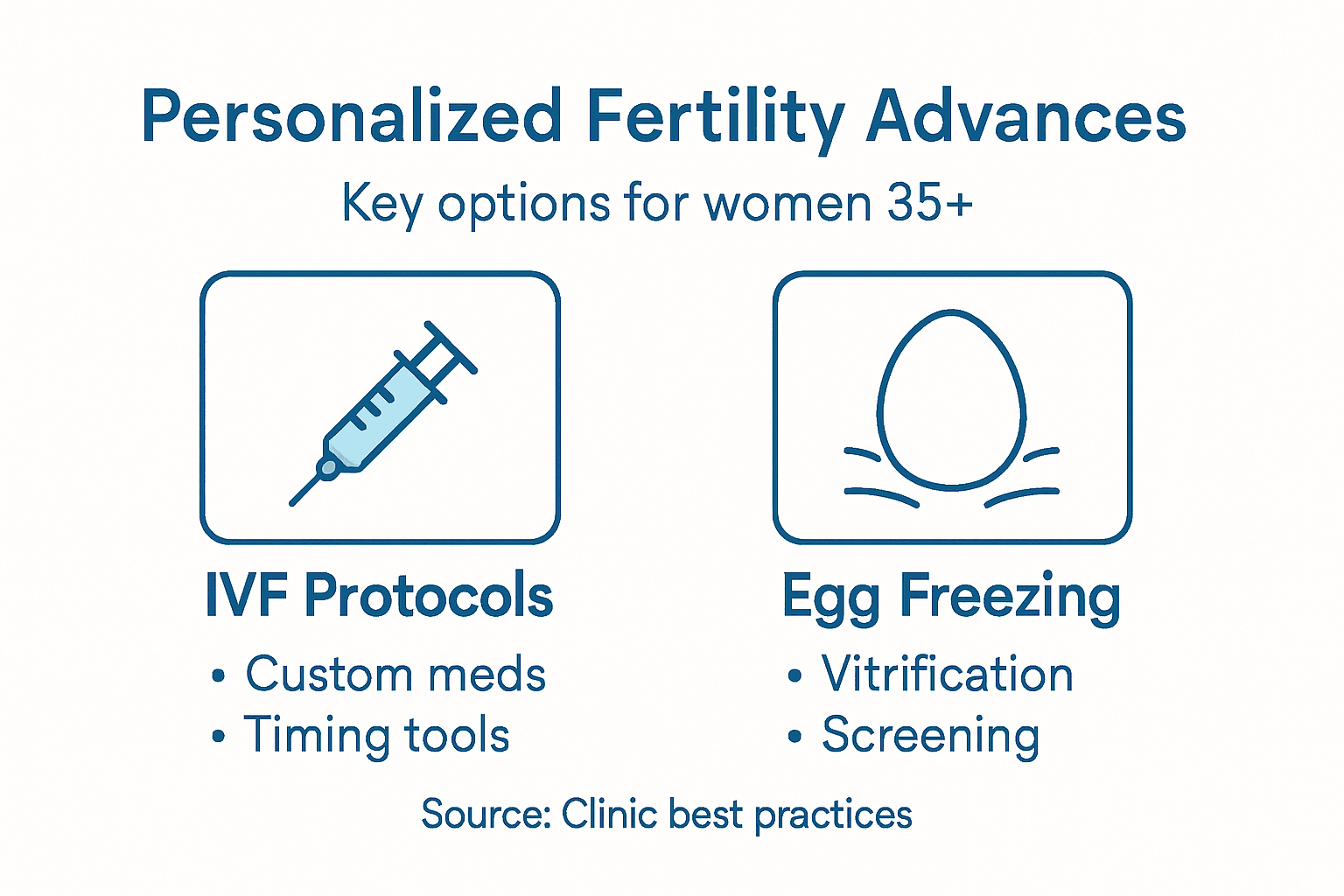
Advanced reproductive technologies are revolutionizing fertility treatments for women over 35, offering unprecedented opportunities for personalized fertility preservation. Machine learning models now predict clinical pregnancy outcomes with remarkable precision, enabling tailored treatment strategies that significantly improve success rates.
Key components of personalized IVF and egg freezing strategies include:
Advanced genetic screening techniques
Individualized ovarian stimulation protocols
AI-powered embryo selection methods
Comprehensive hormonal profiling
Precision fertility preservation planning
Comparative studies of embryo transfer techniques demonstrate the critical importance of personalized approaches. Sophisticated data-driven strategies now allow reproductive specialists to develop nuanced protocols that consider individual patient characteristics, genetic factors, and specific fertility challenges.
The emergence of advanced predictive technologies has transformed traditional fertility treatments. By integrating complex clinical and embryological data, these innovative approaches can optimize treatment protocols, potentially increasing live birth rates and providing hope for women facing challenging fertility landscapes. Machine learning algorithms now analyze multiple parameters simultaneously, offering insights that were previously impossible to obtain through conventional diagnostic methods.
Pro tip: Request a comprehensive fertility assessment that incorporates advanced predictive technologies to develop a truly personalized treatment strategy.
Risks, Costs, and Legal Considerations Worldwide
Fertility treatments represent a complex landscape of medical, financial, and legal challenges that vary dramatically across different global contexts. Legal case studies reveal significant risks associated with assisted reproductive technologies, highlighting the critical importance of understanding potential complications and regulatory environments.
Key considerations for patients include:
Comprehensive insurance coverage assessment
Potential medical and legal risks
Financial planning for multiple treatment cycles
Cross-border fertility treatment regulations
Emotional and psychological support strategies
Financial barriers in reproductive technologies represent a significant challenge, particularly in low- and middle-income countries. The direct medical expenses often exceed average household incomes, creating substantial barriers to accessing fertility treatments and underscoring the need for policy reforms and more equitable healthcare financing.
The global landscape of fertility treatments is characterized by remarkable complexity, with legal and regulatory frameworks varying extensively between countries. Patients must navigate intricate challenges including medical risks, substantial financial investments, potential legal restrictions, and ethical considerations that can differ dramatically across international boundaries.
Below is a summary of risks and challenges faced during global fertility treatment journeys:
Factor | Description | Main Implications |
Legal Differences | Laws vary by country | Affect access and consent |
Financial Barriers | High treatment costs | Limited patient accessibility |
Medical Risks | Complications from procedures | Emotional and physical strain |
Insurance Coverage | Varying policy limitations | Potential for high out-of-pocket costs |
Pro tip: Conduct comprehensive research on legal and financial aspects of fertility treatments in your specific geographic region before initiating any medical procedures.
Alternatives and Limitations of Traditional Fertility Care
Traditional fertility treatments often present significant challenges for women over 35, creating a critical need for innovative and adaptable approaches. Alternative fertility interventions offer nuanced treatment options beyond standard in-vitro fertilization, providing patients with diverse strategies to address reproductive challenges.
Key alternative fertility treatment approaches include:
Intrauterine insemination (IUI)
Expectant management techniques
Tubal flushing procedures
In vitro maturation protocols
Mild ovarian stimulation strategies
Innovative assisted reproduction approaches aim to bridge critical gaps in fertility care, particularly for patients in low-resource settings. These alternative methods recognize that traditional IVF represents just one potential pathway, with varying effectiveness across different patient profiles and clinical contexts.
Each alternative fertility intervention comes with unique clinical considerations, including distinct success rates, cost structures, and potential medical risks. Patients must carefully evaluate these options through comprehensive consultations, understanding that no single approach guarantees successful pregnancy. The complexity of fertility treatments demands personalized, nuanced strategies that account for individual medical histories, genetic factors, and physiological characteristics.
Pro tip: Consult multiple reproductive specialists to explore comprehensive alternative fertility treatment options tailored to your specific medical profile.
Empower Your Fertility Journey with Advanced Personalized Care
Women over 35 face unique fertility challenges that require precision and innovation. This article highlights the importance of tailored approaches such as mitochondrial replacement, stem cell therapy, and AI-driven IVF protocols to improve egg and embryo quality, especially when traditional treatments fall short. If you are seeking a fertility center that understands these complexities and offers cutting-edge solutions based on your individual health profile, Rejuvenating Fertility Center in the Bahamas is ready to support you.
At Rejuvenating Fertility Center, Dr. Zaher Merhi and his expert team specialize in personalized treatments that go beyond conventional care, employing advanced techniques like mitochondrial replacement therapy and stem cell ovarian rejuvenation. These innovative options address poor ovarian reserve and genetic concerns directly, increasing your chances of achieving a successful pregnancy with a compassionate, scientific approach. Discover how modern technology and personalized attention can transform your fertility outcomes.
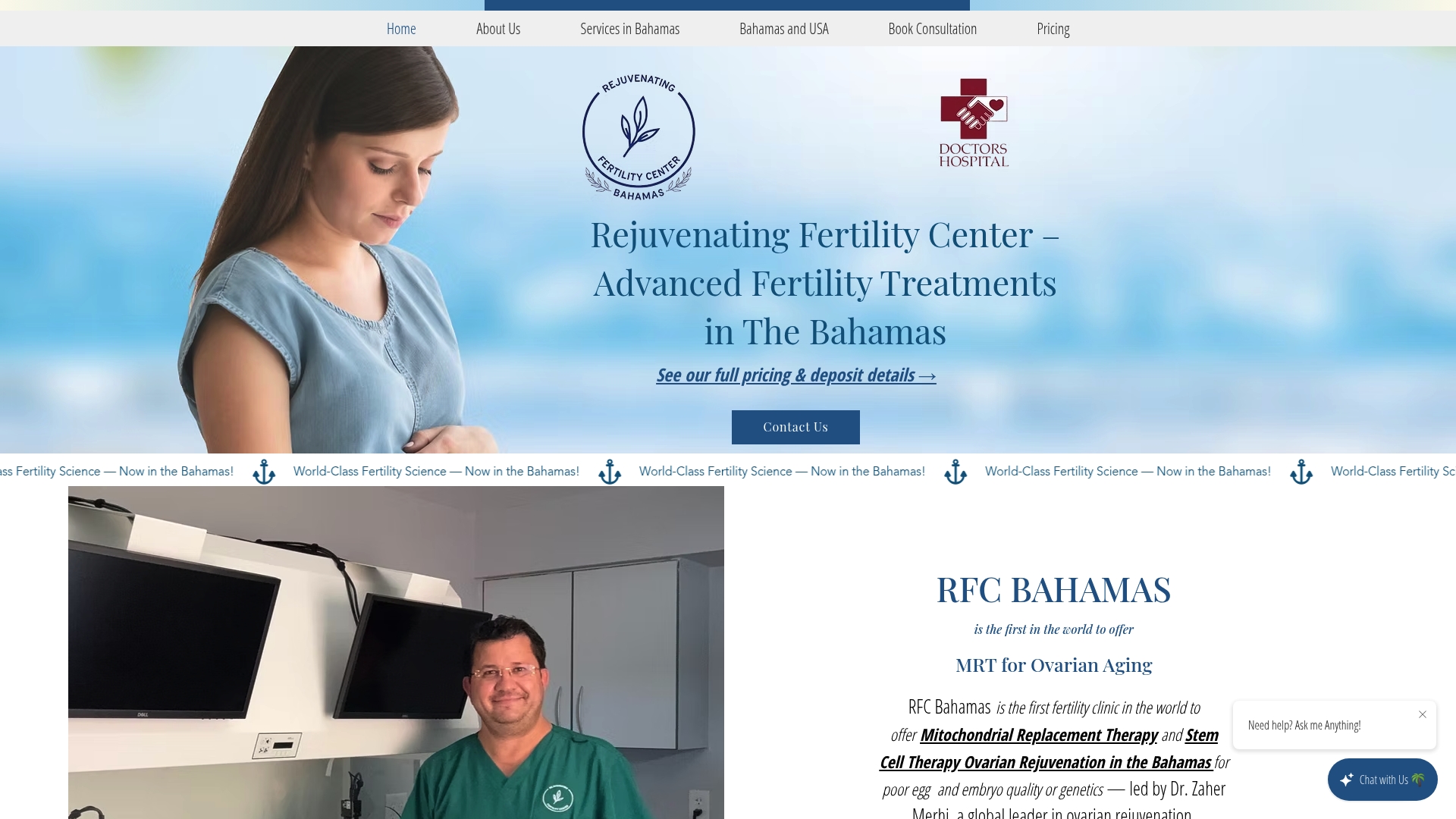
Take the first step today by visiting Rejuvenating Fertility Center’s homepage to schedule a comprehensive consultation. Learn more about our mitochondrial replacement therapy and stem cell treatment options designed especially for women who want personalized fertility solutions. Empower yourself with knowledge and breakthrough care tailored to your unique needs right now.
Frequently Asked Questions
What is personalized fertility care?
Personalized fertility care is a tailored approach to reproductive medicine that considers individual genetic, physiological, and lifestyle factors, moving beyond traditional one-size-fits-all treatment models.
How can advanced technologies improve fertility treatment outcomes for women over 35?
Advanced technologies, such as artificial intelligence and machine learning, provide precise embryo assessments, optimize treatment protocols, and predict outcomes, significantly increasing the chances of successful pregnancies.
What role do mitochondrial replacement techniques play in fertility treatments?
Mitochondrial replacement techniques aim to improve embryo quality by replacing defective maternal mitochondria with healthy ones, offering new possibilities for women facing fertility challenges, especially those with egg quality issues.
What are the risks and considerations surrounding fertility treatments?
Patients should be aware of financial barriers, varying legal implications, potential medical risks, and the need for comprehensive insurance coverage when considering fertility treatments.
Recommended
Comments