
7 Types of Fertility Treatments for Women Over 40

Making informed fertility decisions after age 40 can feel overwhelming. Treatments seem complicated and the options often feel endless. You need clear, actionable insights to understand what really works for older women hoping to conceive.
This guide walks you through the most effective fertility treatments for women over 40, showing you how each method targets real challenges like declining egg quality and irregular cycles. You’ll discover practical details about what each option involves and how these approaches are personalized for your unique needs.
Keep reading for a direct path to the steps, tips, and innovative strategies that can help you maximize your chances of pregnancy at every stage.
Table of Contents
Quick Summary
Takeaway | Explanation |
1. Use Ovulation Induction | This method stimulates egg production, increasing conception chances for women over 40. |
2. Consider Intrauterine Insemination (IUI) | IUI places sperm directly in the uterus, enhancing fertilization odds in a less invasive way. |
3. Explore Genetic Screening Options | Genetic screening increases the likelihood of successful pregnancies by ensuring only healthy embryos are transferred. |
4. Look into Egg Freezing | Egg freezing preserves current egg quality, providing flexibility for future pregnancies without age-related decline. |
5. Investigate Mitochondrial Replacement Therapy (MRT) | MRT rejuvenates aging eggs by replacing depleted mitochondria with healthy donor mitochondria, enhancing fertility potential. |
1. Understanding Ovulation Induction Methods
Overulation induction represents one of the most accessible fertility treatments for women over 40 who struggle with irregular cycles or anovulation, the absence of regular ovulation. This approach directly addresses a core reproductive challenge many women face as they age, offering a pathway to conception before advancing to more complex interventions. The treatment works by using medications to stimulate your ovaries to produce and release eggs at predictable times, making conception more likely when timing aligns with intercourse or intrauterine insemination.
The process relies on carefully chosen fertility medications that encourage your ovaries to mature and release eggs. The two primary options include clomiphene citrate, an oral medication that increases your body’s natural hormone production, and injectable gonadotropins that directly stimulate follicle development. Your fertility specialist monitors your response through ultrasounds and hormone testing to track follicle growth and ensure the timing is optimal for conception. This personalized approach is particularly valuable for women over 40, where precision matters because your egg quality and quantity are already more limited. By synchronizing medication timing with your body’s natural cycles, your doctor maximizes the chance that healthy eggs are available when you need them. The monitoring process typically spans 10 to 14 days per cycle, giving you a clear window for intercourse or insemination.
What makes ovulation induction appealing for your situation is that it preserves your natural pregnancy pathway while giving your ovaries that extra push needed to compensate for age-related changes. Unlike more invasive procedures, it allows you to conceive through regular intercourse or simple insemination, and it’s significantly less expensive than IVF. Many women over 40 find success with ovulation induction, particularly those with polycystic ovary syndrome or other conditions affecting ovulation. At the same time, your specialist can combine this method with additional ovarian rejuvenation strategies if standard ovulation induction alone doesn’t yield results, creating a comprehensive approach tailored to your specific fertility profile. Understanding how home ovulation tests detect luteinizing hormone surges can empower you to time intercourse more accurately during your treatment cycle, adding another layer of control to your fertility journey.
Pro tip: Start tracking your basal body temperature and cervical mucus changes before beginning ovulation induction, giving your doctor valuable baseline data to refine medication dosing and timing specific to your body’s response patterns.
2. Key Benefits of Intrauterine Insemination (IUI)
Intrauterine insemination offers a stepping stone between ovulation induction and more complex procedures, making it an ideal option for women over 40 who want to maximize their chances without immediately pursuing IVF. This technique places specially prepared sperm directly into your uterus at precisely the right moment in your cycle, bypassing natural barriers and giving fertility a genuine boost. Unlike more invasive treatments, IUI respects your body’s natural processes while strategically enhancing them, which is why many women in your age group find it both emotionally and physically manageable.
The mechanics of IUI are straightforward yet effective. Your fertility specialist uses ultrasound monitoring to track ovulation timing, then places concentrated, washed sperm directly into your uterus when your egg is ready for fertilization. This bypass approach proves especially valuable if you have cervical mucus issues that naturally prevent sperm from reaching the egg, or if your partner has mild male factor infertility that reduces sperm count or motility. By placing sperm closer to their destination, IUI dramatically increases the odds that fertilization occurs. When combined with ovarian stimulation through medications like those used in ovulation induction, success rates improve significantly because your ovaries are producing multiple eggs rather than just one.
What makes IUI particularly appealing for women over 40 is its combination of simplicity, affordability, and effectiveness. The procedure itself takes only a few minutes and involves minimal discomfort, unlike egg retrieval procedures required for IVF. Your recovery time is virtually nonexistent, meaning you can return to normal activities immediately. The cost is substantially lower than IVF, allowing you to attempt multiple cycles before considering more expensive interventions. If you’re dealing with unexplained infertility or mild reproductive issues, IUI often serves as the logical next step after ovulation induction alone hasn’t resulted in pregnancy. Many clinics recommend cycling through several IUI attempts before advancing to more comprehensive IVF protocols, giving your body multiple natural opportunities at a fraction of the financial and emotional investment.
Pro tip: Ensure your uterus is evaluated for any polyps or abnormalities before beginning IUI cycles, as correcting these minor structural issues can dramatically improve implantation success rates and save you time and money on unsuccessful attempts.
3. How In Vitro Fertilization (IVF) Works
In vitro fertilization represents the gold standard fertility treatment for women over 40, offering your best statistical chance at achieving pregnancy when your ovaries are producing fewer or lower quality eggs. The term “in vitro” simply means “in glass” because fertilization occurs in a laboratory setting rather than inside your body. IVF essentially removes the guesswork from conception by taking direct control of the fertilization process, allowing your doctor to create embryos outside your body and then select the strongest candidates for transfer into your uterus. This level of control makes IVF particularly powerful for older women whose natural conception rates have declined due to age related egg quality issues.
The IVF journey unfolds in distinct phases that give you time to understand each step. First, you receive fertility medications that stimulate your ovaries to produce multiple eggs rather than the single egg you’d naturally release each month. This ovarian stimulation typically lasts 10 to 14 days and is carefully monitored through ultrasound and blood tests to ensure optimal response. Once your follicles reach the appropriate size, your doctor performs a minimally invasive surgical retrieval procedure to collect the eggs from your ovaries. This takes about 15 to 20 minutes and involves mild sedation, allowing you to go home the same day. The collected eggs are then combined with specially prepared sperm in the laboratory, where fertilization occurs naturally or through intracytoplasmic sperm injection if needed. Your developing embryos are cultured in specialized incubators for five to six days, during which time your doctor can assess their quality and genetic health using advanced screening techniques. Finally, one or more of your strongest embryos are carefully transferred back into your uterus through a simple catheter procedure, giving them the opportunity to implant and develop.
What makes IVF transformative for women over 40 is that it overcomes the primary barrier you face: the declining number and quality of your eggs. By producing multiple eggs in a single cycle, IVF increases the odds that at least some eggs are chromosomally normal and capable of creating a healthy pregnancy. Recent IVF innovations continue to improve success rates for older women by enhancing embryo selection, optimizing culture conditions, and refining transfer techniques. While IVF requires more time, expense, and emotional investment than simpler treatments, it remains the most effective assisted reproductive technology available. Many women over 40 move directly to IVF after initial unsuccessful attempts with ovulation induction or IUI, recognizing that their time is precious and statistically, IVF offers the highest probability of success.
Pro tip: Request comprehensive embryo genetic screening during your IVF cycle to identify chromosomally normal embryos before transfer, significantly increasing your chances of successful implantation and reducing miscarriage risk at age 40 and beyond.
4. Exploring Egg Freezing for Future Fertility
Egg freezing offers women over 40 a powerful option to preserve their current egg quality before it declines further, essentially buying time in your reproductive journey. This fertility preservation technique involves extracting and freezing your eggs at their present quality level, then thawing and using them later when you’re ready for pregnancy or when other treatments haven’t succeeded. Unlike relying on fresh eggs retrieved years later when you’re older, frozen eggs maintain the genetic quality they had at the time of freezing, meaning a 42 year old woman’s frozen eggs retain the characteristics of a 42 year old egg rather than aging with you. For women over 40 facing diminished ovarian reserve or genetic concerns, this represents a glimmer of hope in an otherwise time sensitive situation.
The egg freezing process mirrors the beginning stages of IVF. You undergo ovarian stimulation with fertility medications to produce multiple eggs, which are then retrieved surgically and immediately preserved through a process called vitrification, a rapid freezing technique that prevents ice crystal formation and preserves egg integrity. Your frozen eggs can remain viable for many years, giving you flexibility to pursue pregnancy on your own timeline. When you decide to use them, they are thawed, fertilized with sperm through IVF, and transferred to your uterus as embryos. Egg freezing allows women to store eggs before medical treatments that might affect fertility, but it also serves a crucial purpose for women like you who are concerned about age related decline in egg quality. The significant psychological benefit of knowing you have frozen eggs stored provides reassurance that your reproductive options remain open even as you continue aging.
For women over 40, the strategic advantage of egg freezing lies in its ability to preserve what you have right now rather than hoping for better results later. Research confirms that egg and embryo freezing procedures are safe and effective, with frozen eggs producing healthy pregnancies and babies when thawed and used. If you’re uncertain about timing, facing medical treatments, or want to maximize your chances by accumulating eggs from multiple cycles, freezing offers a no pressure approach. You can gather your eggs today and make decisions about pregnancy years from now. Many women over 40 choose to freeze eggs from multiple stimulation cycles, creating a larger pool of genetic material that increases the likelihood of having chromosomally normal embryos available when you’re ready to pursue pregnancy.
Pro tip: Consider undergoing genetic screening on your frozen eggs before transfer to identify chromosomally normal eggs, as this dramatically increases implantation success rates and reduces miscarriage risk for women over 40 who have higher rates of chromosomal abnormalities.
5. Mitochondrial Replacement Therapy (MRT) Explained
Mitochondrial Replacement Therapy represents a cutting-edge fertility innovation specifically designed to address one of the most fundamental barriers facing women over 40: aging mitochondria that fail to provide sufficient energy for healthy egg function. Mitochondria are the powerhouses of your cells, and as you age, your egg mitochondria accumulate damage and become less efficient at producing the energy needed for successful fertilization, embryo development, and implantation. MRT works by replacing the depleted mitochondria in your egg with healthy mitochondria from a donor, essentially rejuvenating your egg’s cellular batteries and dramatically improving its capacity to support pregnancy. This procedure acknowledges a scientific reality that traditional fertility treatments ignore: sometimes the problem isn’t the number of your eggs or their chromosomal makeup, but rather their energetic capacity to sustain life.
The mechanics of MRT involve sophisticated laboratory techniques that take your egg nucleus, which contains your genetic material, and transfer it into a donor egg whose nucleus has been removed. This creates an egg containing your DNA but donor mitochondria, addressing the specific energy deficiency that often sabotages conception in women over 40. MRT uses specialized IVF techniques involving three genetic contributors, ensuring that your baby receives your nuclear DNA from both you and your partner while benefiting from healthy donor mitochondria. The resulting embryo is then cultured and transferred through standard IVF procedures. What makes MRT particularly promising for your situation is that it tackles a problem that previous treatments couldn’t solve. Many women over 40 have chromosomally normal eggs but experience repeated implantation failure because their mitochondria lack the energy to support development. MRT changes this equation by restoring mitochondrial function without requiring the egg stimulation or retrieval of multiple cycles.
For women over 40 considering MRT, understanding its availability and regulatory landscape is crucial. MRT is approved and regulated in countries like the UK and Australia and is available through specialized fertility clinics internationally, including advanced centers in the Bahamas that pioneer this technology. The procedure offers a calculated risk with significant potential reward, particularly if you’ve experienced multiple implantation failures with chromosomally normal embryos or if testing reveals severely compromised mitochondrial function. While MRT is not yet widely available everywhere, its emergence represents a shift in how fertility specialists approach age-related reproductive challenges. Rather than accepting mitochondrial aging as inevitable, MRT allows you to continue your biological motherhood journey with renewed hope that your eggs can achieve the energetic capacity needed for successful pregnancy.
Pro tip: Request comprehensive mitochondrial function testing before pursuing MRT to confirm that depleted mitochondrial energy is actually your primary barrier, ensuring you’re investing in a solution that directly addresses your specific fertility challenge.
6. Stem Cell Therapy for Ovarian Rejuvenation
Stem cell therapy represents one of the most promising frontiers in fertility medicine for women over 40, offering a regenerative approach that goes beyond simply extracting existing eggs to actually restore your ovaries’ capacity to produce healthy eggs. Unlike traditional treatments that work with what you already have, stem cell therapy aims to repair the underlying damage in your ovarian tissue caused by aging, inflammation, or diminished reserve. This innovative treatment harnesses your body’s own healing mechanisms to rejuvenate ovarian function, potentially restoring hormone production and improving egg quality even when your ovaries have been deemed “functionally spent” by conventional measures. It’s a fundamentally different philosophy: instead of accepting ovarian decline as inevitable, stem cell therapy actively works to reverse it.
The science behind ovarian stem cell rejuvenation involves using adult stem cells or induced pluripotent stem cells to repair damaged ovarian tissue and restore reproductive function. When injected into your ovaries, these specialized cells work to reduce inflammation, promote angiogenesis (the growth of new blood vessels), and encourage the regeneration of follicles that produce eggs. Research is exploring how stem cells could restore ovarian function in women with compromised ovarian reserve, examining both the biological mechanisms and practical applications for improving fertility outcomes. The cells essentially signal your body to rebuild and revitalize tissues that have deteriorated with age. Your ovaries respond by increasing blood flow, reducing oxidative stress, and stimulating the growth of primordial follicles that have been dormant. What makes this approach particularly attractive for women over 40 is that it doesn’t rely on having numerous eggs available; instead, it improves the microenvironment within your ovaries to maximize the potential of whatever eggs remain.
For women over 40 with significantly diminished ovarian reserve, stem cell therapy offers hope when other treatments have plateaued. This treatment can be combined with IVF or used as a standalone intervention to improve ovarian function before pursuing egg retrieval. The procedure itself is minimally invasive, typically involving a small injection directly into your ovarian tissue under ultrasound guidance. Many women report improvements in hormonal profiles, increased follicle counts on subsequent ultrasounds, and improved egg quality after stem cell therapy. Stem cell approaches to ovarian rejuvenation represent experimental regenerative medicine advancing fertility care for women facing age-related reproductive challenges. The timeline for seeing results typically ranges from three to six months, giving your ovaries time to respond to the regenerative stimulus. While stem cell therapy is still advancing scientifically, pioneering fertility centers now offer this treatment to women seeking alternatives to accepting ovarian aging as permanent.
Pro tip: Combine stem cell therapy with comprehensive hormone testing and pelvic ultrasound before and after treatment to objectively measure changes in ovarian reserve markers and confirm whether the therapy is improving your ovarian function for your specific situation.
7. Genetic Screening to Improve Success Rates
Genetic screening has transformed fertility treatment for women over 40 by removing one of the biggest obstacles to successful pregnancy: the selection and transfer of chromosomally abnormal embryos that cannot develop into healthy babies. As you age, your eggs accumulate chromosomal errors at dramatically higher rates, meaning a 40 year old woman’s eggs have roughly double the chromosomal abnormality rate of a 30 year old woman’s eggs. Without genetic screening, you risk transferring embryos that look developmentally normal under a microscope but carry hidden genetic defects that result in miscarriage or failed implantation. Genetic screening essentially gives you X-ray vision into your embryos’ DNA, allowing your doctor to select only the genetically viable ones for transfer, which fundamentally changes your odds of success.
Preimplantation genetic testing, commonly called PGT, examines your embryos’ chromosomes before they’re transferred into your uterus during an IVF cycle. A tiny sample of cells is removed from each developing embryo at the blastocyst stage, and these cells are analyzed to identify the complete chromosome count and detect major genetic abnormalities. PGT screens embryos for genetic abnormalities during IVF, improving implantation rates and dramatically lowering miscarriage risk by ensuring only genetically normal embryos are transferred. This single intervention can increase your IVF success rates by 40 to 50 percent compared to standard IVF without screening. For women over 40, the impact is even more dramatic because you have more chromosomally abnormal eggs to begin with, making the filtering effect of PGT invaluable. Rather than hoping that your embryo is normal, you know for certain. Emerging genetic analysis combined with advanced technologies helps identify mutations impacting reproductive success, allowing your fertility team to guide personalized treatment decisions based on your specific genetic profile.
For women over 40 pursuing IVF, genetic screening transforms from an optional add-on to a critical component of your success strategy. The additional cost of PGT is typically offset by avoiding failed transfers with chromosomally abnormal embryos and reducing the emotional and financial toll of repeated miscarriages. Genetic counseling supports your understanding of these results and helps you make informed decisions about which embryos to transfer and whether to pursue additional treatment cycles. Many women over 40 who use genetic screening report that it finally provided clarity and control over their fertility journey. Instead of playing genetic roulette with each transfer, you’re making evidence based decisions grounded in actual chromosomal data. Genetic screening significantly improves IVF success by selecting genetically viable embryos for transfer, making it an indispensable tool for older women navigating the biological realities of age related egg quality decline.
Pro tip: Request that your fertility clinic perform comprehensive PGT analysis on all embryos, including testing for mitochondrial mutations and aneuploidy, giving you the most complete genetic picture to optimize your embryo selection and maximize your chances of healthy pregnancy.
Below is a comprehensive table summarizing the methods, benefits, and strategies of various fertility treatments for women over 40 as discussed in the article.
Fertility Treatment | Description | Benefits |
Ovulation Induction | Medications stimulate ovulation for more predictable conception timing. | Noninvasive, cost-effective, preserves natural pregnancy pathways. |
Intrauterine Insemination (IUI) | Prepared sperm is placed directly into the uterus to increase fertilization chances. | Minimally invasive, addresses certain infertility factors, affordable alternative to IVF. |
In Vitro Fertilization (IVF) | Fertilization occurs in a lab, followed by embryo transfer to the uterus. | High success rates for older women, genetic screening of embryos improves outcomes. |
Egg Freezing | Eggs are preserved at current quality for future use. | Provides flexibility in family planning, preserves egg quality regardless of biological aging. |
Mitochondrial Replacement Therapy (MRT) | Replaces damaged mitochondria in eggs with healthy ones to restore energy levels. | Addresses age-related energy deficiencies in eggs, enhances embryo viability. |
Stem Cell Therapy | Encourages ovarian tissue regeneration to improve egg quantity and quality. | Restores ovarian function, offers hope for women with diminished ovarian reserve. |
Genetic Screening | Embryos are tested for chromosomal normality before transfer. | Increases chances of successful implantation, reduces miscarriage risks. |
Discover Advanced Fertility Solutions Designed for Women Over 40
Struggling with age-related fertility challenges such as diminished ovarian reserve, poor egg quality, or repeated implantation failures can feel overwhelming. This article highlights important treatments like ovulation induction, IUI, IVF, egg freezing, mitochondrial replacement therapy, and stem cell therapy that are tailored to boost your chances of pregnancy despite these obstacles. If you are seeking personalized care that combines cutting-edge science with compassionate support, the Rejuvenating Fertility Center in the Bahamas offers innovative options that address both egg quality and ovarian rejuvenation.
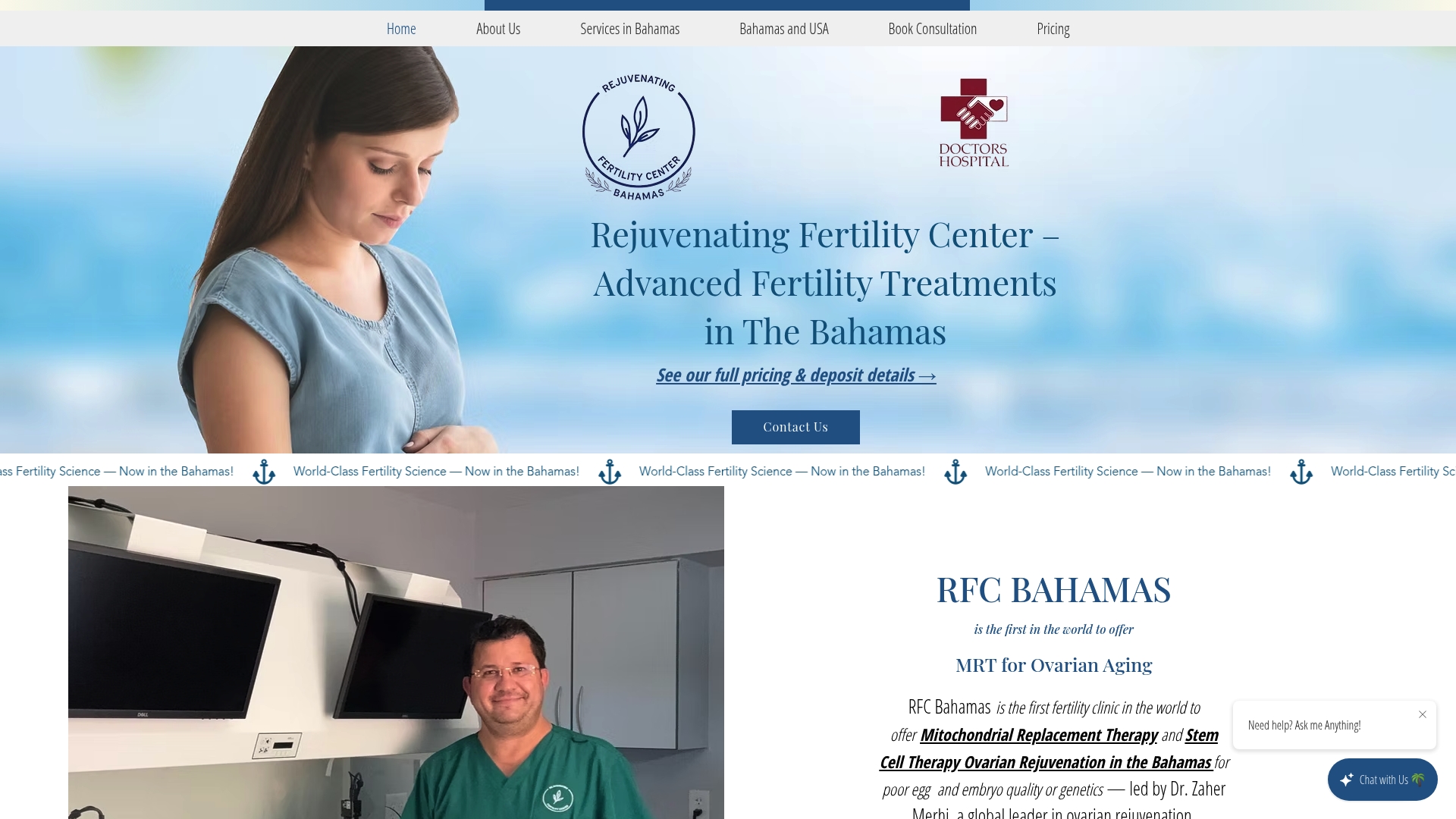
Take control of your fertility journey today by exploring treatments like Mitochondrial Replacement Therapy and Stem Cell Therapy for ovarian rejuvenation available at our center. With the expertise of Dr. Zaher Merhi and our state-of-the-art technology, you can gain renewed hope and improved outcomes. Don’t wait until time runs out. Visit Rejuvenating Fertility Center now to schedule your consultation and unlock the most advanced fertility care for women over 40.
Frequently Asked Questions
What are the different fertility treatments available for women over 40?
The main fertility treatments for women over 40 include Ovulation Induction, Intrauterine Insemination (IUI), In Vitro Fertilization (IVF), Egg Freezing, Mitochondrial Replacement Therapy (MRT), and Stem Cell Therapy for Ovarian Rejuvenation. Each option targets various aspects of fertility and can be tailored to individual needs.
How does In Vitro Fertilization (IVF) work for women over 40?
IVF involves stimulating the ovaries to produce multiple eggs, retrieving them, fertilizing them in a lab, and transferring healthy embryos back into the uterus. Consider discussing your specific situation with a fertility specialist to understand the process and set expectations for the timeline, which typically spans several weeks.
What is the purpose of genetic screening in fertility treatments for women over 40?
Genetic screening is used to identify chromosomally normal embryos before transfer, increasing the chances of a successful pregnancy. This testing helps avoid transferring embryos with potential genetic defects, which can lead to miscarriage or implantation failure. Ask about incorporating this screening into your IVF plan to enhance your success rates.
How can Egg Freezing benefit women over 40?
Egg Freezing allows women to preserve their current egg quality, giving them flexibility in timing for future pregnancies. By freezing eggs at their current state, women are not forced to use fresh eggs later when the quality may have declined. Consider discussing this option with a fertility specialist to understand the procedure and ideal timing for preservation.
What can I expect during a Stem Cell Therapy session for ovarian rejuvenation?
Stem Cell Therapy involves the injection of stem cells into the ovaries to repair damaged tissue and enhance egg production. The procedure is minimally invasive and typically offers observable results within three to six months. Schedule a consultation with a fertility expert to determine if this treatment aligns with your fertility goals.
How should I prepare for Intrauterine Insemination (IUI) cycles?
Preparation for IUI involves tracking ovulation and ensuring any uterine abnormalities are addressed. Your fertility specialist will help monitor your cycle using ultrasounds to determine the optimal time for insemination, increasing your chances of conception. Start by discussing your health history and concerns with your doctor to develop a personalized plan.
Recommended
Comments