
What Is Fertility Innovation? 70% Oocyte Activation Explained

Approximately 70% of women with ovarian failure experience oocyte activation after stem cell therapy, a statistic that challenges traditional fertility treatment expectations. Fertility innovation encompasses emerging reproductive technologies like mitochondrial replacement therapy and stem cell treatments that target the biological root causes of age related infertility. For women over 40 facing diminished ovarian reserve and couples struggling with fertility challenges, these advanced options offer renewed hope beyond conventional IVF.
Table of Contents
Key Takeaways
Point | Details |
Fertility innovation targets biological aging | Advanced therapies like MRT and stem cells improve egg quality and ovarian function through cellular mechanisms. |
Stem cell therapy shows measurable results | Approximately 70% of women with ovarian failure achieve oocyte activation; 7% conceive spontaneously and 14% via IVF. |
MRT addresses mitochondrial dysfunction | Mitochondrial replacement enhances embryo viability primarily for cases involving mitochondrial DNA issues. |
Personalized approaches optimize outcomes | Combining innovations with IVF and genetic screening improves pregnancy success rates for women over 40. |
Realistic expectations matter | These therapies complement traditional treatments but require careful patient selection and specialist guidance. |
Introduction to Fertility Innovation
Fertility innovation represents the application of emerging technologies that address the underlying biological causes of infertility rather than simply compensating for reproductive challenges. These breakthroughs particularly benefit women over 40 with diminished ovarian reserve and couples facing unexplained or treatment resistant infertility. Traditional IVF protocols often struggle when egg quality declines with age because they cannot reverse the cellular damage affecting oocytes.
The core innovations transforming reproductive medicine include mitochondrial replacement therapy and stem cell treatments. Both target the energy production systems within eggs that deteriorate over time. Mitochondrial replacement therapy exchanges defective mitochondria for healthy ones, while stem cell therapy stimulates dormant ovarian follicles and improves blood flow to reproductive tissues.
These fertility innovation advances address critical unmet needs:
Improving egg quality at the cellular level rather than just increasing egg quantity
Activating dormant ovarian follicles in women with premature ovarian insufficiency
Reducing chromosomal abnormalities caused by mitochondrial dysfunction
Offering options when conventional advanced IVF options have failed
Women considering these treatments need thorough fertility treatment evaluation after 40 to determine candidacy. Not every patient benefits equally from these innovations. Successful outcomes depend on accurate diagnosis, appropriate patient selection, and realistic expectations about what these therapies can and cannot achieve.
The Biological Basis of Fertility Innovation
Mitochondria function as cellular power plants, producing the ATP energy required for all egg cell processes. Every mature egg contains approximately 100,000 mitochondria, far more than typical body cells. This energy powers chromosome separation during fertilization, embryo development, and implantation. When mitochondrial function declines with age, eggs lack sufficient energy to complete these critical processes.
Mitochondrial dysfunction manifests through several mechanisms that directly impair fertility. Damaged mitochondria produce excessive reactive oxygen species, creating oxidative stress that damages egg cell structures and DNA. This oxidative damage accumulates over decades, explaining why fertility declines sharply after age 35. The resulting chromosomal abnormalities cause failed fertilization, poor embryo development, and miscarriage.
Cellular aging compounds these problems through multiple pathways:
Reduced mitochondrial DNA integrity leads to energy production failures
Accumulated oxidative damage impairs cellular repair mechanisms
Declining antioxidant defenses allow unchecked free radical damage
Telomere shortening affects cellular replication capacity
Diminished ovarian reserve reflects not just fewer remaining eggs but also declining egg quality driven by mitochondrial dysfunction. Women with low AMH levels often have eggs with compromised energy production, making fertilization and healthy embryo development less likely. This biology of fertility decline explains why traditional fertility treatments sometimes fail despite retrieving multiple eggs.
Fertility innovations target these specific biological mechanisms rather than bypassing them. By addressing mitochondrial health and cellular energy production, these therapies aim to improve the fundamental quality of available eggs. This biological focus distinguishes modern fertility innovation from earlier approaches that primarily increased egg quantity through hormonal stimulation.
How Mitochondrial Replacement Therapy Works
Mitochondrial replacement therapy involves transferring healthy mitochondria into eggs with compromised energy production capacity. The goal is restoring adequate ATP generation to support fertilization and early embryo development. Two main approaches exist: heterologous transfer using donor mitochondria and autologous transfer using the patient’s own mitochondria from other cells.
Several mitochondrial replacement therapy techniques have been developed:
Maternal spindle transfer removes the nuclear DNA from an egg with defective mitochondria and transfers it into a donor egg with healthy mitochondria
Pronuclear transfer moves fertilized egg nuclei into enucleated donor eggs after fertilization
Germinal vesicle transfer exchanges nuclear material at the immature oocyte stage
Polar body transfer utilizes polar bodies as mitochondrial sources
Autologous mitochondrial replacement therapy extracts mitochondria from the patient’s own stem cells or other tissue, avoiding genetic material from third parties. This approach appeals to patients concerned about three parent embryo ethics. Heterologous transfer typically provides more robust mitochondrial function but introduces mitochondrial DNA from a donor.

Clinical evidence shows MRT improves egg mitochondrial function but has variable impact on pregnancy outcomes. Success depends heavily on patient selection and the underlying cause of infertility. Women with confirmed mitochondrial DNA mutations benefit most clearly. Those with age related general decline see more modest improvements.
MRT limitations include:
Not effective for all infertility causes, particularly structural or hormonal issues
Requires significant laboratory expertise and specialized equipment
Regulatory restrictions limit availability in many countries
Long term effects remain under study
Patients considering MRT need comprehensive genetic testing to identify whether mitochondrial dysfunction contributes significantly to their infertility. The therapy works best as part of integrated treatment protocols rather than as a standalone solution.
How Stem Cell Therapy Supports Ovarian Rejuvenation
Autologous stem cell therapy injects a patient’s own stem cells and platelet rich plasma directly into ovarian tissue to stimulate regenerative processes. The stem cells are typically harvested from bone marrow or adipose tissue, processed to concentrate growth factors, then injected via ultrasound guided transvaginal approach. This minimally invasive procedure takes about 30 minutes and requires no general anesthesia.
The therapy works through several biological mechanisms. Stem cells release growth factors and cytokines that improve ovarian blood supply, bringing more nutrients and oxygen to follicles. They modulate local immune responses that may have been suppressing follicle development. Most significantly, they appear to activate dormant primordial follicles that have remained quiescent, potentially recruiting them into the growing follicle pool.
Clinical results from stem cell treatment studies demonstrate measurable outcomes. Approximately 70% of women with ovarian failure showed oocyte activation after stem cell therapy. Of these responders, 7% achieved spontaneous pregnancies without further intervention and 14% successfully conceived via IVF. These statistics represent meaningful hope for women previously told they had no remaining fertility options.
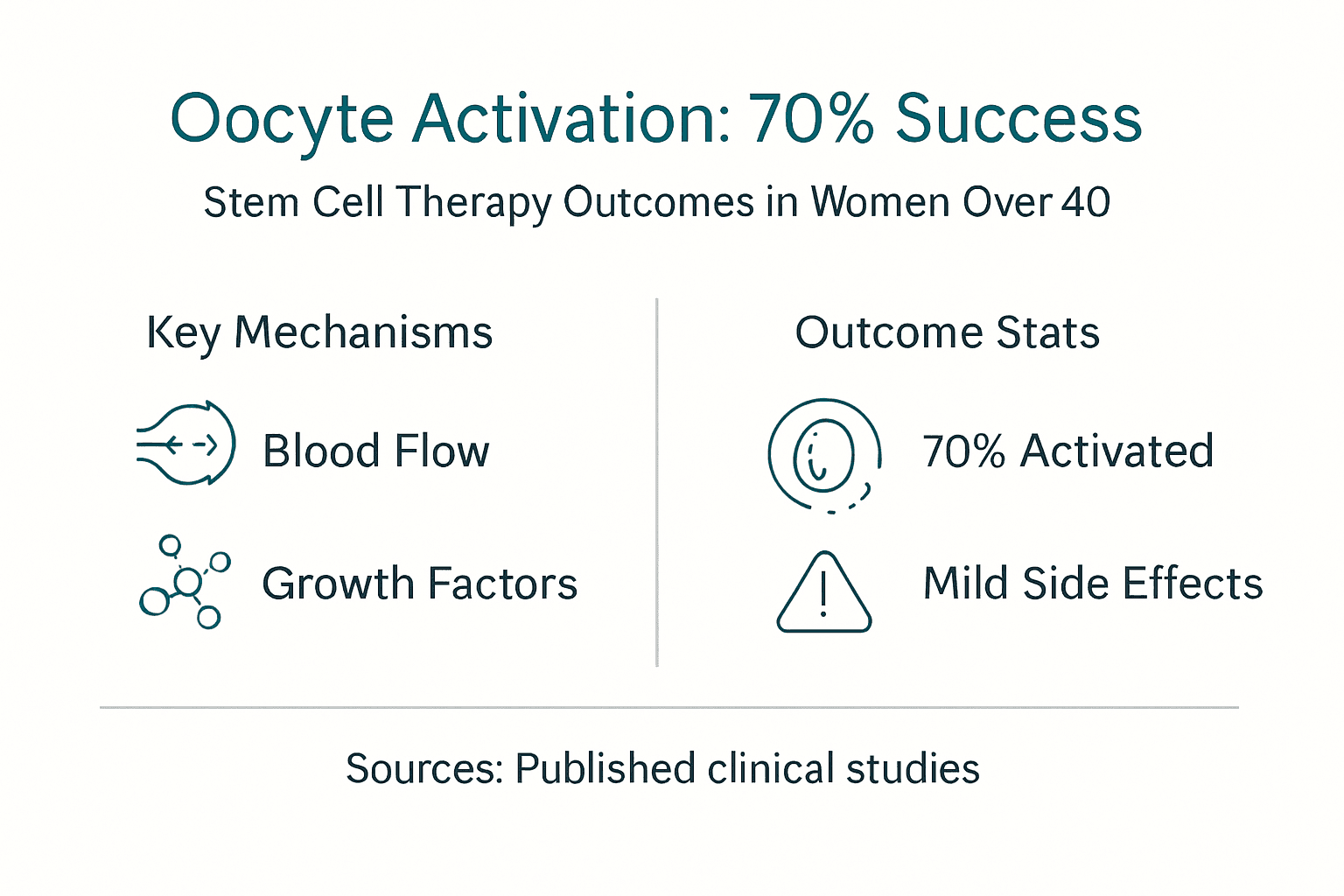
The stem cell mechanisms in ovarian aging include improved ovarian blood supply, immune modulation, and activation of dormant follicles. The treatment appears particularly effective for women with premature ovarian insufficiency, poor ovarian response to stimulation, and diminished ovarian reserve despite young biological age.
Safety profiles show minimal adverse effects. Most patients experience mild cramping or spotting for 24 to 48 hours after injection. No severe complications have been reported in published studies. The autologous nature eliminates rejection risk since patients receive their own cells.
Pro tip: Track your response to stem cell therapy through monthly hormone monitoring for at least six months. Watch for rising AMH levels, increased antral follicle counts on ultrasound, and menstrual cycle changes that indicate renewed ovarian activity. This monitoring helps determine whether additional interventions like IVF should proceed.
Common Misconceptions About Fertility Innovation
Many patients mistakenly view mitochondrial replacement therapy as a universal fertility cure applicable to any infertility diagnosis. In reality, MRT primarily benefits cases involving confirmed mitochondrial DNA mutations or severe mitochondrial dysfunction. Women with structural uterine problems, male factor infertility, or blocked fallopian tubes will not see improvement from mitochondrial interventions alone.
Stem cell therapy effectiveness varies significantly among patients. Not everyone responds with follicle activation or hormone level improvements. Approximately 30% of women show minimal response despite technically successful stem cell injection. Age, baseline ovarian reserve, and underlying health conditions all influence outcomes. The therapy represents a promising option but never guarantees pregnancy.
Key misconceptions to address:
Fertility innovations do not replace traditional IVF; they enhance it by improving egg quality before retrieval
These therapies require months to show effects, not immediate results within days or weeks
Genetic embryo screening remains essential even with improved egg quality
Success rates still decline with advancing maternal age despite cellular improvements
Ethical and safety considerations appropriately restrict some applications. Three parent embryo concerns have limited MRT availability in many jurisdictions. Long term effects on offspring require continued study. Regulatory bodies rightfully proceed cautiously with techniques that alter germline genetics.
Women over 40 need realistic treatment goals. Understanding fertility innovation limits prevents disappointment and helps allocate resources effectively. These therapies improve odds but cannot completely reverse biological aging. Setting appropriate expectations allows patients to appreciate meaningful improvements without unrealistic hopes for guaranteed success.
Personalized Treatment Approaches Combining Innovations
Integrating mitochondrial replacement therapy and stem cell treatments with conventional IVF creates synergistic benefits. Stem cell therapy performed three to six months before egg retrieval allows time for follicle recruitment and maturation. Mitochondrial replacement occurs during the IVF cycle itself, enhancing retrieved eggs before fertilization. Preimplantation genetic testing then identifies embryos with normal chromosomes, maximizing transfer success.
Hormone protocols require individualization based on each patient’s AMH levels, antral follicle count, and previous stimulation responses. Women who have undergone stem cell therapy may respond differently to gonadotropins as dormant follicles awaken. Monitoring protocols adjust medication doses based on real time follicle development and estrogen levels.
Combining genetic embryo screening and tailored hormonal support with fertility innovations improves pregnancy success and reduces miscarriage risk. PGT identifies embryos unaffected by chromosomal abnormalities that mitochondrial therapy alone cannot prevent. This combination addresses both energy production and genetic integrity.
Approach | Target | Timeline | Best Candidates |
Traditional IVF | Egg quantity | 2 to 4 weeks | Normal ovarian reserve, younger than 38 |
Stem Cell + IVF | Follicle activation | 3 to 6 months + IVF cycle | Diminished reserve, poor responders |
MRT + IVF | Egg quality | IVF cycle | Mitochondrial dysfunction, recurrent failure |
Combined Protocol | Multiple factors | 4 to 7 months total | Severe diminished reserve, advanced age |
Pro tip: Work with advanced fertility specialists who regularly combine these modalities rather than clinics offering them in isolation. Integrated treatment requires expertise in timing interventions, adjusting protocols based on response, and troubleshooting when expected improvements do not materialize. Comprehensive fertility treatment planning coordinates all elements for optimal results.
Safety, Side Effects, and Practical Considerations
Stem cell therapy demonstrates excellent safety profiles in published studies. The Stem Cell Regenera protocol is well tolerated with mild transient side effects and no severe adverse effects reported. Most women experience temporary pelvic discomfort, light spotting, or mild cramping that resolves within 48 hours. These symptoms indicate normal inflammatory responses to the injection procedure.
Mitochondrial therapies potentially reduce total hormone exposure compared to multiple traditional IVF cycles. By improving egg quality, fewer stimulation cycles may be needed to achieve pregnancy. This matters for women concerned about repeated high dose gonadotropin exposure. However, MRT itself carries theoretical risks related to mitochondrial heteroplasmy and genetic compatibility that require ongoing research.
Key safety considerations include:
Thorough medical screening to identify contraindications before treatment
Informed consent discussions covering known risks and unknown long term effects
Close monitoring during and after procedures to detect complications early
Realistic expectation setting to prevent psychological distress from failed cycles
Ethical considerations particularly affect mitochondrial replacement therapy. Some countries prohibit germline genetic modifications, classifying MRT as such. Patients may need to travel to jurisdictions where these treatments are legal and regulated. Understanding fertility treatment challenges and regulatory landscapes helps patients make informed decisions.
Patient eligibility requires comprehensive evaluation. Not every woman with diminished ovarian reserve benefits from these innovations. Specialists assess ovarian reserve markers, prior treatment responses, overall health status, and specific infertility diagnoses. This thorough evaluation prevents inappropriate treatment selection and manages expectations appropriately.
Conclusion: Empowering Advanced Fertility Choices
Fertility innovations directly target the biological mechanisms of ovarian aging rather than simply working around declining fertility. Scientific evidence demonstrates that stem cell therapy activates oocytes in 70% of women with ovarian failure, while mitochondrial replacement improves energy production in compromised eggs. These measurable improvements translate into tangible pregnancy opportunities for women previously facing limited options.
Personalized treatment approaches combining these innovations with IVF and genetic screening optimize outcomes. The evidence based strategies empower women over 40 with diminished ovarian reserve to pursue pregnancy with renewed hope grounded in biological science. Understanding both the potential and limitations of these therapies enables informed decisions about pursuing advanced fertility treatments.
Explore Advanced Fertility Treatments with RFC Bahamas
Ready to explore how fertility innovation could support your family building goals? RFC Bahamas specializes in mitochondrial replacement therapy, stem cell treatments, and advanced IVF protocols specifically designed for women over 40 facing diminished ovarian reserve. Our team combines cutting edge reproductive science with personalized care tailored to your unique situation.
Schedule a consultation to evaluate your candidacy for advanced fertility treatments and discuss which innovations align with your diagnosis and goals. We provide comprehensive assessments, realistic outcome projections, and integrated treatment planning that coordinates all elements of your care. Contact RFC Bahamas today to take your next step toward parenthood with confidence in evidence based fertility innovation.
FAQ
What is mitochondrial replacement therapy (MRT) and how effective is it?
MRT replaces defective mitochondria in eggs with healthy mitochondria to restore energy production needed for fertilization and embryo development. Effectiveness varies based on the underlying cause of infertility, with best results in cases of confirmed mitochondrial DNA mutations. It is not a guaranteed cure for all infertility types.
How does stem cell therapy improve ovarian function?
Autologous stem cells and platelet rich plasma injected into ovaries stimulate blood flow, modulate immune responses, and activate dormant follicles. Clinical studies show approximately 70% of women with ovarian failure experience oocyte activation after treatment. The therapy is generally safe with only mild, temporary side effects like cramping or spotting.
Are fertility innovations suitable for all women over 40?
Suitability depends on individual factors including current ovarian reserve markers, overall health, and the specific cause of infertility. A thorough fertility specialist evaluation determines whether you are a good candidate for these treatments. Innovations work best as complements to traditional fertility treatments rather than complete replacements.
What are the common misconceptions about fertility innovation?
Many believe MRT universally cures infertility, but it primarily helps mitochondrial dysfunction cases. Stem cell therapy results vary significantly, with about 30% of women showing minimal response. These innovations are not quick fixes and require months to demonstrate effects. They enhance but do not replace conventional IVF and genetic screening.
Recommended
Comments