
Why Optimize Egg Quality – Impact on Fertility Outcomes

Struggling with diminished ovarian reserve can often feel overwhelming, especially when so much advice centers on simply counting eggs. Yet clinical research highlights that true fertility hinges on more than numbers. For women over 35, understanding the difference between quantity and actual egg quality opens the door to advanced therapies like mitochondrial replacement and stem cell treatments. This guide clarifies misconceptions, connects age and genetic factors, and spotlights innovative approaches that prioritize the complex health of each oocyte.
Table of Contents
Key Takeaways
Point | Details |
Understanding Egg Quality | Egg quality is determined by intricate factors beyond quantity, including chromosomal integrity and mitochondrial function, crucial for successful reproduction. |
Impact of Aging on Egg Quality | Advanced maternal age affects egg quality significantly; women may maintain fertility longer than expected depending on individual genetic factors. |
Lifestyle Effects | Proactive lifestyle choices, such as nutrition and stress management, can enhance egg health and improve reproductive potential. |
Advanced Therapies | Innovative techniques like Mitochondrial Replacement Therapy offer new hope for women facing fertility challenges linked to egg quality. |
Egg Quality Defined and Common Misconceptions
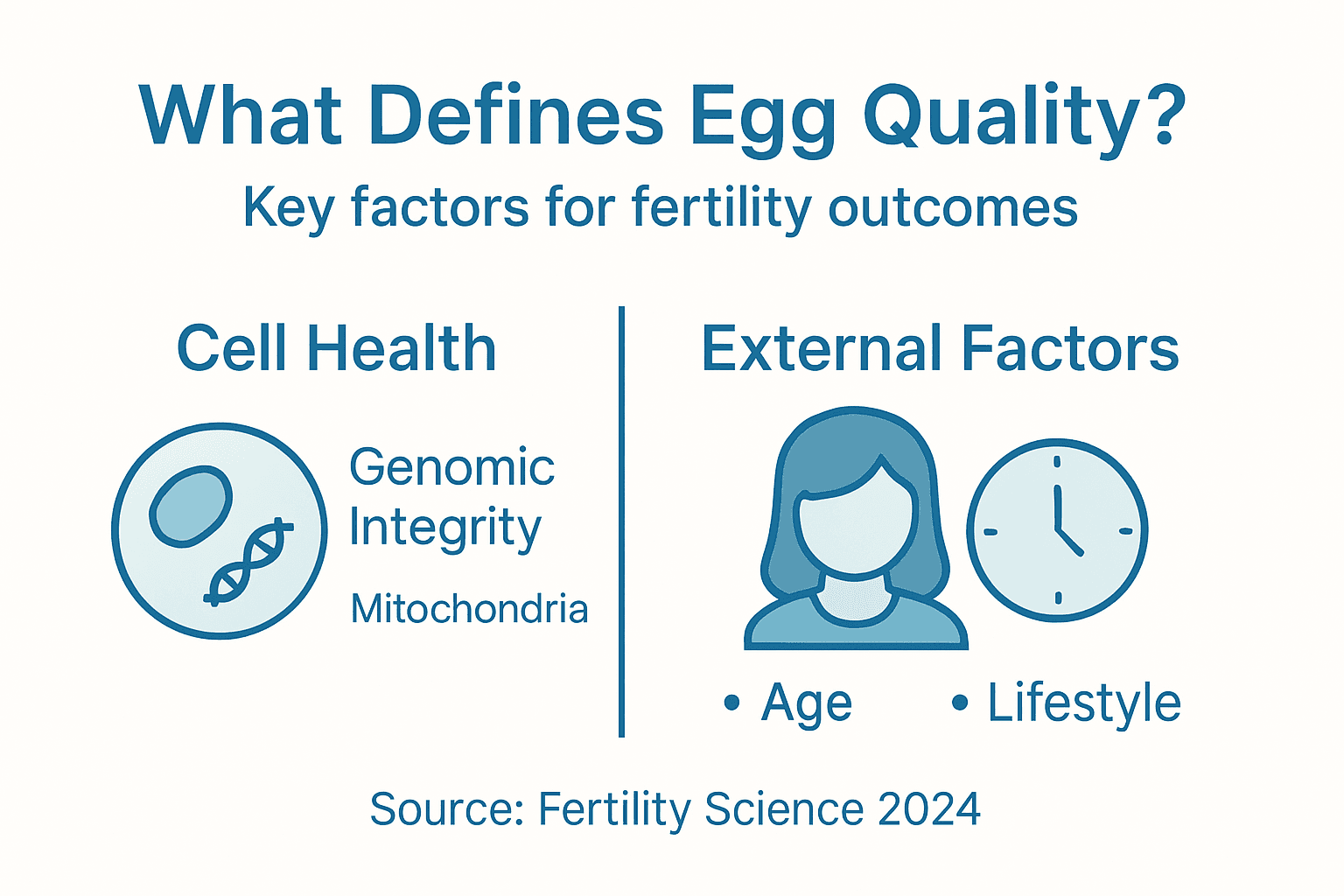
Egg quality represents the intrinsic potential of an oocyte to develop into a healthy, viable embryo capable of successful implantation and pregnancy. Unlike the simplistic view that egg quality is purely about quantity, it encompasses complex morphological and biochemical attributes that determine reproductive success. Comprehensive reproductive research reveals that clinical assessments must look beyond numerical counts to understand the physiological competence of eggs.
When examining egg quality, several critical factors emerge as essential markers:
Chromosomal Integrity: Normal genetic composition without structural abnormalities
Mitochondrial Function: Efficient energy production for cellular processes
Cellular Metabolism: Optimal metabolic activity supporting embryonic development
Molecular Signaling: Proper communication mechanisms within the oocyte
Common misconceptions frequently mislead women about reproductive potential. Many believe that egg quantity directly correlates with fertility, but this oversimplifies the complex reproductive landscape. Advanced maternal age does not automatically preclude successful pregnancy - egg quality plays a far more nuanced role than numerical decline.
Professional fertility specialists recognize that egg quality involves sophisticated biochemical parameters. A seemingly normal-looking egg might harbor significant developmental limitations, while a smaller number of high-quality eggs can yield remarkable reproductive outcomes. The microscopic world of oocyte competence involves intricate molecular interactions that cannot be assessed through simple visual inspection.
Pro tip: Request comprehensive egg quality assessments that examine multiple physiological markers beyond traditional counting methods, ensuring a holistic understanding of your reproductive potential.
Influence of Age and Genetic Factors on Eggs
Female reproductive potential is fundamentally shaped by two interconnected factors: age and genetic integrity. Declining egg quality with age represents a complex biological process that goes far beyond simple numerical reduction. Women are born with a finite number of eggs, and as time progresses, both quantitative and qualitative changes dramatically impact fertility outcomes.
Key genetic and age-related factors influencing egg quality include:
Chromosomal Degradation: Increased risk of genetic abnormalities
Mitochondrial Dysfunction: Reduced cellular energy production
DNA Damage Accumulation: Progressive genomic instability
Epigenetic Modifications: Changes in gene expression patterns
Telomere Shortening: Cellular aging indicators
The intricate mechanisms of egg quality decline involve multiple biological processes. Genomic integrity deterioration occurs through complex molecular changes that impair oocyte function. Mitochondrial performance, nuclear DNA stability, and cellular communication networks all contribute to the progressive reduction in reproductive potential.
Genetic predispositions play a significant role in modulating fertility trajectories. Some women experience accelerated egg quality decline due to inherited genetic variations, while others maintain relatively robust reproductive capabilities well into their late 30s and early 40s. Understanding individual genetic profiles can provide critical insights into personalized fertility strategies and potential intervention approaches.
Pro tip: Consider comprehensive genetic screening and mitochondrial health assessments to gain a nuanced understanding of your unique reproductive potential beyond chronological age.
Advanced Therapies: Mitochondrial Replacement and Stem Cell
Reproductive medicine has reached a groundbreaking frontier with advanced therapeutic approaches targeting egg quality at its most fundamental cellular level. Mitochondrial Replacement Therapy represents a revolutionary technique that addresses reproductive challenges by targeting the core energy production mechanisms within eggs.
Key components of advanced fertility interventions include:
Nuclear DNA Transfer: Preserving genetic information while replacing dysfunctional mitochondria
Stem Cell Donation: Introducing healthy cellular components
Targeted Mitochondrial Replacement: Enhancing cellular energy production
Genetic Disease Prevention: Reducing inherited mitochondrial disorders
Cellular Rejuvenation: Restoring optimal reproductive potential
The mechanism of Mitochondrial Replacement Therapy involves intricate scientific processes. Stem cell-based strategies offer promising interventions by introducing healthy mitochondrial components into eggs, effectively addressing energy production deficiencies and reducing oxidative stress that can compromise reproductive outcomes.
Understanding these advanced therapies requires recognizing their potential to transform reproductive medicine. By directly addressing cellular dysfunction, these interventions provide hope for individuals struggling with genetic challenges, diminished ovarian reserve, and age-related fertility decline. The ability to replace or repair mitochondrial components represents a significant leap forward in our approach to reproductive health.
Here’s a comparison of advanced fertility interventions and traditional approaches:
Approach | Core Mechanism | Typical Candidate | Main Benefit |
Mitochondrial Replacement Therapy | Cellular energy renewal | Women with mitochondrial issues | Improves oocyte function |
Stem Cell-based Therapy | Cellular component rejuvenation | Women with low ovarian reserve | Potential to restore egg quality |
Traditional Hormonal Treatment | Endocrine stimulation | Most IVF candidates | Increases egg availability |
Egg Donation | Use of donor eggs | Severe egg quality loss | Maximizes pregnancy chance |
Pro tip: Consult reproductive specialists who specialize in advanced mitochondrial therapies to understand how these cutting-edge interventions might specifically benefit your unique fertility profile.
Lifestyle and Environmental Impacts on Egg Health
Lifestyle factors dramatically influence reproductive potential, creating a complex ecosystem of physiological interactions that directly impact egg quality and fertility outcomes. Beyond genetic predispositions, women can meaningfully modify their reproductive health through conscious lifestyle choices that support cellular integrity and hormonal balance.
Key lifestyle factors affecting egg health include:
Nutritional Intake: Quality and diversity of dietary nutrients
Stress Management: Hormonal balance and cortisol regulation
Physical Activity: Metabolic health and hormonal equilibrium
Environmental Toxin Exposure: Reduction of oxidative cellular damage
Sleep Quality: Hormonal restoration and cellular repair mechanisms
Oxidative stress represents a critical mechanism through which lifestyle choices impact reproductive potential. Nutrition and environmental interactions play fundamental roles in protecting oocyte health, with specific dietary interventions and toxin avoidance strategies proving particularly impactful for maintaining optimal egg quality.
Modern reproductive science increasingly recognizes the profound connection between lifestyle behaviors and egg health. Metabolic disorders, chronic inflammation, and cumulative environmental exposures can significantly compromise oocyte function, underscoring the importance of proactive, holistic approaches to reproductive wellness. Women can effectively mitigate potential fertility challenges by implementing targeted lifestyle modifications that support cellular resilience and hormonal optimization.
The table below summarizes lifestyle factors with their impact on egg health:
Lifestyle Factor | Impact on Egg Health | Suggested Action |
Nutrition | Supports cellular integrity | Prioritize antioxidant-rich diet |
Stress Management | Balances reproductive hormones | Adopt relaxation techniques |
Physical Activity | Promotes metabolic wellness | Maintain moderate exercise |
Toxin Avoidance | Reduces oxidative stress | Limit exposure to pollutants |
Sleep Quality | Enhances cellular repair | Aim for consistent sleep |
Pro tip: Develop a comprehensive wellness strategy that integrates nutrition, stress management, and environmental awareness to proactively support your reproductive potential.
Risks of Poor Egg Quality in Fertility Treatments
Fertility treatment outcomes are critically dependent on the intrinsic quality of eggs, with compromised oocyte health presenting significant reproductive challenges. Poor egg quality introduces multifaceted risks that extend beyond simple fertilization failure, potentially impacting entire reproductive trajectories.
Key risks associated with poor egg quality include:
Reduced Fertilization Rates: Lower likelihood of successful conception
Embryo Development Complications: Impaired cellular division and growth
Increased Miscarriage Risk: Higher probability of pregnancy loss
Implantation Failure: Decreased embryo attachment potential
Genetic Abnormality Transmission: Higher chance of chromosomal disorders
Advanced reproductive technologies must carefully navigate the complex landscape of egg quality challenges. Procedural risks in fertility treatments become more pronounced when egg quality is compromised, requiring sophisticated monitoring and personalized intervention strategies to mitigate potential complications.
Professional fertility specialists recognize that poor egg quality represents more than a statistical challenge - it’s a nuanced biological puzzle demanding comprehensive assessment. Advanced maternal age, genetic predispositions, and cumulative environmental exposures can significantly impact oocyte health, necessitating a holistic approach to reproductive medicine that goes beyond traditional treatment protocols.
Pro tip: Request comprehensive genetic and mitochondrial screening to understand your unique reproductive potential and develop targeted intervention strategies.
Comparing Egg Optimization Strategies and Alternatives
Fertility enhancement strategies represent a complex landscape of interconnected approaches designed to improve reproductive potential. No single intervention offers a universal solution, highlighting the critical importance of personalized, targeted treatment plans tailored to individual physiological profiles and reproductive challenges.
Egg optimization strategies can be categorized into several key approaches:
Nutritional Interventions: Targeted dietary supplements and antioxidant protocols
Hormonal Treatments: Precise endocrine modulation techniques
Mitochondrial Therapies: Advanced cellular energy restoration
Lifestyle Modifications: Holistic wellness and reproductive health optimization
Genetic Screening: Comprehensive chromosomal and mitochondrial assessments
Each optimization strategy carries unique benefits and potential limitations. Some interventions focus on direct cellular repair, while others address systemic factors that indirectly influence egg quality. Alternatives such as egg donation remain a viable option for individuals with severely compromised ovarian function, underscoring the nuanced nature of modern reproductive medicine.
Professional fertility specialists increasingly recognize that egg optimization is not a one-size-fits-all approach. Individual genetic predispositions, age-related changes, and environmental exposures demand sophisticated, multifaceted strategies that integrate advanced medical technologies with personalized wellness protocols.
Pro tip: Develop a comprehensive consultation with reproductive specialists to create a customized egg optimization strategy that addresses your specific biological and reproductive profile.
Enhance Your Fertility Journey by Optimizing Egg Quality Today
Struggling with declining egg quality and its impact on your fertility can feel overwhelming. This article highlights the critical challenges such as mitochondrial dysfunction, genetic risks, and lifestyle influences that affect your reproductive potential. At the Rejuvenating Fertility Center in the Bahamas, we specialize in cutting-edge treatments including Mitochondrial Replacement Therapy and Stem Cell Therapy that directly address these complex biological factors to improve egg and embryo quality.
Take control of your reproductive future now. Explore our advanced fertility solutions and personalized care led by Dr. Zaher Merhi, a pioneer in reproductive innovation. Visit Rejuvenating Fertility Center to learn how our unique therapies can transform your chances for successful pregnancy. Don’t wait to discover the difference that state-of-the-art science can make for your fertility—schedule your consultation today.
Frequently Asked Questions
What is egg quality and why is it important for fertility?
Egg quality refers to the potential of an oocyte to develop into a healthy, viable embryo capable of successful implantation and pregnancy. It is crucial because high-quality eggs are more likely to result in successful fertilization, implantation, and ultimately, a healthy pregnancy.
How does age affect egg quality?
As women age, both the quantity and quality of their eggs decline. Key factors such as chromosomal degradation, mitochondrial dysfunction, and DNA damage accumulation can impair egg function, significantly impacting fertility outcomes.
What lifestyle changes can improve egg quality?
Dietary intervention, stress management, regular physical activity, minimizing exposure to environmental toxins, and ensuring good sleep quality can all positively impact egg health. These changes help support cellular integrity and hormonal balance critical for reproductive success.
What are the risks associated with poor egg quality during fertility treatments?
Poor egg quality can lead to reduced fertilization rates, complications in embryo development, increased risk of miscarriage, implantation failure, and a higher chance of genetic abnormalities. This underscores the need for comprehensive assessments and tailored treatment strategies.
Recommended
Comments